…
…
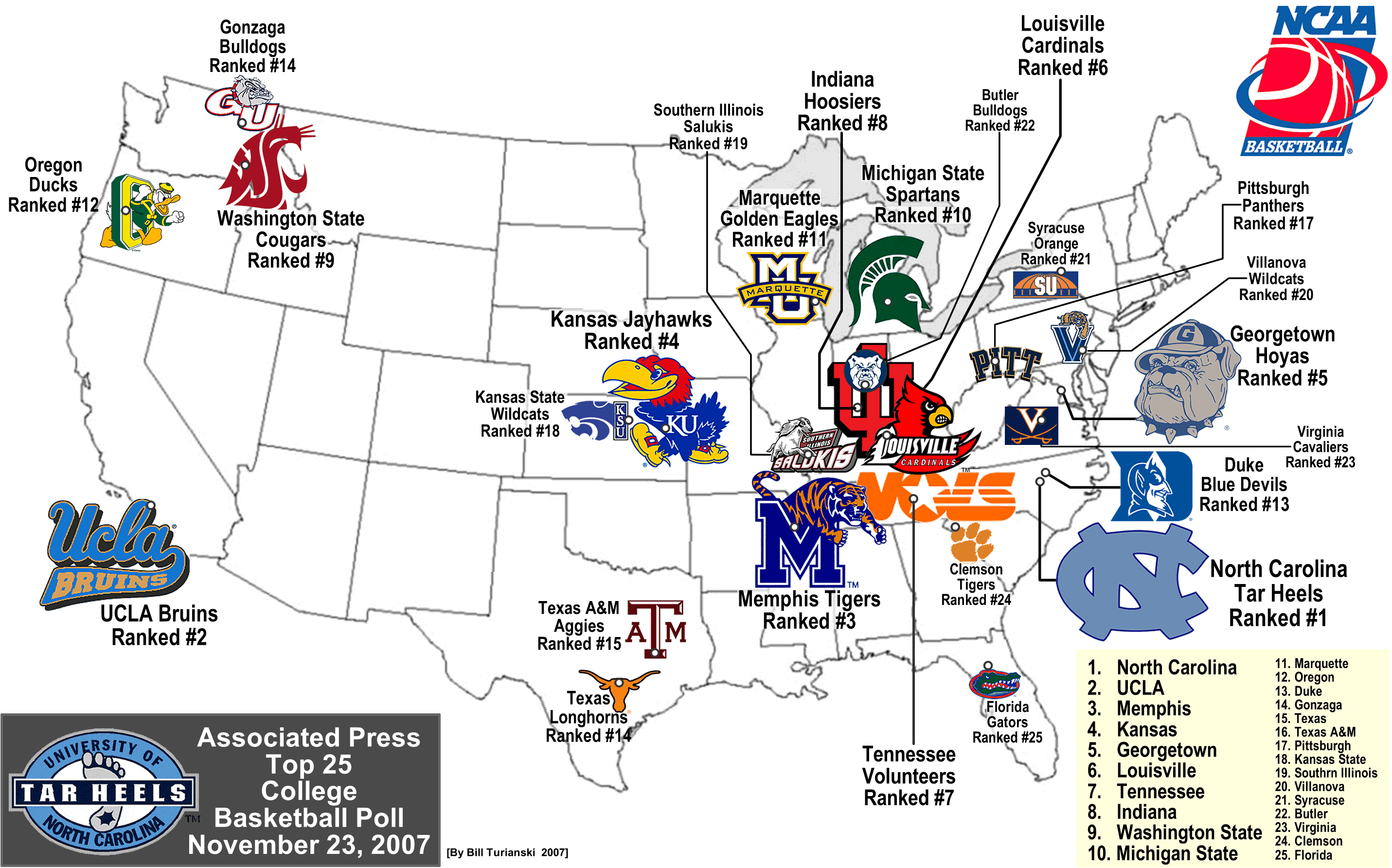
This is a new concept I’m trying out here. I’ve taken the latest Associated Press College Basketball Poll, and made a map out of it. The 25 top ranked school’s emblems are scaled progressively smaller, as the team rankings go down from #1 to #25.
November 23, 2007
College Basketball. AP Top 25 Poll, November 23, 2007.
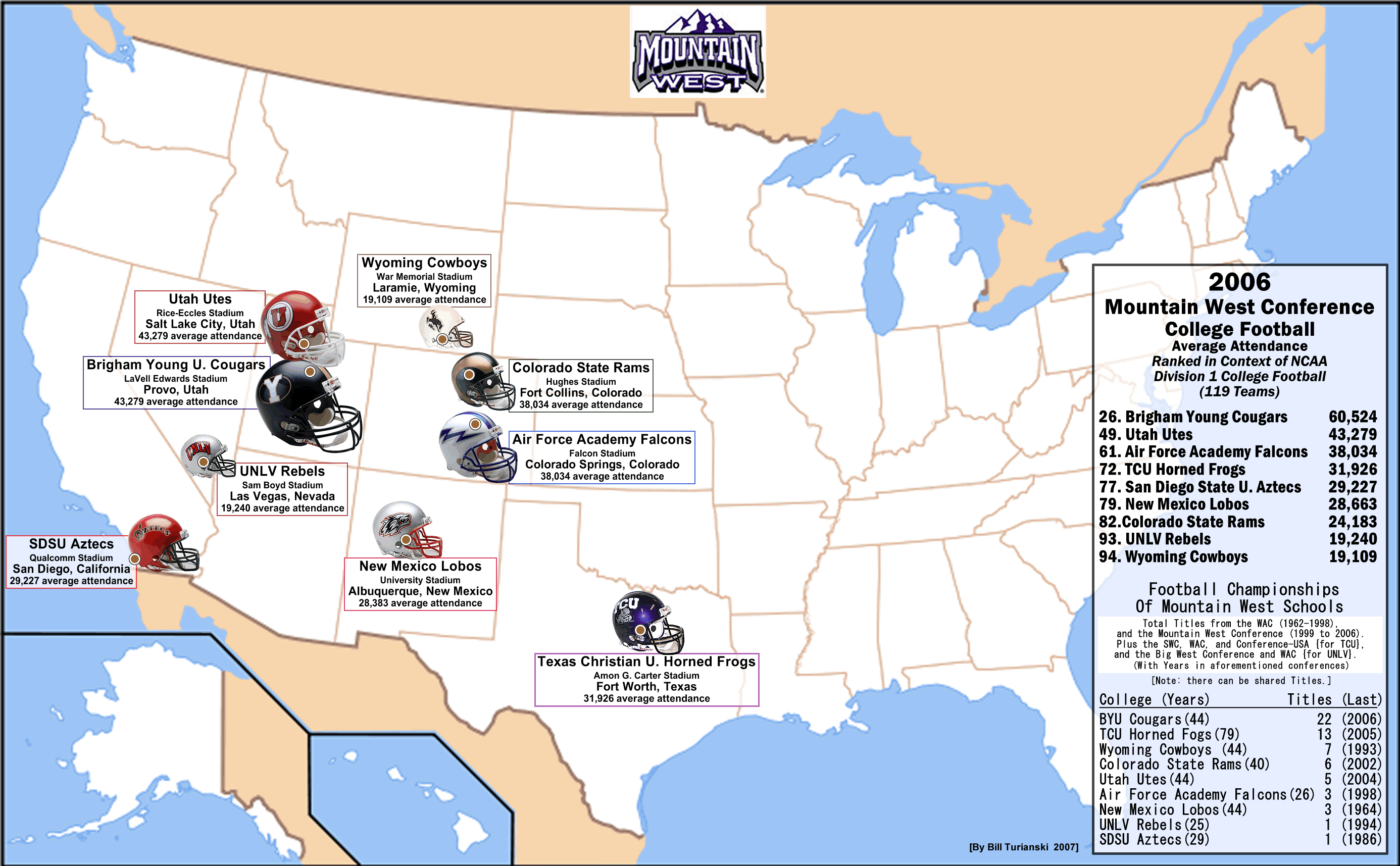
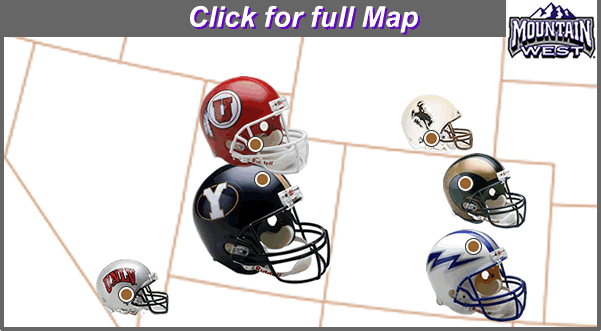
College Football, Mountain West Conference. 2006 Attendance Map.
…
The Mountain West Conference (MWC) was formed in 1999, when several members of the recently expanded Western Athletic Conference decided that the conference was too big. 8 schools left , depriving the WAC of much of it’s competitive strength and history. TCU followed 4 years later. Founding members of the WAC (which was formed in 1962) that eventually became part of the Mountain West Conference were Brigham Young University, New Mexico, Utah, and Wyoming. Schools that later joined the WAC, and also moved on to the Mountain West were Colorado State (joined WAC in 1967), San Diego State (joined WAC in 1978), Air Force (joined WAC in 1980), UNLV (joined WAC in 1996), and TCU (joined WAC in 1996). So the MWC is basically the old-time WAC, plus TCU and UNLV. Only Hawaii remains in the WAC, from the earlier days of that conference. The Mountain West has it’s own TV broadcast network, the “mtn.” (the mountain). They ceased their affiliation with ESPN after that network insisted the MWC play games on Tuesday and Wednesday nights. But there have been problems. The network is unavailable on satellite TV, and totally unavailable in Dallas/Ft. Worth, the home of TCU. Both Utah schools are dissatisfied to the point of bringing in their lawyers.
November 22, 2007
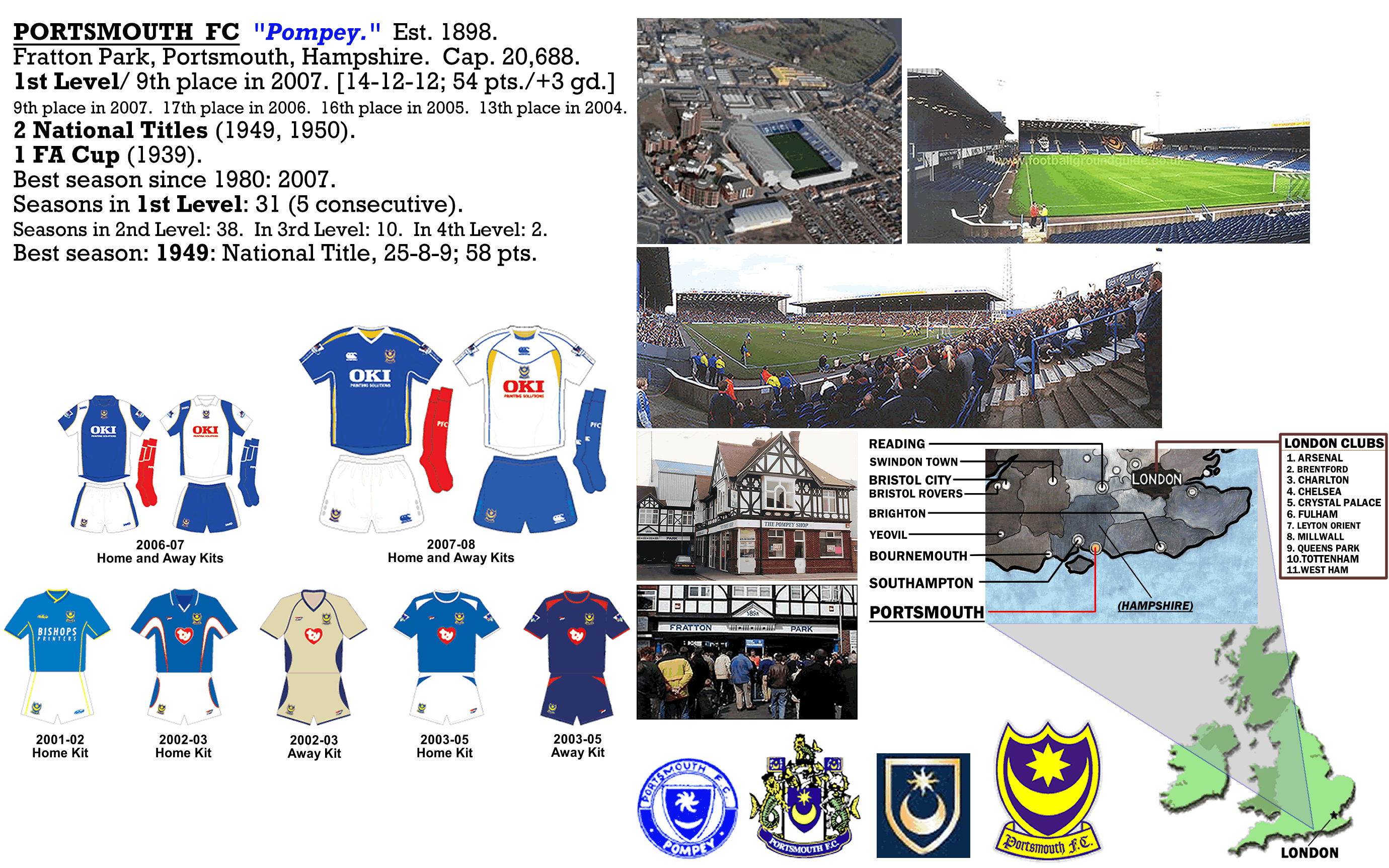
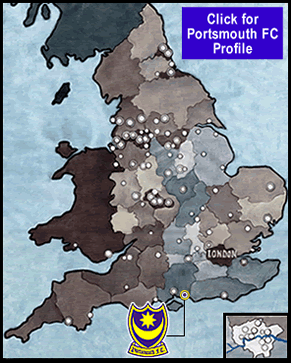
Portsmouth Football Club.
Today is Thanksgiving in the USA, and I am giving thanks to the roof over my head, my family and their continued health and happiness, this old e-machine that can still (slowly) do the work I demand of it, and to the fact that my favorite sporting club is sitting in 6th place in one of the top leagues in the world. That would be plucky Portsmouth FC of the English Premier League, affectionately known as “Pompey.” Portsmouth was the traditional home base of the British Navy, all through the years of Empire, and the naval presence there is still strong. It is a very working-class town, as opposed to the more upper-middle class Southampton, 15 miles northwest. The two have one of the biggest rivalries in English football, and there was much glee in Portsmouth when Southampton FC were relegated in 2005. Pompey almost were relegated the following season, but pulled off one of the greatest escapes in Premier League history, going from 9 pts. down, to safety, in the last 10 games. They did this by virtue of two things: the return of much-loved manager Harry Redknapp earlier that season, and a cash-infusion from new ownership that allowed the wheeler-dealer Redknapp to make some crucial player acquisitions during the January transfer window. I decided on Portsmouth as my club because I love their passionate fans, and I am drawn to teams that have to struggle to keep their heads above water. Portsmouth, in their dilapidated stadium, with their working class fan base, punching above their weight, really reminded me of the soccer club I lived and died for as a youth…the Rochester Lancers of the old North American Soccer League. I later found out that Harry Redknapp had played, and coached, in the NASL, with the Seattle Sounders from 1976 to 1979. Here he met Milan Mandaric, then owner of the original San Jose Earthquakes. Harry had come up through the West Ham United system, playing midfield for the East London club from 1965-72, with 147 appearances and 7 goals. He ended his English career at Bournemouth in 1976, and then went to the US . Years later, when Mandaric decided to buy (and basically rescue and revive) Portsmouth FC (he loved how devoted the Pompey faithful were), he appointed Redknapp (who had just managed West Ham for 6 seasons) as Director of Football. Redknapp eventually became manager in 2002, guiding Pompey back to the top flight for the first time in 15 years, in 2003. So that NASL vibe I felt with Portsmouth was real.
Portsmouth FC has less cash-flow worries since Alexandre Gaydamak bought the club in 2005. Since avoiding relegation in 2005, they have been steadily improving. They finished 9th last season, just missing out on qualifying for Europe, in the UEFA Cup. Under Harry, Pompey has always played a brand attacking football, and the team has been fun to watch these last 5 seasons. Redknapp is much loved by his players, and has an avuncular style that has endeared him to the public. His acumen in the transfer market is legendary. He’s kind of like a used car salesman, but with footballers. Now with more cash at his disposal, Redknapp has been acquiring (and attracting) a higher caliber of player. Portsmouth’s defense (never a strength) has improved considerably, and they recently won an unprecedented 4 straight games on the road. The club is also improving infrastructure like it’s training facillities, and they finally put a roof over the re-built away stands. Fratton Park is still the smallest venue in the Premier League, but the club plans to build a new, state of the art stadium/commercial complex/luxury co-op development, on land reclaimed from the English Channel. Last time I checked, it was slated for a 2010 completion, but I’ll believe it when I see it. Whatever the outcome of the perpetually delayed new stadium, Portsmouth FC”s future looks bright.
Special thanks to these websites: FootballGroundGuide[dot]com[dot]uk, and Stadium Guide[dot]com for the photos, and Colours-Of-Football[dot]com for the kits.
November 18, 2007
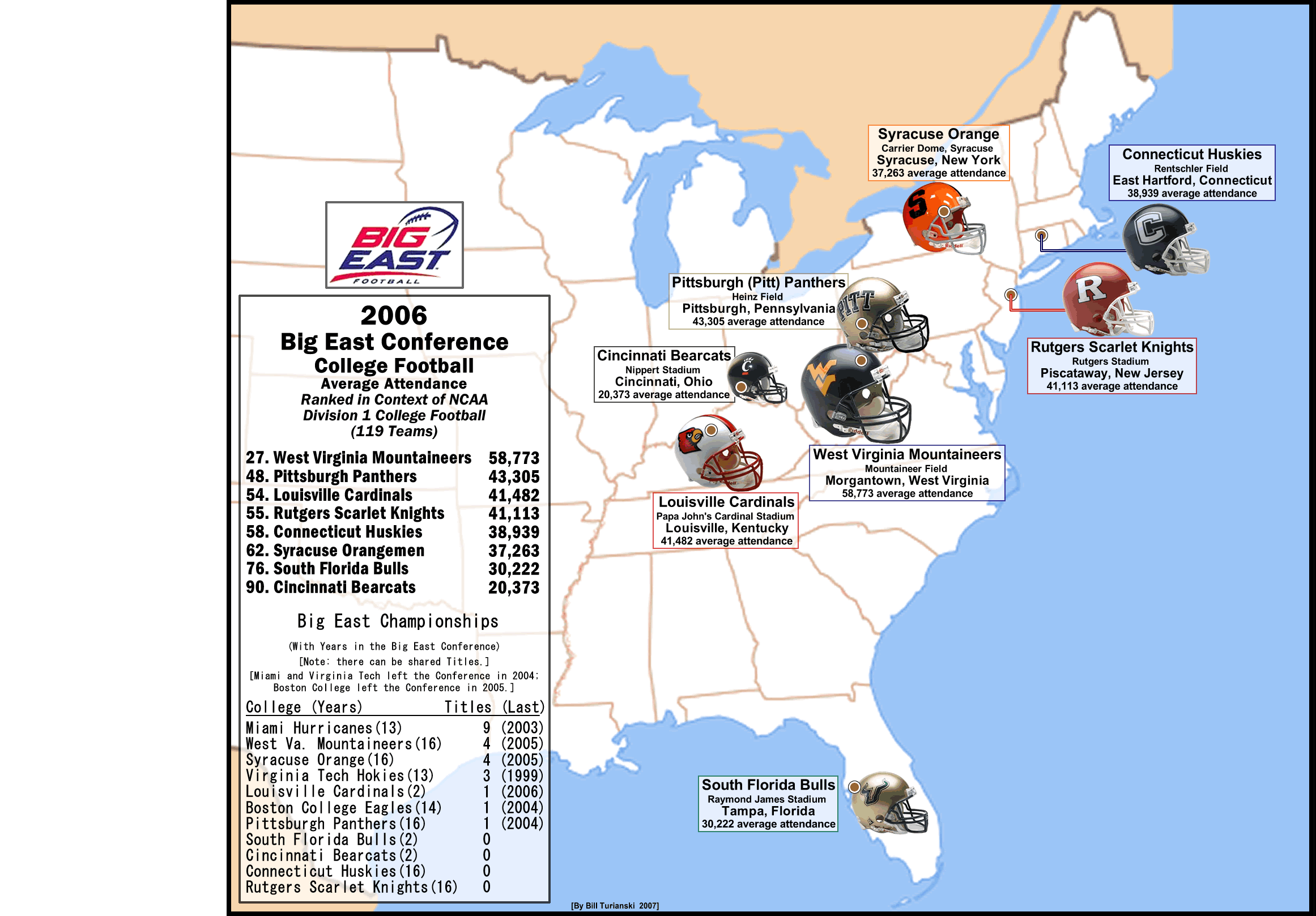
College Football, The Big East. Attendance Map, 2006.
The Big East Conference was founded in 1979, but did not begin playing football until 1991. Before then, it had been primarily a stage for the basketball programs of it’s constituent schools. Miami’s presence gave Big East football instant credibility, and the Hurricanes dominated, winning 9 titles in 13 years. When Miami left (along with Virginia Tech) to join the ACC in 2004, there was a gaping hole, only partially filled by the additions of Cincinnati, Louisville, and South Florida. Boston College also left to join the ACC, in 2005. In 2005, West Virginia claimed the Big East title, and won the Sugar Bowl (over Georgia), finishing #5 nationwide, in the AP poll. In 2006, Louisville won the title, which they sealed with a triple-overtime win over upstart Rutgers. Louisville went on to win the Orange Bowl (over Wake Forest), and finished #6 in the AP poll. West Virginia finished #10, and Rutgers were #12. The state school of New Jersey, Rutgers were a perennial doormat in football up until 2006. Their surprising success, along with the rise of Connecticut and South Florida as football powers, points to a promising future for Big East football.
November 16, 2007
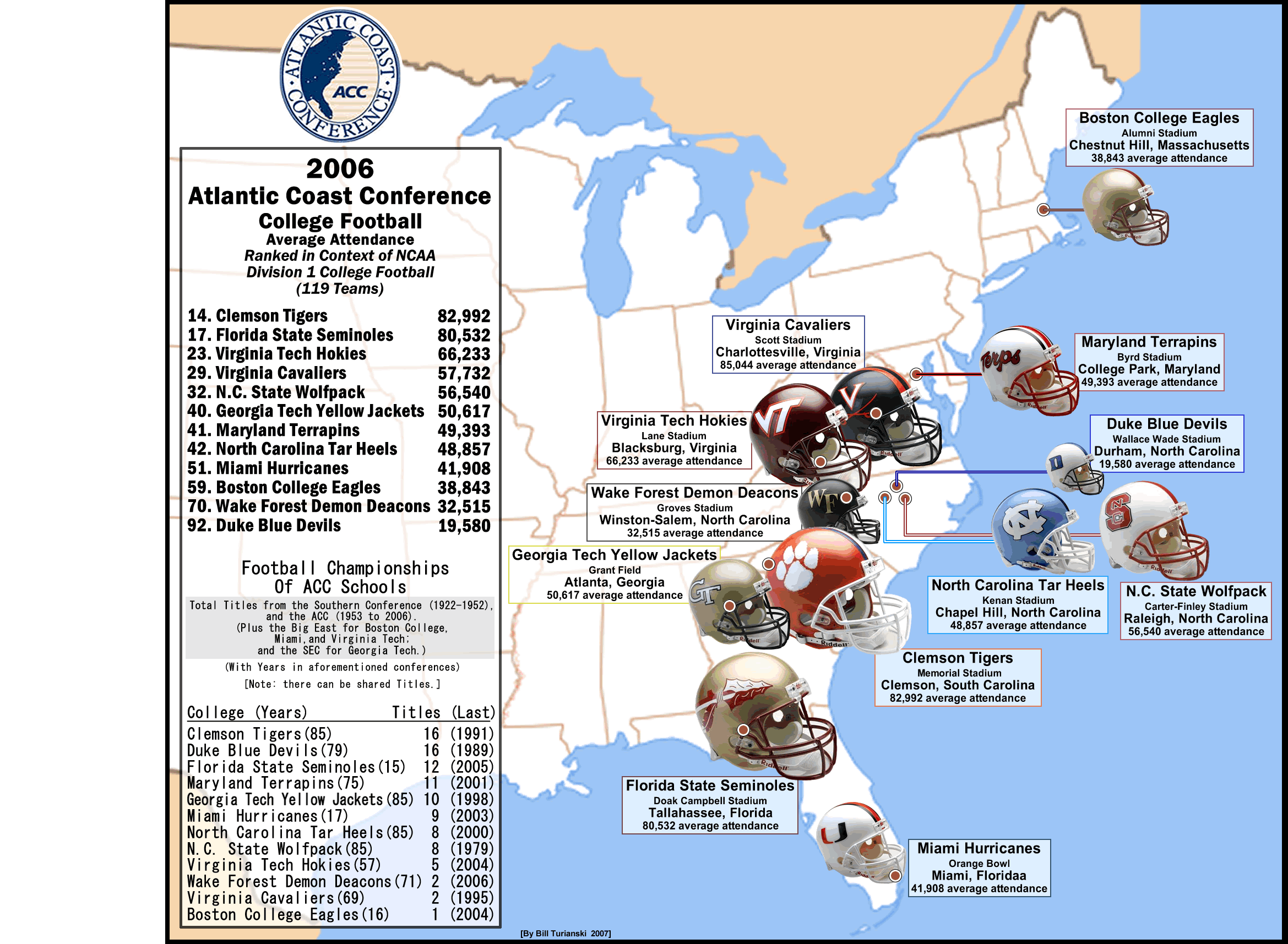
College Football, The ACC. Attendance Map, 2006.

The Atlantic Coast Conference was formed in June, 1953, and begun play for football that fall. The 7 founding members had left the Sothern Conference, primarily due to that conference’s ban on post-season play. Charter members were Clemson, Duke, Maryland, North Carolina, North Carolina State, South Carolina, and Wake Forest. Virginia joined the following year. South Carolina opted to become an independent in 1971 (they are now in the SEC). Georgia Tech joined in 1978, and Florida State joined in 1991 (both from the old Metro Conference, a fore-runner of Conference USA). In 2004, Miami and Virginia Tech left the Big East, in a rather acrimonious fashion, and joined the ACC. A year later, Boston College followed suit. This made the ACC a 12-team conference. In 2005, the ACC began divisional play, with a Championship game played each December in Jacksonville, Florida. The Atlantic Division is made up of Boston College, Clemson, Florida State, Maryland, N.C. State, and Wake Forest. The Coastal Conference is comprised of Virginia Tech, Georgia Tech, Miami, Virginia, North Carolina, and Duke.
With regards to the Conference Titles chart, I did not list the 3 Dixie Conference titles that Florida State won (1948-1950), as the conference was a pretty small concern. 4 of the 9 schools in it then did not field football teams. The conference, now called the USA South Athletic Conference, is in Division 3. The list shows Duke with 16 conference titles, and that is not a typo. Duke fielded some successful football teams during it’s time in the Southern Conference (1928-1952), and were champions, or co-champions, of the first 3 ACC seasons (1953-1955). Of course now, Duke focuses it’s energies on it’s huge basketball program, to the detriment of it’s sparsely attended football program. Thanks to the Midwest Collectibles website.
November 14, 2007
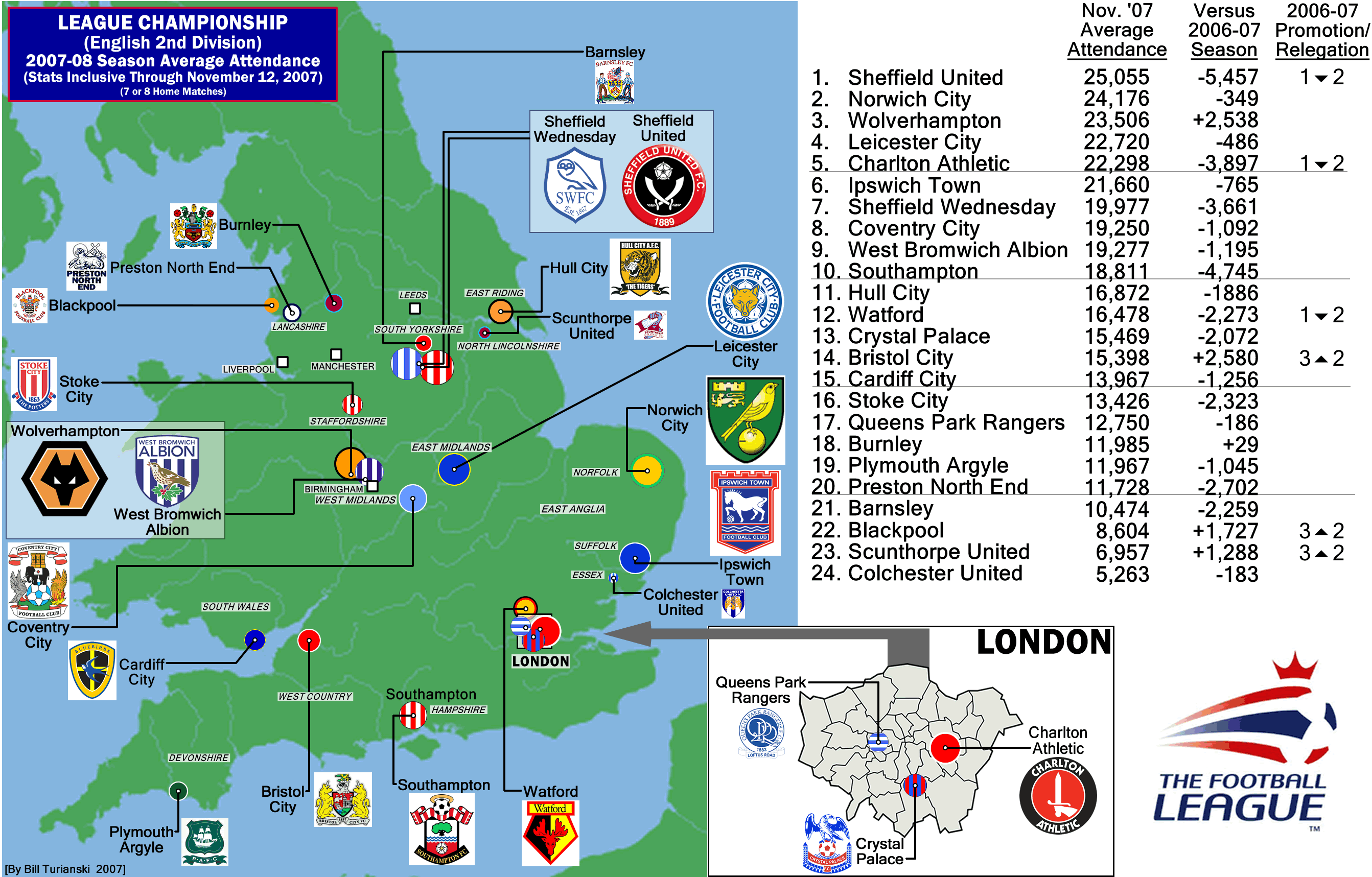
England, 2nd Division: attendance update, November, 2007.
…
The League Championship is the second level of football (soccer) in England. It is the 12th highest-drawing professional domestic league in the world. Last season, the league averaged 18,221 per game. However, this season attendance is down over 10% . The only non-promoted club with a significant gate increase is Wolverhampton. The West Midlands-based club, which was last in the top flight 4 seasons ago, have maintained a solid fanbase, and yet again are pushing for promotion. They sit 5th in the table, which is a promotion play-off position (first and second place win automatic promotion to the Premier League; 3rd through 6th place vie for the third promotion spot). As the season progresses, and clubs become involved in both the push for promotion spots, and in the struggle to avoid relegation (the bottom three clubs), attendances will likely increase.
November 12, 2007
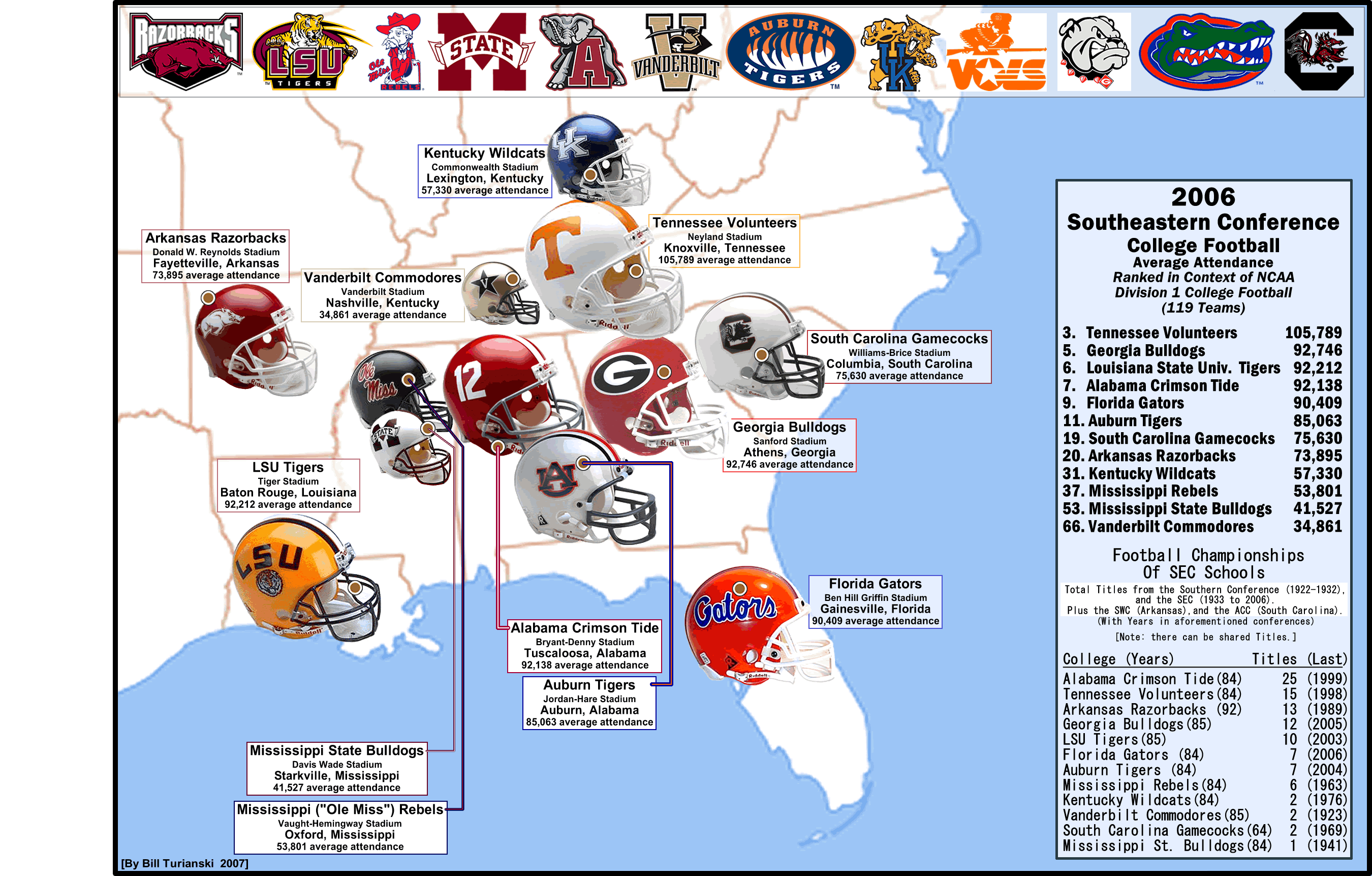
College Football, The SEC. 2006 Attendance Map.

The Southeastern Conference (or SEC) was formed in December 1932, and began play in 1933. It was formed when 13 schools from the Southern Conferencece left to form their own conference. 10 of these schools still play in the SEC. At the end of 1991, the SEC expanded to 12 schools, with the addition of Arkansas (from the disbanded Southwest Conference), and South Carolina (who had been independent). Since 1992, the SEC has been split into 2 divisions. The Eastern Division is made up of Florida, Georgia, Kentucky, South Carolina, Tennessee, and Vanderbilt. The Western Division comprises Alabama, Arkansas, Auburn, LSU, Mississippi (usually referred to as “Ole Miss”), and Mississippi State. The winner of each division plays in the SEC Championship Game, held each December at the Georgia Dome, in Atlanta. Here are the biggest rivalries in the SEC. Alabama vs. Auburn (“The Iron Bowl”). Florida vs. Georgia (“The World’s Largest Outdoor Cocktail Party”). LSU vs. Arkansas (“The Battle for the Golden Boot”). Alabama vs. Tennessee (“The Third Saturday in October”). Florida vs. Tennessee (“The Third Saturday in September”). Auburn vs. Georgia (“The Deep South’s Oldest Rivalry”). Thanks to the NFL Helmet Store, Midwest Collectibles, Elite Deals, CBS Sports Store, and Sports Unlimited Inc. websites.
November 9, 2007
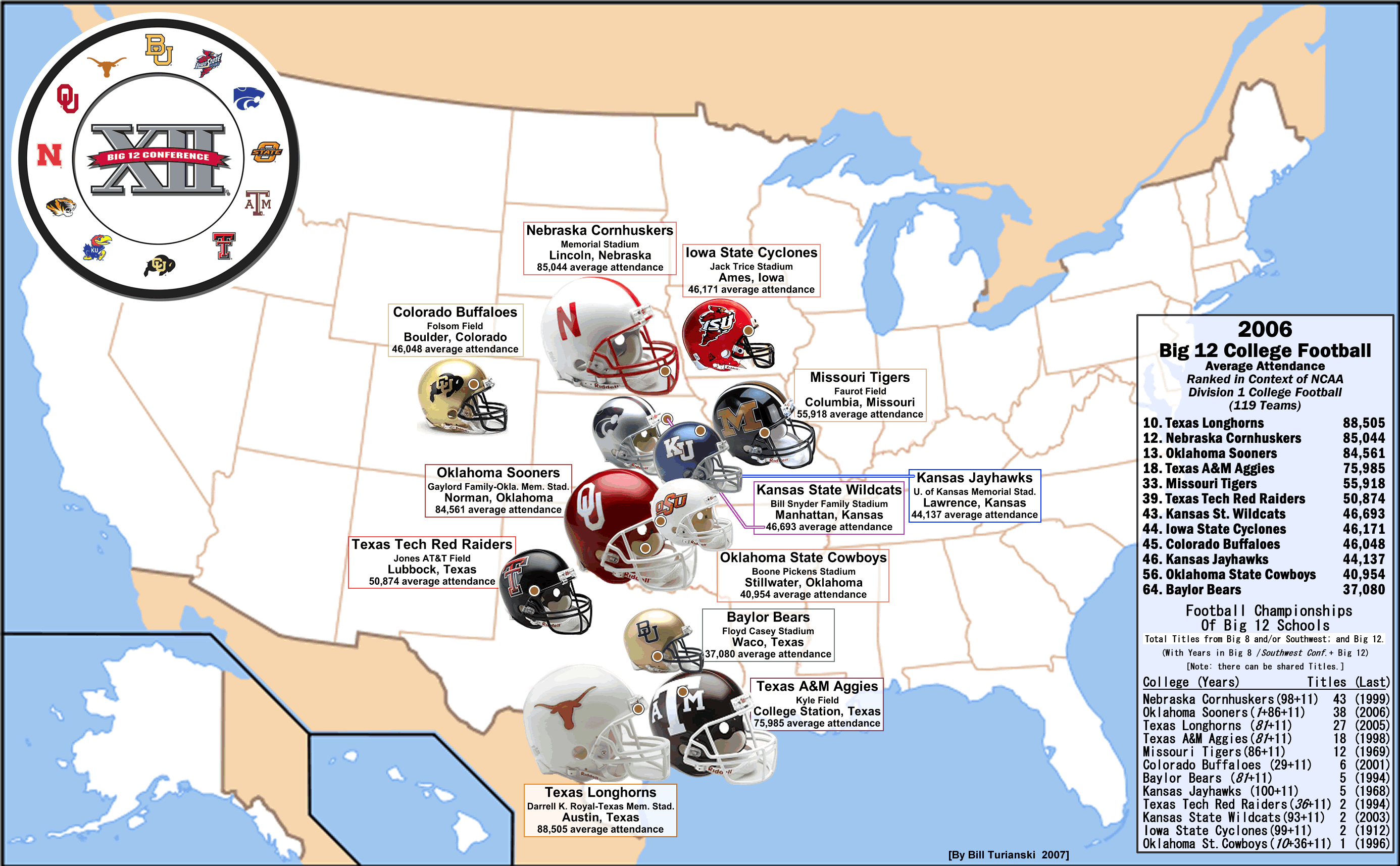
College Football, The Big 12. 2006 Attendance Map.

The Big 12 was formed in 1994, and began play in 1996. The schools of the Big 8 joined with four Texas-based schools from the disbanded Southwest Conference. Although the Big 12 does not officially claim the history of the Big 8 as it’s own, most fans see the Big 12 as an enlarged version of the old Big 8. [The chart on this map lists total conference championships as the sum of Big 8+Big 12 Titles; and the sum of Southwest Conference+Big 12 Titles.]
Keeping with the rivalries theme of my last NCAA football map, here are the main rivalries in the Big 12. Oklahoma vs. Texas: “the Red River Shootout” (politically correct name is ”Red River Rivalry”). Oklahoma vs. Oklahoma State: “the Bedlam Series.” Texas vs. Texas A&M: “the Lone Star Showdown.” Texas A&M vs. Baylor: “the Battle of the Brazos.” Kansas vs. Missouri: “the Border War” (p.c. version: “Border Showdown”). Kansas vs. Kansas State: “the Sunflower Showdown.” Five of these annual match-ups have trophies for the winner (the A&M-Baylor game doesn’t). Three more rivalries also have trophies, but aren’t big enough (I guess) to have an actual name. Thanks to the NFL Helmet Store, Elite Deals, Joes Sports, and Midwest Collectibles webites. Also thanks to All-Time Database (http://nationalchamps.net/NCAA/database/). I will do the Southeastern Conference next.
November 8, 2007
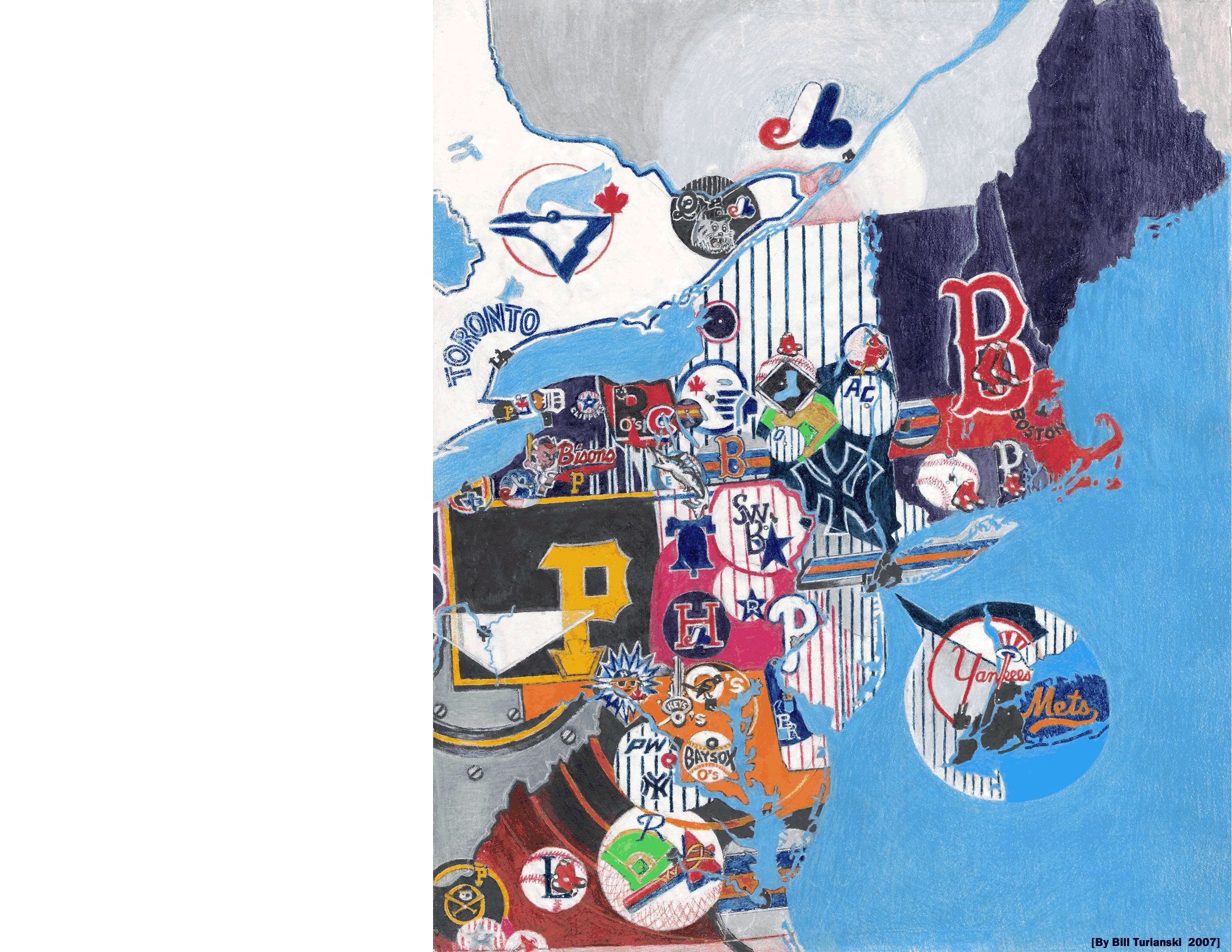
Baseball of the Northeast, 1992.

I made this map in 1992, back in the days before the internet: my source for team information was “The Baseball Almanac, 1991″ by Dan Schlossberg. The minor league team’s affiliations are noted by small crests or icons of the parent club. The green and tan baseball diamond in the center of New York State represents Cooperstown and the Baseball Hall Of Fame. Many of the smaller minor league teams shown here are defunct, like the Albany-Colonie Yankees, the Geneva Cubs, the Watertown Indians, the Welland (Ontario) Pirates, the St. Catherines (Ontario) Blue Jays, and the Utica Blue Sox. Some of the logos here I took the liberty of inventing, like the Blue Sox crest, and the one for the Frederick Keys, in Maryland. I carved out domains for the Major League teams, trying to be as realistic as possible, while still maintaining a graphic balance. The New York Yankees got all of Upstate NY, northern and coastal New Jersey, and Fairfield County, Connecticut. The New York Mets got all of Long Island, NY, plus a Met-colored bar cutting a swath through northern NJ. This style of representing fan bases proved too problematic and arbitrary, though. My maps have evolved to where I now usually depict team crests larger or smaller, depending on average attendance. Showing each team’s “sphere of influence” would entail a census-taking of Herculean scale, and would ultimately be open to dispute.
November 6, 2007
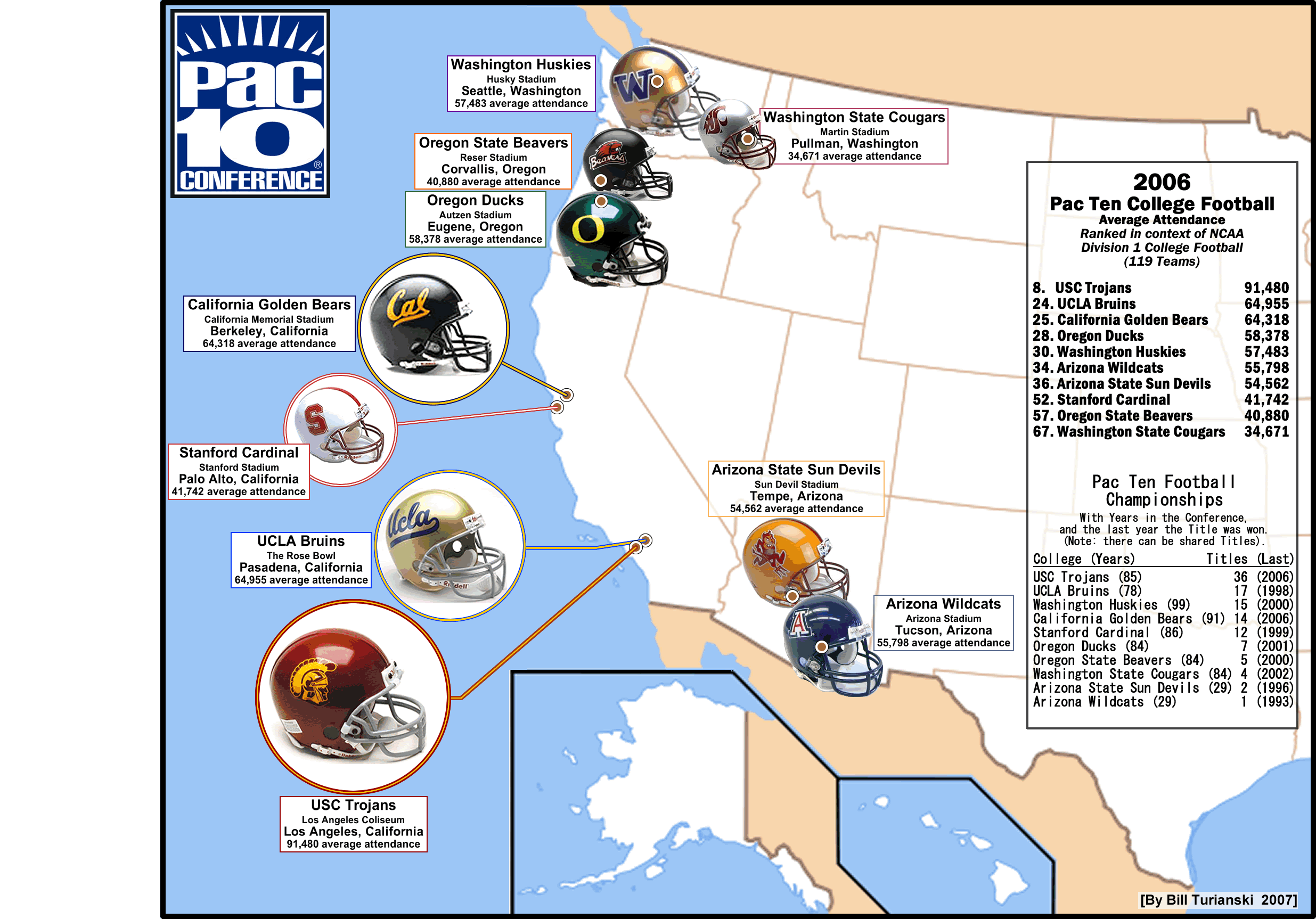
College Football, The Pac-Ten. 2006 Attendance Map.

Any sports fan knows of the galvanizing power of a good rivalry. The Pacific Ten (or Pac-Ten) is great because the conference is essentially comprised of 5 separate in-state rivalries. The rivalries are: the Washington Huskies and the Washington State Cougars; the Oregon Ducks and the Oregon State Beavers (aka “the Civil War”); Stanford Cardinal and California Golden Bears (San Francisco Bay area); Southern Cal Trojans and UCLA Bruins (Los Angeles area); the Arizona Wildcats and the Arizona State Sun Devils. In fact, the 2 Arizona colleges joined the conference as a pair, in 1978. Thanks to the NFL Helmet Store, Midwest Collectibles, and Elite Deals websites.