billsportsmaps.com

November 5, 2007

NCAA Football, The Big Ten. 2006 Average Attendances.

Filed under: NCAA Gridiron Football,NCAA/fb-Big Ten — admin @ 7:26 am

big_ten_segment.gif


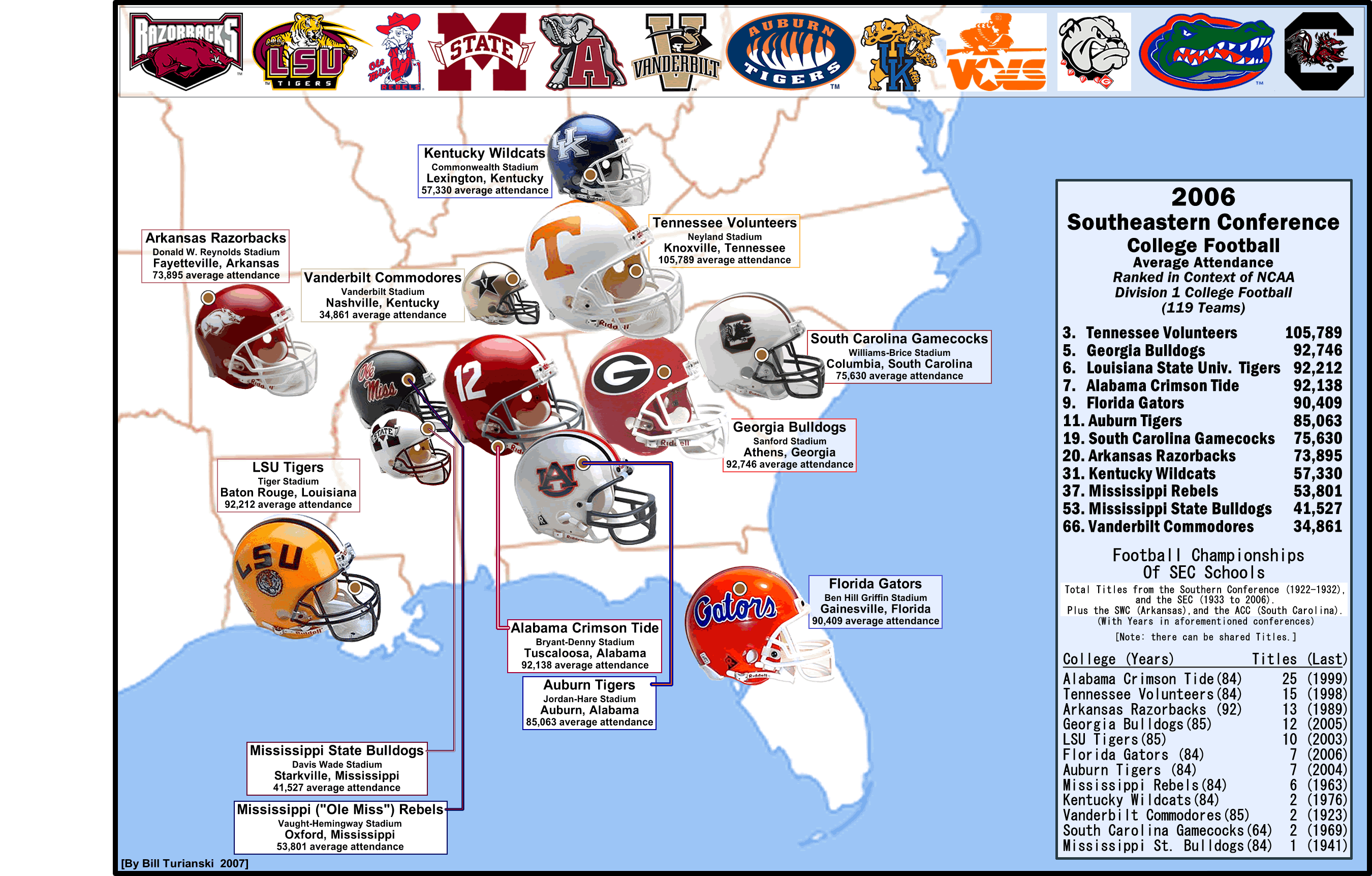
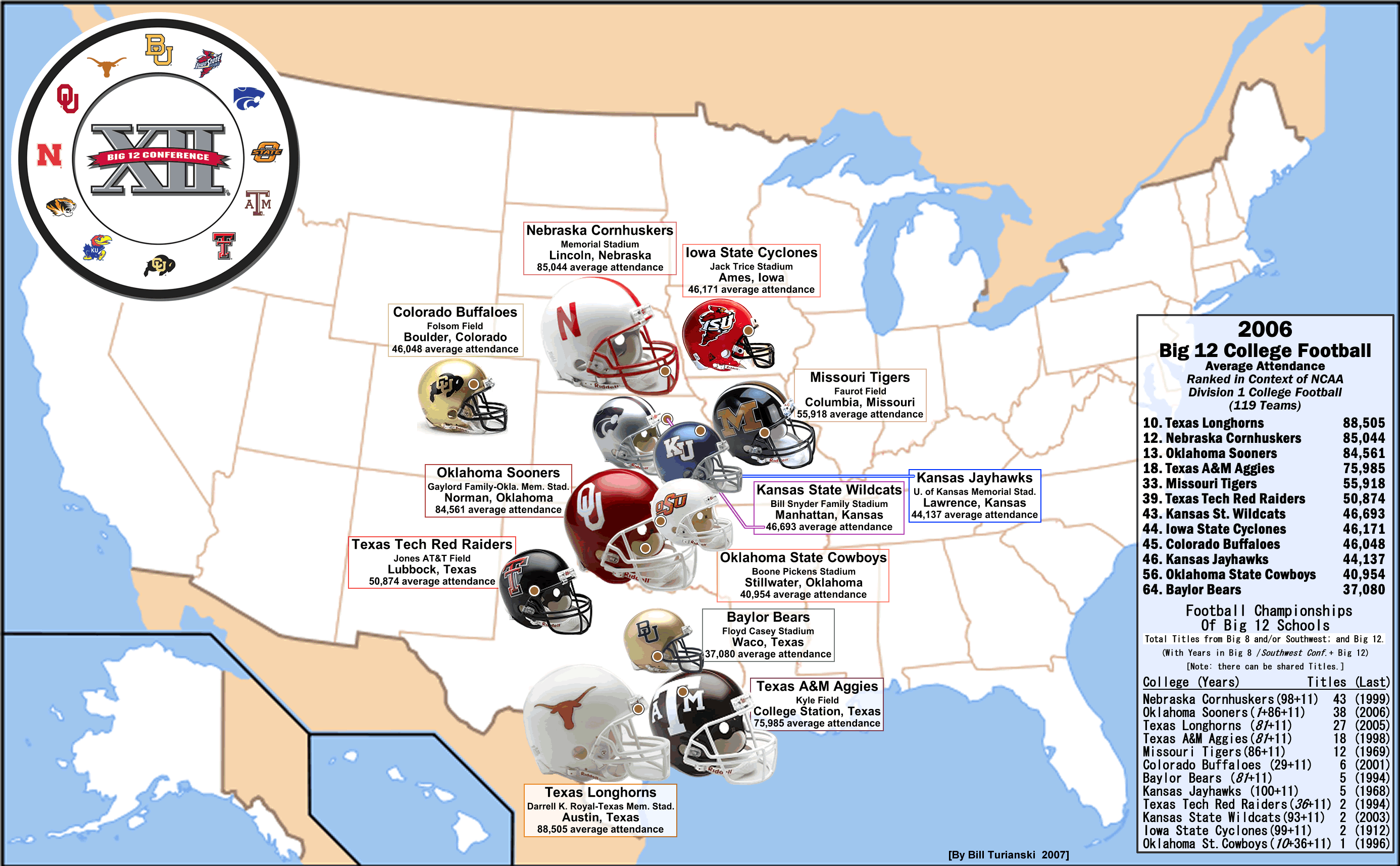
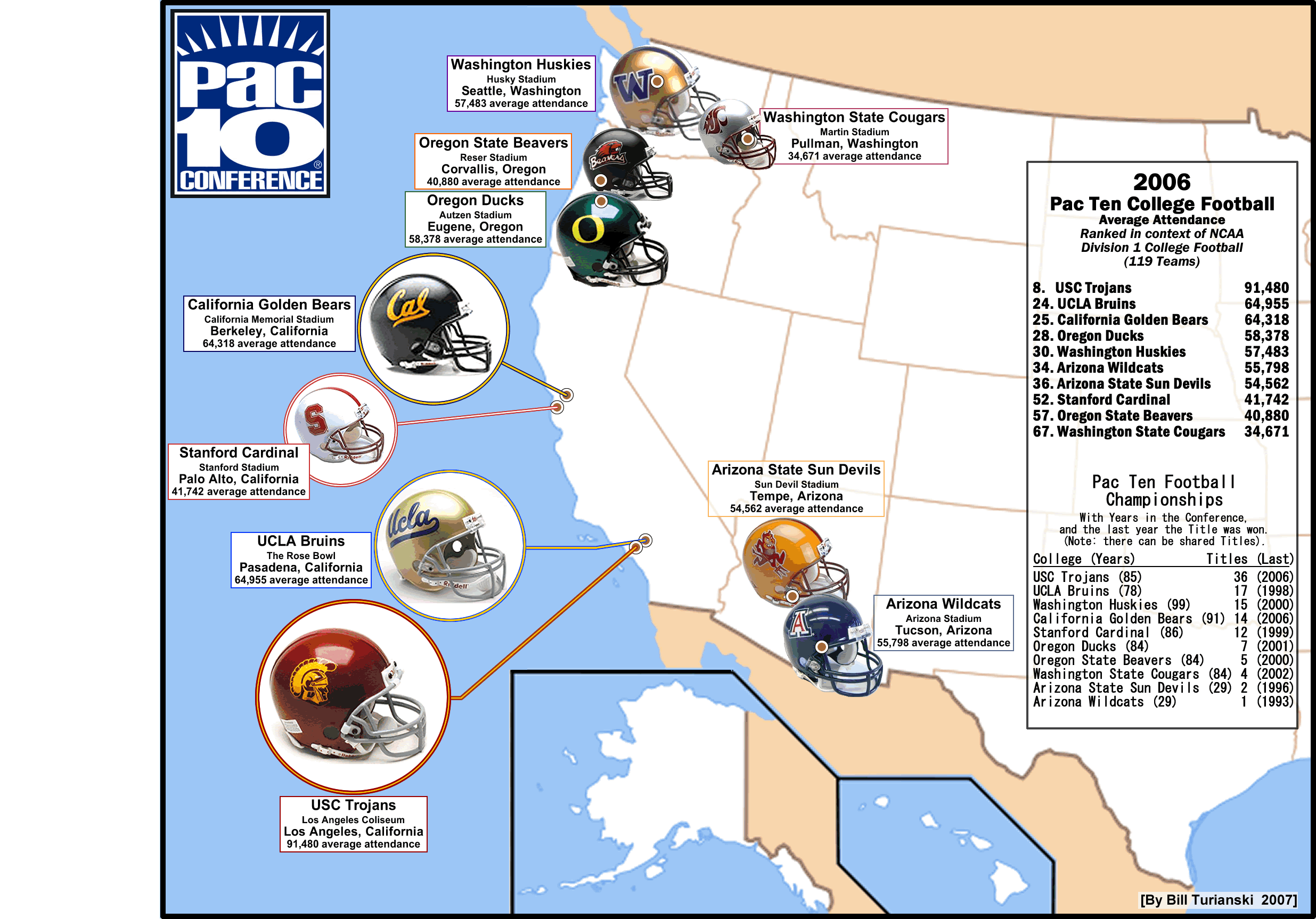
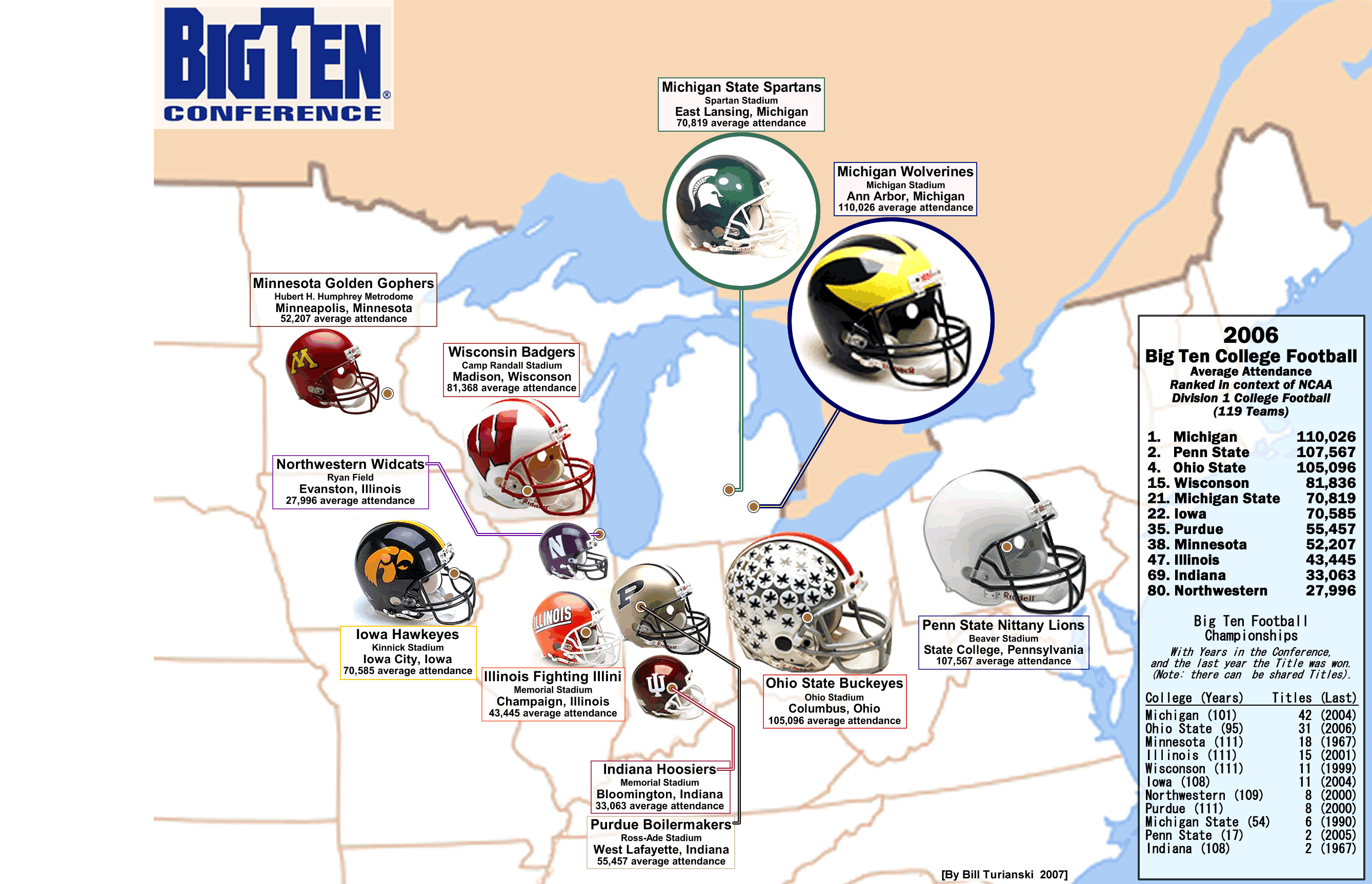
The Big Ten is actually an 11-team conference, since Penn State joined in 1990.  It boasts 3 of the top 4 draws in all of American collegiate football (Tennessee is third).  The amount of spectators that the big-time college football programs draw is staggering.  In 2006, 57 teams had average attendances over 40,000.  The helmets on this map are sized proportionally to reflect the teams average gate.  Thanks to the NFL Helmet Store for the photographs.  

November 4, 2007

Japan: The 2006 J-League, with attendance figures.

Filed under: Japan — admin @ 2:10 pm

j-league_segment2.gif


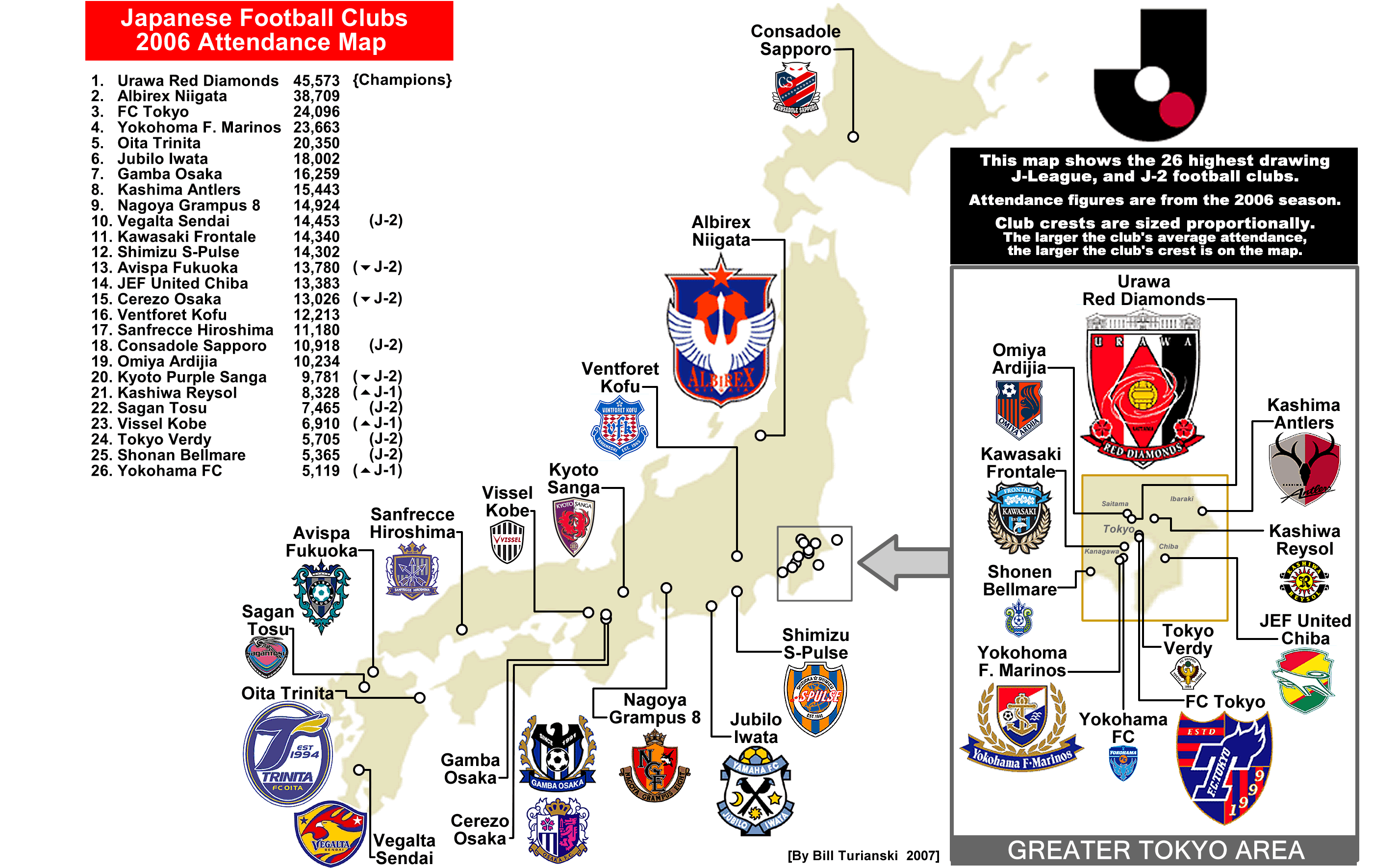
I like the J-League because it has sprung up out of nowhere, and has such maniacal fans.  The fans make the games a colorful spectacle  Also, the caliber of play is better than one might expect, and you are likely to see some pretty nice goals here.  The Urawa Reds are poised to become Japan’s first “big” club.  They draw the biggest crowds (45,500 average), and finally won the league title last season.  Albirex Niigata draw extremely well (38,700), in spite of being a mediocre club.  FC Tokyo, Yokohama F. Marinos, and Oita Trinita average in the 20,000 to 24,000 range.  There are 10 clubs with respectable gates of between 13,000 and 18,000.  The J-League averaged 18,292 per game in 2006.

November 1, 2007

The Golden Age of Baseball.

Filed under: Baseball,Hand Drawn Maps,Retro maps — admin @ 8:00 pm

mlb_golden_segment5.gif


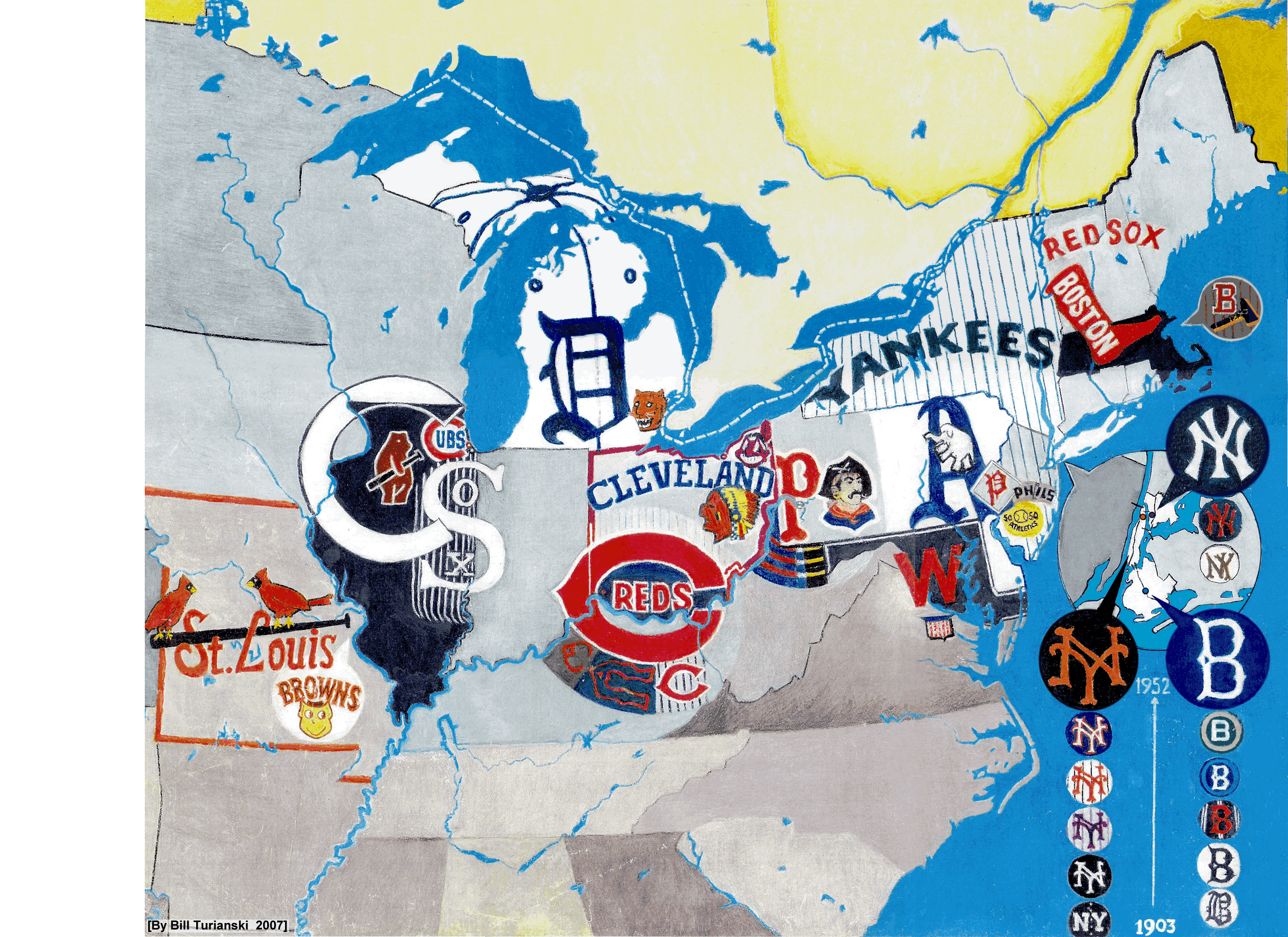
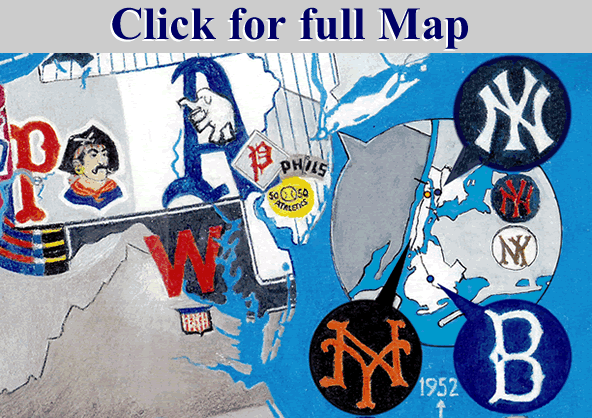
Between 1903 and 1952, there was no franchise movement among the 8 National League and 8 American League baseball clubs.  This map shows all 16 clubs, with emblems, cap crests and uniform details from that time period.  Included is an inset map of the Greater New York City area.  In it, the locations of Yankee Stadium (NY Yankees), the Polo Grounds (NY Giants), and Ebbets Field (Brooklyn Dodgers) are marked.   The evolution of these three clubs’ crests and the evolution of the ball clubs’ colors are also shown here.  This map was drawn in 1993, and would not have been possible without the incredible book “Baseball Uniforms of the 20th Century” {at Amazon, here}.  That book was researched, written, and illustrated by Marc Okkonen.  His artwork for this book can now be found as the main uniform database (from 1900 to 1994) for the Baseball Hall of Fame site “Dressed to the Nines – A History of the Baseball Uniform“. 

October 28, 2007

English Premier League, October 2007 attendance update.

Filed under: Uncategorized — admin @ 8:08 pm

epl_segment2.gif

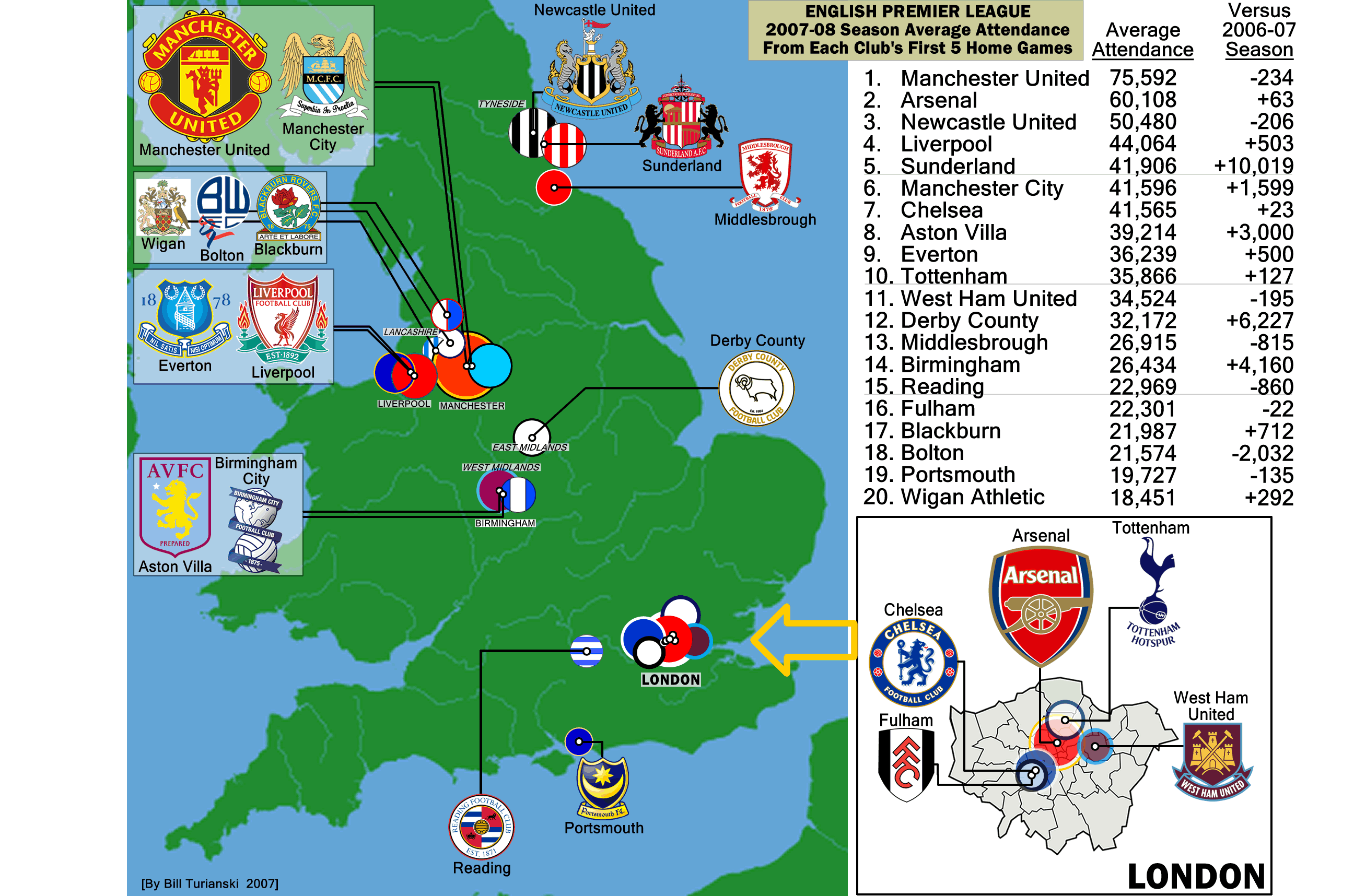
English Premier League attendance is up 5 % this season, but some of that can be explained by the addition of Sunderland.  The Black Cats have rocketed to the 5th best attendance in the country.  They are up 10,000 from last season’s final totals (when they won the 2nd Division).  As for the two other newly promoted clubs, Derby has an increase of 6,200, while Birmingham’s gate is up 4,100.  The 2 biggest gate increases of non-promoted clubs are at Aston Villa and Manchester City.  Both these clubs are seeing a rejuvenation on the field, and it has been reflected in the turnstiles.  Villa are 3,000 above last season’s average; City shows an increase of 1,600.  The club with the biggest downturn is Bolton, at -2,000.  They seem doomed to relegation, and it looks like the fans know it.    

October 26, 2007

Hockey of the North Atlantic, circa 1994.

Filed under: Hand Drawn Maps,Hockey — admin @ 10:26 pm

nhl_segment4.gif


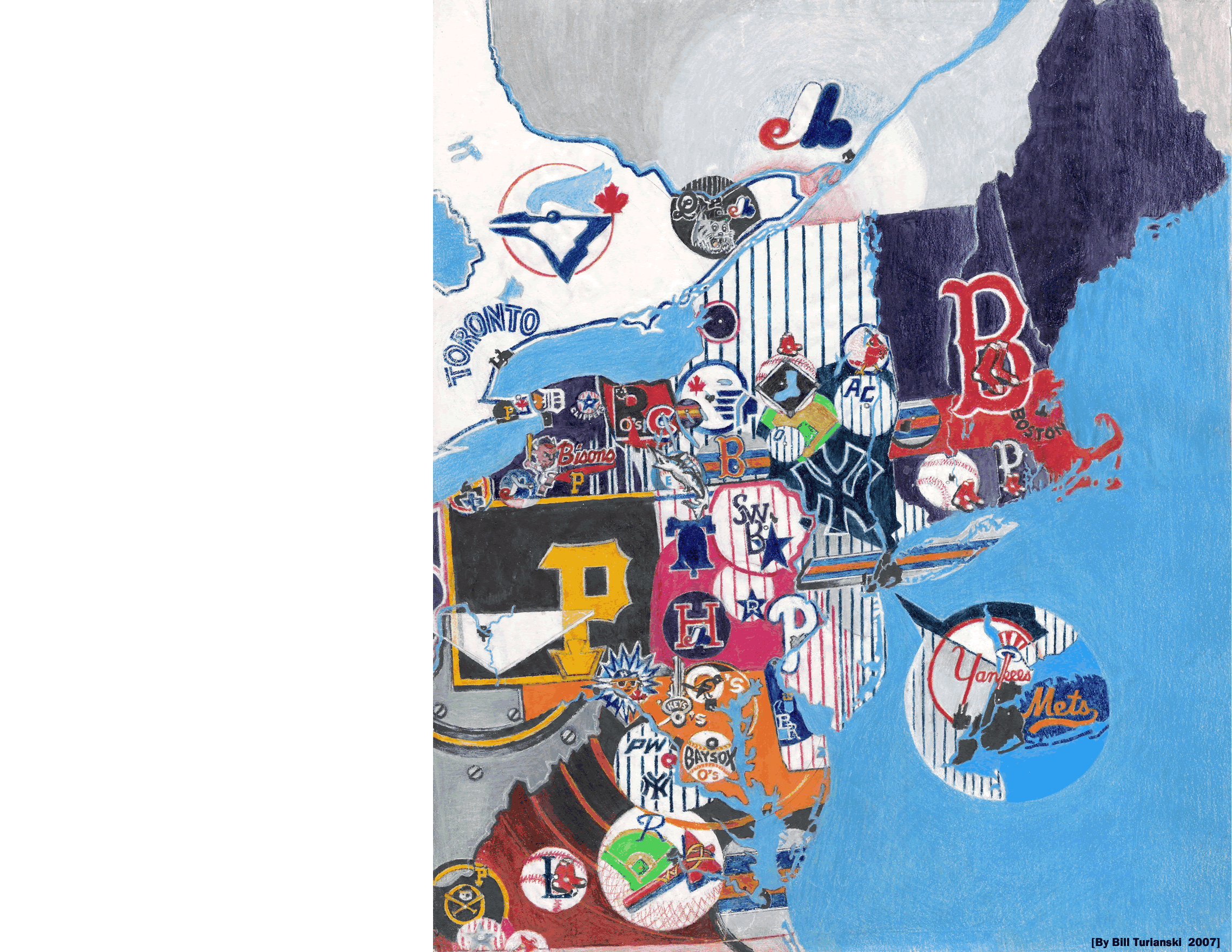
This is a map from my early days of sports maps, around 13 years ago.  As you can see, I was way more into the unbridled use of color and form, and less into accuracy.  I can remember, halfway into the map, deciding to put in minor-league hockey clubs, only to realize (pre-internet) that I had little chance of finding the logos for most of these small clubs.  So I improvised:  Ontario Hockey League trading cards I had helped; and for the Quebec Major Junior Hockey League teams, I just used their names alone.  This map has teams from the National Hockey League; the American Hockey League; the aforementioned OHL and QMJHL; and the East Coast Hockey League.  Minor league affiliations of AHL clubs are noted by small logos of their parent NHL clubs.  The player in the map’s legend is New York Ranger goalie Mike Richter, in his 1994 All-Star team uniform. 

October 24, 2007

1979: The North American Soccer League.

nasl_segment5.gif


This map shows the 1979 North American Soccer League, whose heyday was in the late 1970s. The league averaged 13,084 in 1979, and hit its high of 14,201 the following year. The league is most famous for the New York Cosmos and their star-studded roster, but the Vancouver Whitecaps were champions in 1979. The Cosmos had won it in 1977 and 1978, and won it again in 1980. The Cosmos rise (and subsequent fall) was meteoric, to say the least. Before they signed Pele, in 1977, they were playing in a rundown stadium on Randalls Island, drawing 5,000 at best. In the short span of four years, 1974 to 1978, the Cosmos’ average gate went from 3,578 to 47,856.

In 1979 the Cosmos averaged 46,690. That same season, Tampa Bay, Minnesota, and Vancouver all drew very well, between 22,000 and 27,000. Seattle, and somewhat surprisingly, Tulsa, were drawing respectable crowds in the 16,000-18,000 range. San Jose drew 15,000; Los Angeles, though fielding Johann Cruyff, only drew 14,000. Also, Chicago averaged only 8,000, a poor showing considering the size of the city and the fact that the team was competitive. In retrospect, that last attendance figure could be seen as the writing on the wall. For if a decent team, in a huge city, in middle America, couldn’t pull 10,000 through the turnstiles, then the viability of the whole project was in doubt. Especially with the high salaries of the overseas players.

Growing up in Rochester, New York, I was a devout follower of the Rochester Lancers. Opposing players dreaded the barracks-like atmosphere of their crumbling concrete stadium and its potato patch field. This gave the scrappy, Slavic-heavy Lancers squad a solid home advantage. Before game time, me and my brothers would go up to the top of the stadium and watch the traffic pulling in, trying to will more fans through the turnstiles. In 1979, Rochester had its best gate, 8,600. But it wasn’t enough to keep them alive, and after the 1980 season, the Rochester Lancers of the NASL dissolved. The NASL was dead to me at that point. It died for real, 4 years later. It had existed from 1968 to 1984. Its most vibrant period was from around 1976 to 1981. Pele, Eusebio, Rodney Marsh, George Best, Franz Beckenbauer, Bobby Moore, Giorgio Chinaglia, Trevor Francis, Carlos Alberto, and many more world football legends graced the rosters of NASL teams. The stodgy rules of the game were relaxed, with a striker-friendly 35-yard offside line, and shootouts instead of penalty kicks. The shootouts were awesome. It was a 5-second-Chinese-fire-drill, with the goal keeper usually rushing towards the shooter. The shooter then had to decide whether to elude the keeper, rifle the ball low, or chip it. Offense was further encouraged by awarding points in the standings for goals scored. So even if you lost, you could gets points in the standings.

But the league over-expanded, diluting on-field quality. The league expanded from 16 to 24 teams in 1977, and many franchises shifted to other cities. The clueless new ownership of many franchises aped the Cosmos, overspending on aging internationals and letting domestic talent languish on the bench. When the crowds fell off, the owners bolted. Some also believe that when FIFA awarded the 1986 World Cup to Mexico, instead of the US, it hastened the league’s demise. Still, the NASL ultimately contributed to the overall improvement of the quality of American (and Canadian) players, and their national teams. The US national team has been transformed from also-rans to a competitive force. And no American ever played in the English 1st Division before the NASL. John Harkes was the first, with Sheffield Wednesday, in 1990. Today, the USA is represented in England by the likes of Brian McBride, Clint Dempsey, Carlos Bocanegra, and Kasey Keller on Fulham; Marcus Hanhnemann and Bobby Convey on Reading; Brad Friedel on Blackburn; Tim Howard on Everton; Jonathon Spector on West Ham United, and Jay Demerit on Watford.

October 22, 2007

The American League, established 1901.

Filed under: Baseball,Hand Drawn Maps,Retro maps — admin @ 11:50 pm

mlb_al_segment2.gif


The World Series starts Wednseday, so this is a good time for a baseball map.  This map was drawn in 2005.  The map includes every ball club that has played in the American League, since its inception in 1901. The American League was created 25 years after the National League, which was formed in 1876.  Since 1903, the winner of each league has gone on to play in the best-of-7-game World Series.  Featured on this map are caps, logos, and cap crests from the past, with the years listed.  Franchise shifts are also noted.

October 19, 2007

UEFA Cup Group Stage, 2007-08.

Filed under: UEFA Cup / Europa League — admin @ 9:09 am

uefa_cup_segment2.gif


Franz Beckenbauer once called the UEFA Cup the “Losers Cup.”  But now, as president of Bayern Munich, he must watch his team compete in it.  Bayern’s average gate dwarfs much of the competition; Germany has the top 3 here.  There are some decent numbers from clubs like FC Copenhagen, FC Basel, and Zenit St. Petersburg, all drawing in the low 20,000s.  The UEFA Cup may be the second-tier cup of Europe,  but there are still solid attendance figures for most of the clubs involved.  

October 16, 2007

1977-78, England. Nottingham Forest, champions.

Filed under: Engl. 1977-78 Map,Retro maps — admin @ 10:47 am

1977_segment7.gif


    Click the icon to the right for just the kits and crests of the 22 clubs.

   22clubs1977.gif

Click the title to the right for just the map.  1977_map3.gif

I needed to do a good deal of research for this map and chart.  Here is a list of sites I utilized….  
1. Historical Football Kits  www.historicalkits.co.uk.  The kits I used are from this site.  Check it out.  It rules.   2. Behind the Badges  www.behindthebadges.co.uk  Origins of football club badges.   3. Footy-mad sites  www.footymad.net.  They have sites for all 92 clubs in the English League.  I go to the Portsmouth site every few days (www.portsmouth-mad.co.uk).  Great reporting and commentary.  Plus, they have the League history of each club.  I used this for the relegations/promotions part of the chart.   4. Classic Kits  www.kitclassics.co.uk.  They feature away kits, too.   5. European Football Statistics  www.european-football-statistics.co.uk. This is where I get my attendance figures.   6.   I can’t seem to link this next one , so google ”Nigel’s webspace” if you like old cards and magazines.  Where I found the old Forest pennant.   7. Sykes Online  www.sykesonline.com. Where I found the Leeds smiley badge, a design that really belongs on some 1970s prog-rock album cover.   8. Martin’s Coventry City Page  www.martinwildig.com.   9. Pride of Anglia  www.tmwmtt.com. Ipswich Town site.   10. Bristol City Supporter’s Trust www.bristolcityst.org.uk.   10. Nottingham Forest FC  www.nottinghamforest.premiumtv.co.uk.   11. BBC www.bbc.co.uk.   12. Wikipedia www.en.wikipedia.org.   13. E-Bay www.ebay.com.   14. Russell Davies www.russelldavies.typepad.com/planning/2004/09/.  His eulogy for Brian Clough.
  

October 12, 2007

Portugal. Attendance map, 2006-07.

Filed under: Portugal — admin @ 8:59 am

portugal_segment43.gif 

The big 3 in Portugal is Benfica (31 titles),  Porto (22 titles),  and Sporting Club Portugal [aka Sporting Lisbon] (18 titles).  They have won all but 2 league titles.  Belenenses won the league in 1946 , and Boavista won it  in 2001. 

Portugal’s domestic league is good enough to get them up to 3 spots each year in the Champions League.  Portugal’s current national league ranking by UEFA is #6 in Europe.   

« Newer PostsOlder Posts »

Powered by WordPress