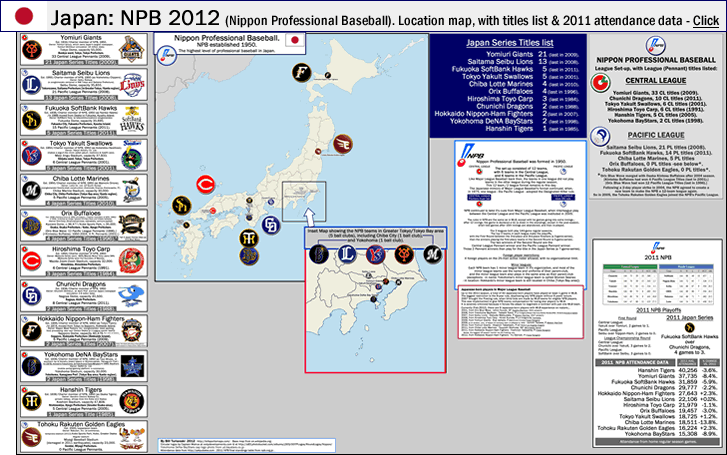
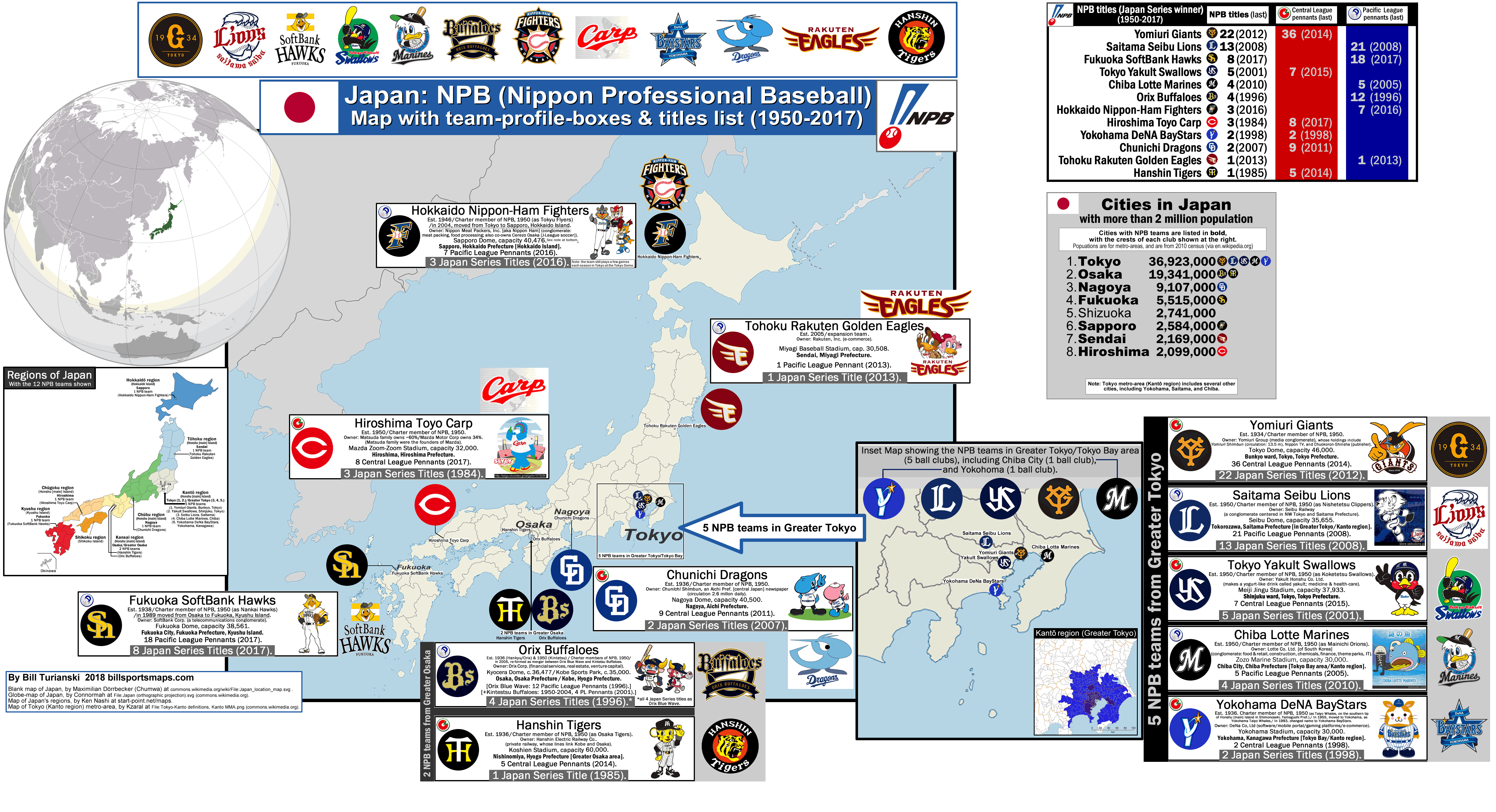
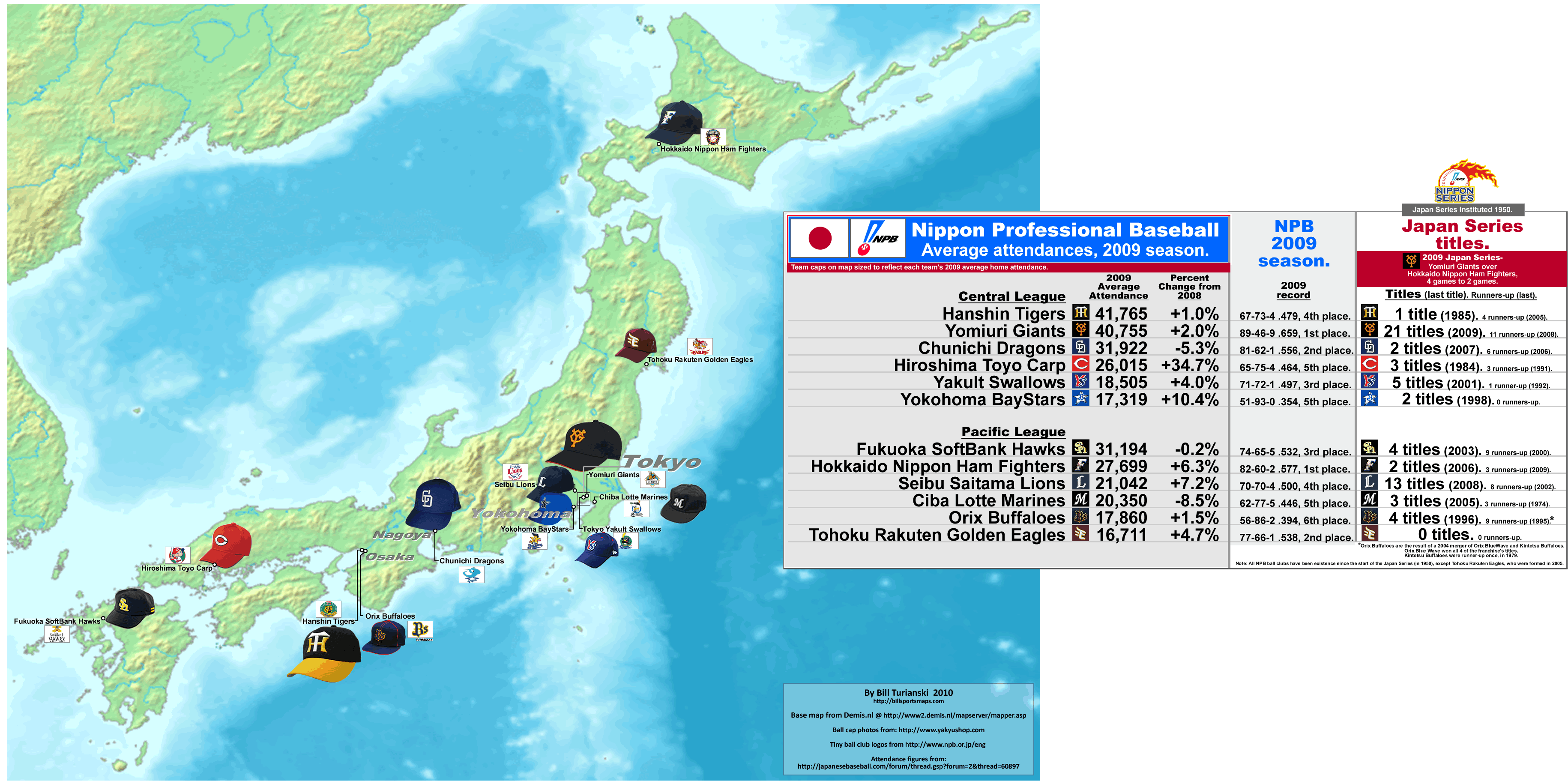
NPB location map w/ titles list and 2011 NPB attendance data
…
…
English language version of official NPB site, http://www.npb.or.jp/eng/.
‘2011 NPB season‘ (en.wikipedia.com).
Below, 2011 attendance data. Note: attendance figures that might have been affected by the March 31 2011 earthquake / tsunami (directly or indirectly) include Yomiuri Giants, Saitama Seibu Lions, Chiba Lotte Marines, Tohoku Rakuten Golden Eagles, Tokyo Yakult Swallows, and Yokohama Bay Stars. The 2011 baseball season in Japan was delayed by the Tohoku earthquake. Hardest hit were the northern Japan-based Tohoku Rakuten Golden Eagles – the quake severely damaged the Miyagi Baseball Stadium, and the team did not return to Sendai to play their home games until April 29 2011.
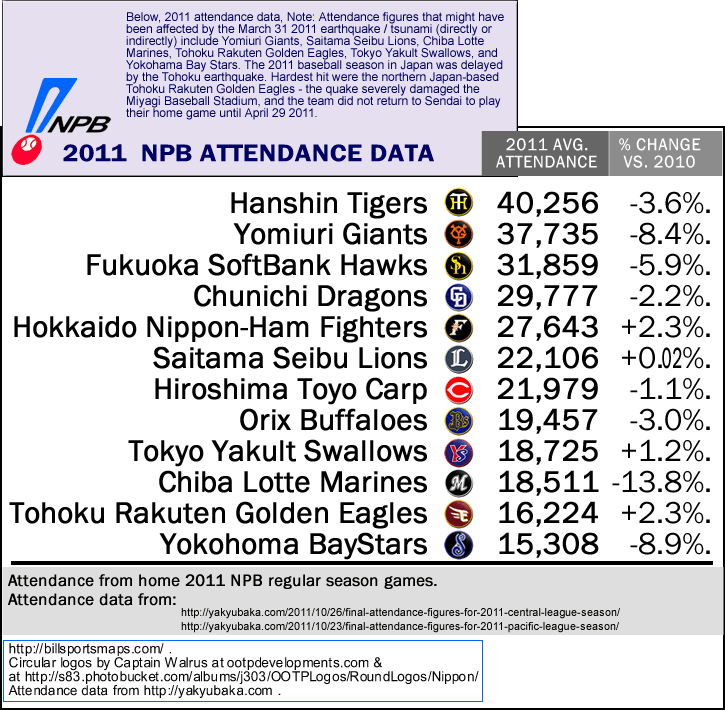
Attendance data from, yakyubaka.com/2011/10/26/final-attendance-figures-for-2011-central-league-season/.
yakyubaka.com/2011/10/23/final-attendance-figures-for-2011-pacific-league-season/.
Image credits above – circular NPB logos by Captain Walrus at, http://s83.photobucket.com/albums/j303/OOTPLogos/RoundLogos/Nippon/. ‘CAPTAIN WALRUS’S CIRCULAR LOGOS (at ootpdevelopments.com/boards)’.
…
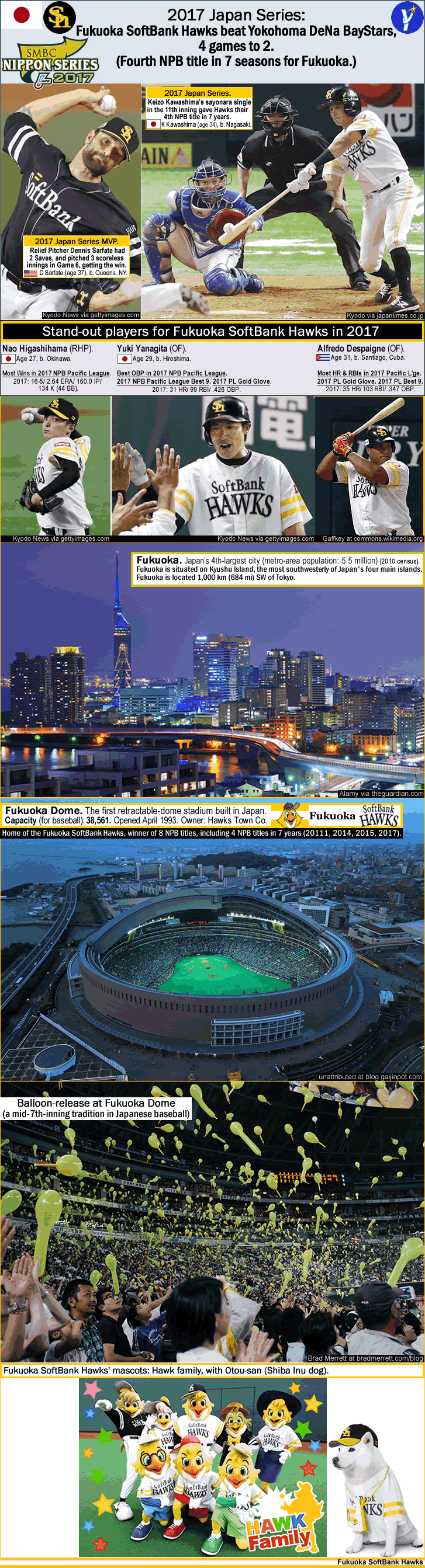
2011 Japan Series winners and 2011 NPB champions – the Fukuoka SoftBank Hawks. ‘Fukuoka SoftBank Hawks‘ (en.wikipedia.org).
From Asahi Shimbun (asahi.com), from Nov.20,2011, ‘Hawks shut down Dragons in Game 7, win Japan Series‘.
The Fukuoka SoftBank Hawks won the 2011 Japan Series title by beating the Chunichi Dragons in 7 games, shutting out Chunichi 3-0 in Game 7. It was the Hawks’ 5th title, and their third since moving to Fukuoka, Kyushu Island from Osaka in 1989. Fukuoka are the southern-most team in Nippon Professional Baseball (see small map, below).
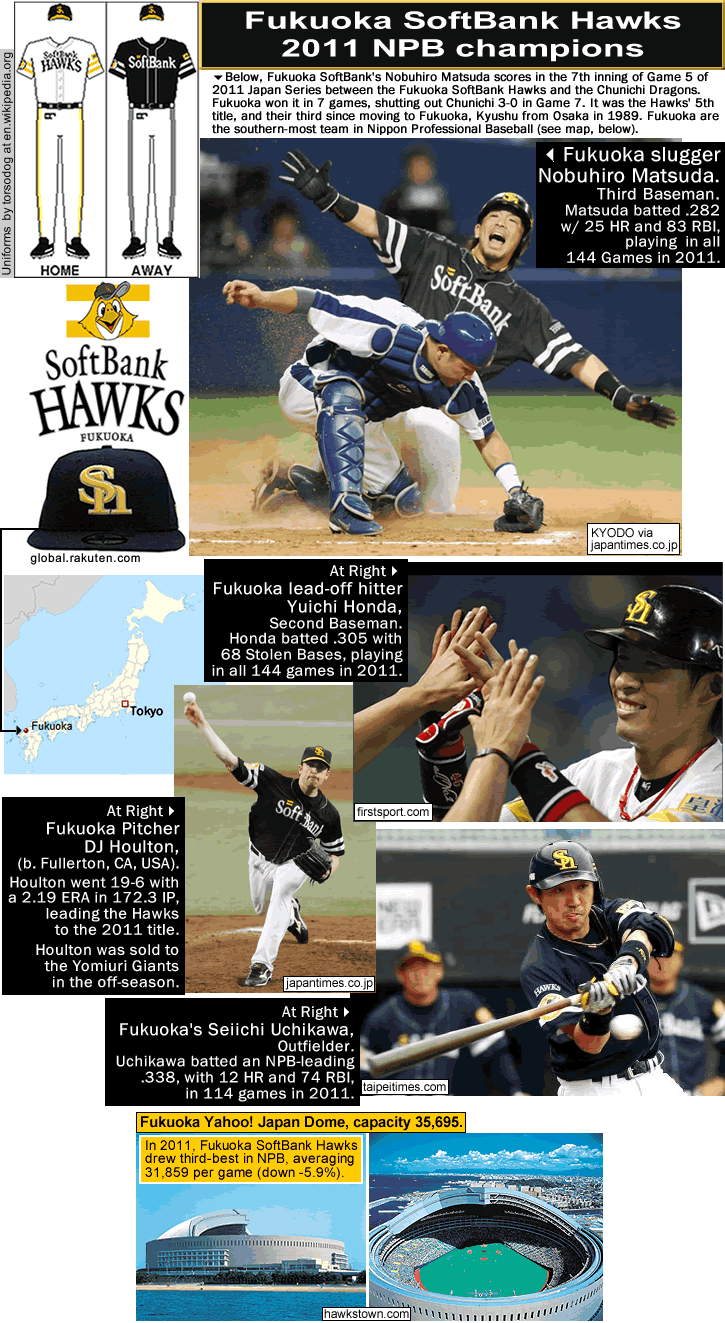
Photo and image credis above – Hawks’ uniforms illustrations by torsodog at en.wikipedia.org. Yuichi Honda hi-fiving teammates, firstpost.com. 2011 Japan Series Game/Matsuda play at plate, KYODO via japantimes.co.jp. DJ Houlton, japantimes.co.jp. Map from ‘Fukuoka‘ at en.wikipedia.org. Seiichi Uchikawa, taipeitimes.com. Fukuoka Dome photos, hawkstown.com.
__
Nippon Professional Baseball was formed in 1950.
The set-up consisted of 12 teams, with 6 teams in the Central League, and 6 teams in the Pacific League. Like Major League Baseball back then, the teams in one league did not play teams in the other league during the regular season. This 12 team / 2 league format remains to this day. The Japanese mimicry of Major League Baseball’s format continued, when, in 1975, one league – the Pacific League – adopted the Designated Hitter rule (this was 2 years after MLB’s American League instituted the DH rule, but the National League did not). NPB continued to take its cues from Major League Baseball when inter-league play between the Central League and the Pacific League was instituted in 2005 (8 years after inter-league play was introduced in Major League Baseball).
…
Rules in NPB & league format:
The rules in NPB are the same as in MLB, except with tie games going into extra innings…after 12 innings, the game is declared a tie (a draw) in the standings, except in the post-season, when tied games after 15th innings are abandoned, and then later re-played.
The 2 leagues both play 144-game regular seasons. Unlike in MLB, in Japan, the pennant-winner is crowned before the playoffs begin… the teams with the best regular season records in the two leagues are the Central League Pennant winner and the Pacific League Pennant winner. (In other words, unlike in MLB’s World Series, in Japan, the teams that meet to decide the NPB title in the Japan Series are not necessarily pennant winners.) The top 3 teams in each league make the playoffs. The Pennant-winners (again, the first place team from the regular season), gets a bye to the second round; while the 2nd-place and 3rd-place finishers play in the First Stage (a 3-game-series). Then the First Stage winners play the Pennant winners in the Second Stage (a 5-game-series). Those two playoff-winners then play for the title, in the Japan Series (a 7-game-series).
Distribution of NPB teams throughout Japan:
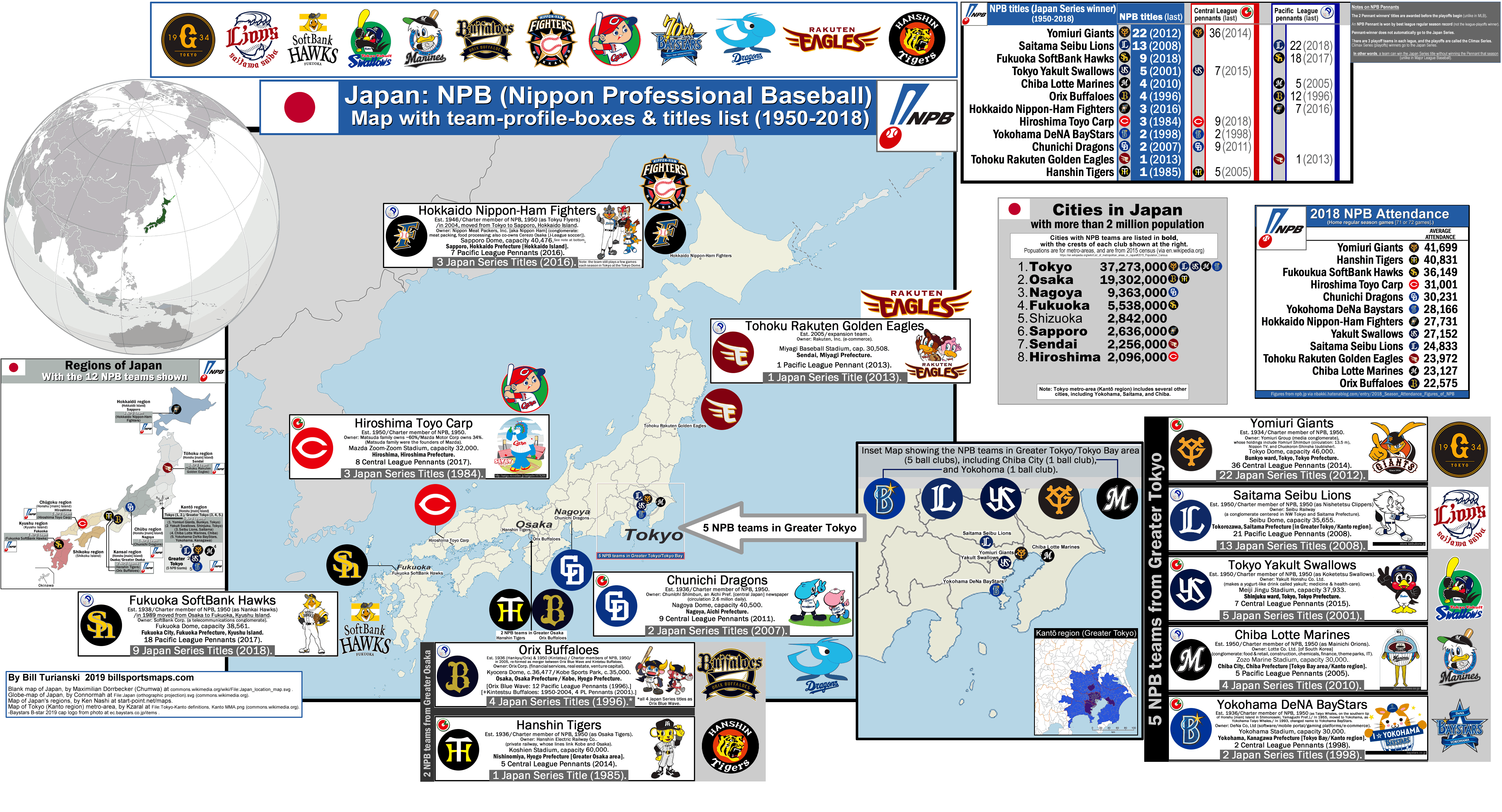
While it is true that Japanese baseball franchises do sometimes move, that is part of a broader trend of teams simply going to areas that had been historically ignored by Nippon Professional Baseball. Because as recently as 1988, 24 years ago, 9 of the 12 NPB teams used to be located in just two regions – the Greater Tokyo Bay area [the Kanto region], which previously had 6 teams (5 teams are located there now), and the central Japan/Osaka/Kobe area, which previously had 3 teams (2 teams are located there now). Since then, franchises have moved to Kysuhu Island (where the Fukuoka SoftBank Hawks [est. 1989] are located), and Hokkaido Island (where the Hokkaido Nippon-Ham Fighters [est. 2004] are located. [Note, the Osaka region lost its 3rd team when the Orix BlueWave merged with the Kintetsu Buffaloes, and then when the only-ever players' strike in NPB (in the late summer of 2004) forced the league to reverse their decision to contract to 11 teams in 2005, the new franchise (the Tohoku Rakuten Golden Eagles) was not re-placed in the Osaka region, but instead put in the Sendai region north of Tokyo.] There is one area that has never had an NPB team, and that would probably support one pretty well – the NW Honshu Island (main island) city of Niigata, which is on the west coast on the Sea of Japan. Niigata is home of the perennially-highest-drawing J-League soccer team in Japan – Albirex Niigata, who became the first-ever J-League team to average over 40,000 per game, in 2005.
Foreign player restrictions:
4 foreign players on the 25-man active roster allowed, with no organizational limit.
Minor leagues in Japan:
Each NPB team has 1 minor league team in its organization, and most of the minor league teams use the name and uniforms of their parent-club, and the minor league team also plays in the same area as their parent-club (exception – in location: Hokkaido’s minor league team is still located in the Tokyo Bay area).
Attendance in NPB, and Japan’s glaring lack of fan-friendly asymmetrical ballparks with retro-features and modern amenities
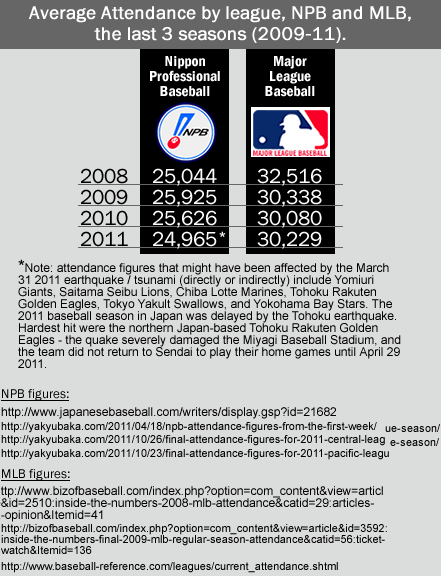
Attendance was down 2.4% overall in NPB in 2011, compared to 2010. And in 2010, attendance was down 1.8% overall in NPB, compared to 2009. However, it must be pointed out that the March 31, 2011 Tohoku earthquake and tsunami certainly affected attendances of the teams in NE Honshu Island (main island) – the Tohoku Rakuten Golden Eagles and the 5 Tokyo Bay/Kanto region teams (Yomiuri, Seibu, Yakult, Lotte, and Yokohoma).
Below, Nippon Professional Baseball and Major League Baseball attendance (league averages), 2008, 2009, 2010, and 2011…
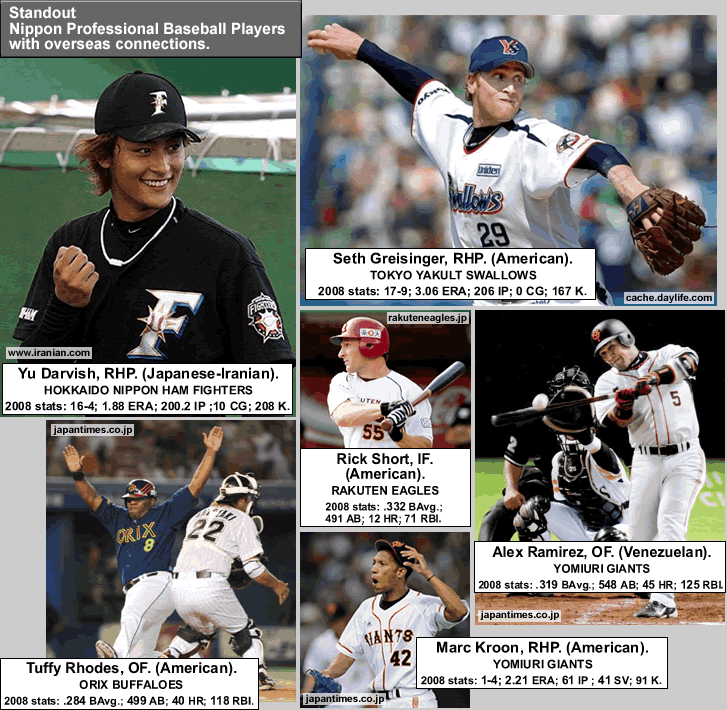
For over 60 years now, the people who run baseball in Japan have maintained their emulation of Major League Baseball – by aping every aspect of MLB’s format, even the problematic aspects like forcing the pitchers to bat in one league yet maintaining the Designated Hitter rule in the other league. However, the folks that run NPB never got the message that baseball fans absolutely hate impersonal dome stadiums and artificial turf (see 6 paragraphs down). And there is a larger issue that looms – now that Japanese ballplayers can play in Major League Baseball (see further below), that slavish devotion to the format of American baseball has become the NPB’s albatross, because attendance at big league baseball games is plateauing in Japan, and revenue from televised games is a fraction of the value of MLB’s television revenue, and over 75% of Japanese major league baseball teams are big money-losers, year-in, year-out. And the superstar Japanese ballplayers, usually forced to play 9 years before the chance to play in North America – want to play in North America. To be blunt, in the eyes of many Japanese baseball fans, Nippon Professional Baseball fails in comparison to Major League Baseball. Many Japanese baseball fans would rather follow Major League Baseball, and specifically, Japanese-born MLB players like Ichiro Suzuki and Daisuke Matsuzaka and Hideki Matsui, and soon, Yu Darvish, than they would follow Nippon Professional Baseball. Japan’s national television, NHK, broadcasts 270 MLB games a year – live, despite the time difference between North America and Japan, which puts these live North American baseball games on in the early morning in Japan – yet these broadcasts still get very good ratings. Good enough ratings that NHK shows way more American baseball than Japanese baseball…those 270 Major League Baseball games that NHK broadcasts in Japan each year is more than twice the total of Nippon Professional Baseball games broadcast by NHK each season.
Here are the recent words of one of NHK’s baseball commentators, the NPB and MLB veteran, the former Angels and Mariners relief pitcher Shigetoshi Hasegawa, (from the article linked to below) “Japanese baseball is losing TV audience, and MLB is gaining here. It’s kinda tough to see Japanese TV ratings go down, but there’s nothing we can do about it. It’s not like 20 years ago when Japanese was the only baseball on TV. Serious Japanese fans see Nomo, Ichiro, and me go to the U.S., and they start watching American baseball. They can tell the difference in the games. They want to see the best, just like soccer fans in the U.S. like to watch the best in the world.”
From [Seattle-based website] Crosscut.com, from March 26, 2012, by Art Thiel, ‘Japanese baseball: An American hottie is still a cultural challenge‘.
And not only do most NPB teams never make a profit, they almost universally lose an estimated average of 50 million dollars per year (and some teams are losing much more than that each year). These losses are written off by the corporations that own NPB teams as advertisement expenses. The exceptions to this situation of money-losing NPB franchises are widely believed to be the two best-drawing teams, the Yomiuri Giants and the Hanshin Tigers, both of whom draw over 40,000 per game regularly.
What makes it even more difficult for NPB teams is that the idea of municipally-funded state-of-the-art stadiums provided for with very generous terms to ball clubs – like in the United States – usually doesn’t exist in Japan. MLB (and NFL) franchises can hold an American city hostage – either the taxpayers there pony up, or the team bolts lock stock and barrel to another municipality which offers a sweetheart deal on a new venue. And crucially, unlike in the USA, in Japan there never has been the current trend for building new, asymmetrical, retro-themed ballparks with modern amenities. In Major League Baseball {2012 MLB attendance map, here}, the impressive recent gate figures of MLB teams in several cities has been significantly boosted by new ballparks that tick all the boxes for fan-friendliness and a genuine ballpark experience. Examples are in Philadelphia, PA (‘Citizens Bank Park‘); in San Francisco, CA (‘AT&T Park‘); in Minneapolis/St. Paul, MN (‘Target Field‘); in Milwaukee, WI (‘Miller Park‘); in Greater Dallas/Ft. Worth, TX (‘Rangers Ballpark in Arlington‘); in Detroit, MI (‘Comerica Park‘) and in San Diego. CA (‘Petco Park‘). These are not stadiums walled off from the city, these are ballparks that let the fan sitting in the grandstand see the view of the city’s skyline. These are ballparks that venerate tradition, with asymmetrical layouts similar to ballparks built a century or so ago (circa 1910s to 1930s), which were back then necessarily part of the ballparks being able to fit into the tight urban grids found in northeastern and midwestern United States cities. So the logical outcome of the tight confines of these ballparks is that the fans are very close to the field of play. You see this in the ballparks listed above, as well as in places like Seattle; in Queens, New York; in St. Louis; in Washington DC; and, of course, in the two remaining ballparks that helped inspire the modern retro-themed asymmetrical ballparks – Fenway Park in Boston, and Wrigley Field in Chicago. And in several instances, the value that the ball club places on its connection with the city’s past is shown where old buildings adjacent to the site often become part of the design of the new venue (such as in Baltimore, Detroit, San Diego, and even in minor league ballparks like in Toledo, OH).
Meanwhile, in Japan, only 3 teams in NPB have built new stadiums in the last 25 years that are open air, while 4 fixed-roof dome stadiums have also gone up, 2 as recently as 1997, and one as recently as 2001. In 1997, folks in American cities that were saddled with dreary astro-turf-laden, fixed-dome, multi-purpose sports stadiums were already clamoring for them to be torn down (as in Seattle). But in Japan, in the past 25 years, and even as recently as in the early 21st century, NPB teams have moved into the kind of stadiums that they tear down these days in America – monolithic Death-Star-like domed stadiums with plastic turf and all the charm of a parking garage. Those 4 teams are the Yomiuri Giants, who moved into ‘Tokyo Dome‘ in 1989; the Chunichi Dragons, who moved into the ‘Nagoya Dome‘ in 1997; and the Osaka Kintetsu Buffaloes’ franchise (which later merged with Orix BlueWave to become the Orix Buffaloes in 2005], who moved into the ‘Osaka Dome‘ in 1997; and the Hokkaido Nippon-Ham Fighters, who moved into the ‘Sapporo Dome‘ in 2004.
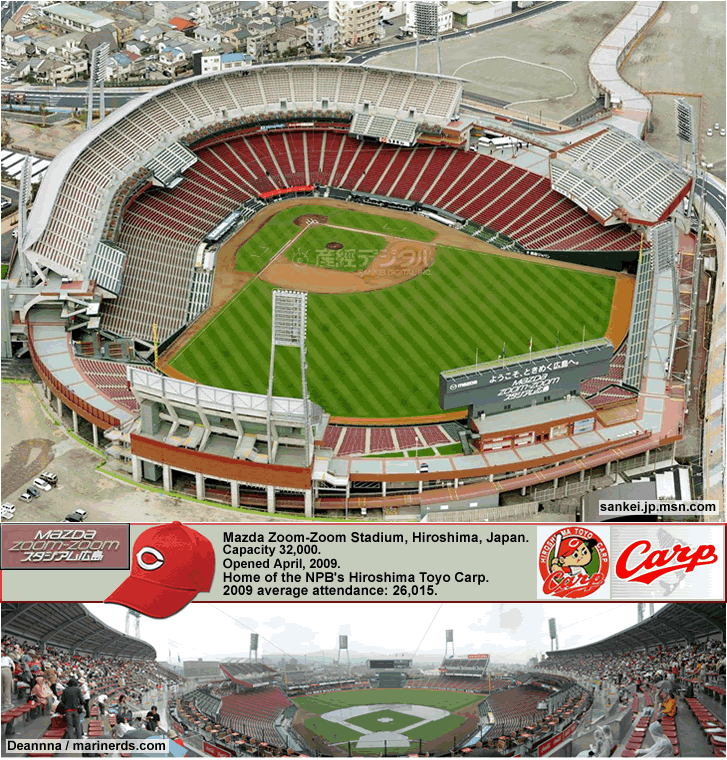
Finally, in 2009, an NPB stadium in Japan was built with no dome and no artificial turf. The Mazda Stadium, home of the Hiroshima Toyo Carp, opened in 2009 ‘Mazda Stadium. The other two open air NPB stadiums built in the last 25 years are the Fukuoka SoftBank Hawks”Fukuoka Dome‘, opened in in 1993; and the Chiba Lotte Marines’ ‘Chiba Marine Stadium‘, which opened in 1990. The latter 2 of these stadiums belong to a past era in ballpark design that just wouldn’t cut it in Major League Baseball these days…because the Lotte stadium is a bowl-shaped venue with artificial turf and too much foul territory – an impersonal venue similar to the notoriously bleak plastic-turfed concrete purgatory that was Philadelphia’s Veterans Stadium. And Fukuoka’s retractable-dome stadium is too much like the Toronto Blue Jays’ stadium (previously called Skydome and now called Rogers Centre) – modern, but stark and pretty soul-less, and with the inexcusable inclusion of artificial turf in a stadium which has access to sunlight with the flick of a switch.
Below: the best 3 NPB stdiums -
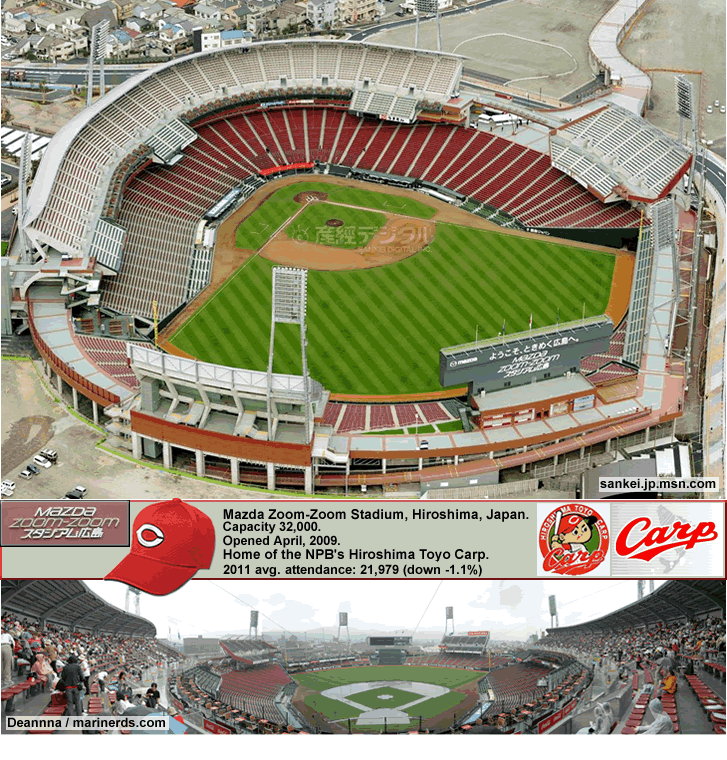 Photo credits above – large photo: image now unavailable on Internet. marinerds.blogspot.com/2009/06/friday-foto-mazda-zoom-zoom-stadium. store.japan-zone.com/apparel-baseball-caps.
There are probably only a few NPB ballparks that would get positive reviews from North American baseball fans today, like the aforementioned Mazda Stadium in Hiroshima, which opened in 2009 (see above).
The other stadium that would be a good tourist destination would definitely be the Hanshin Tigers’ Koshien Stadium which opened in 1924 (see below), and is the oldest NPB ballpark. Check out the gigantic main grandstand there at Koshien, and how close fans are to the field of play – behind home plate, and all the way up the 1st and 3rd base lines. You look at Hanshin’s stadium and it is no wonder the ball club draws best in Japan, despite their lack of success in Japan Series titles, with just 1 Japan Series championship title, (won in 1985). Koshoen Stadium is also the annual site of the national Japanese high school baseball tournament – so it’s sort of like the Mecca of Japanese baseball.
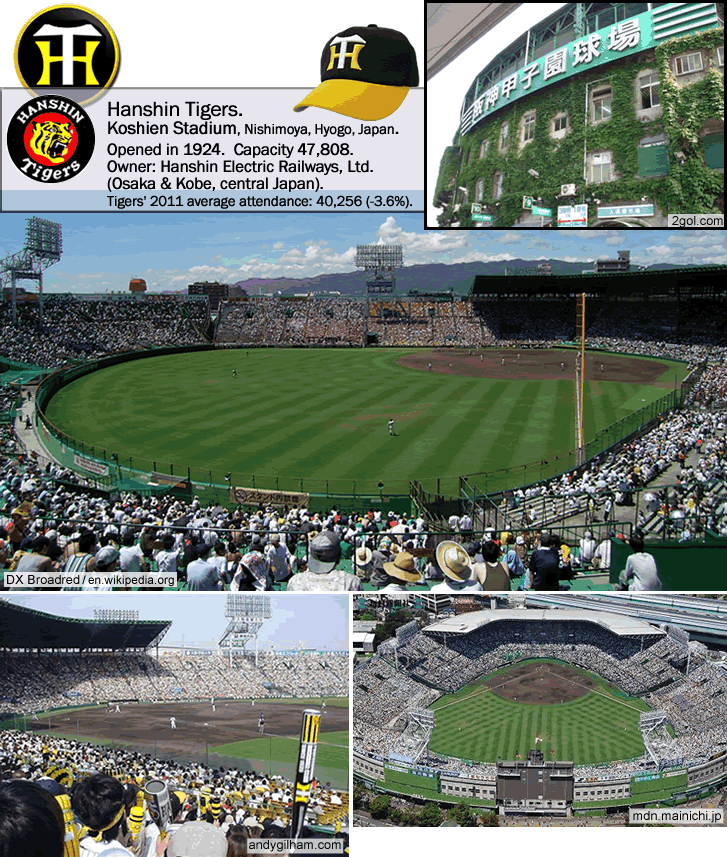
Photo credits above – www2.gol.com/users/michaelo/Koshien.html (Ivy). store.japan-zone.com/apparel-baseball-caps.
Also the Tokyo Yakult Swallows’ Meiji Jingu Stadium, in the Shinjuku ward in Tokyo would get some good reviews from visitors from the States. Like Koshien Stadium, Meiji Jingu Stadium is a venerable old ballpark – it opened in 1926. It is one of the few ballparks still standing in the world where Babe Ruth played in (in 1934, when MLB stars were on a tour of Japan). The Yakult Swallows franchise has played here since 1964. But Meiji Jingu Stadium has artificial turf, and it has way too much foul territory, needlessly separating even front-row-seated fans from the field off play (see photo illustration further down, of 4 examples of NPB stadiums with far too much foul territory).
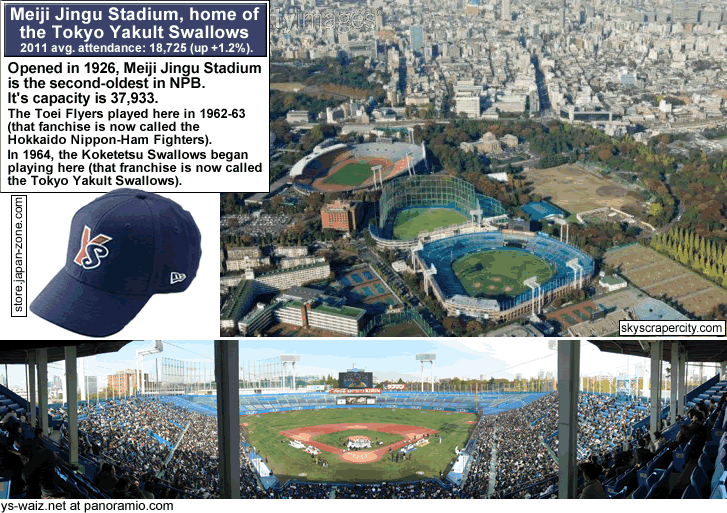
Photo credits above – Aerial photo, skyscrapercity.com/thread. Swallows cap, store.japan-zone.com. ys-waiz.net at panoramio.com.
Japan is a country whose climate allows most every surface to be green and growing and verdant – except in 10 of their 12 big-league-ballparks. That’s right – 10 of the 12 major league teams in Japan play their home games in ballparks that feature artificial turf. I am sorry, but in the year 2012, when modern turf-management systems make it feasible to have natural grass almost anywhere outside the Arctic Circle, that is just not acceptable. MLB has 30 teams, and 28 of them (or 93% of them) play on natural grass, and only one team – the Tampa Bay Rays – play in a fixed-roof dome stadium. But in Japan, 83% of their major league ball clubs play on artificial turf, and almost half of them (5 of the 12 teams) play in fixed-roof dome stadiums.
As far as baseball venues go, until the Mazda Stadium opened in Hiroshima in 2009, Nippon Professional Baseball had been stuck in a mind-set that Major League Baseball evolved out of more than 2 decades ago. The design of most NPB stadiums looks like they built them to accommodate a baseball team and a gridiron football team, even though Japan has no big-time American-style football league. Again, here is yet another example of NPB aping MLB, even if the aspect they are mimicking is problematic. Even during the 1990s, after Camden Yards in Baltiimore (which opened in 1992) showed the way forward for what fans want in a ballpark {‘Oriole Park at Camden Yards‘}, Japanese city officials and NPB top brass were stuck in the circa-1960s-to-1980s American municipalities’ mindset, when the thinking was, to save money, you build a stadium that would house both the city’s MLB team and it’s NFL team. This was the now-dreaded multi-purpose, circular concrete stadium that made for a horrible baseball fan experience…those largely-now-since-demolished stadiums were pretty much all horrible. You can see this by the fact that so many NPB stadiums have the vast foul territory necessary to pull of this dual-purpose capability…but there never were any major league gridiron football teams in Japan. Granted, since 1992, J-League football teams [soccer teams] have at times shared stadiums with NPB teams, and one current baseball/soccer stadium share exists, at the Sapporo Dome, with J-League team Consodole Sapporo and NPB team Hokkaido Nippon-Ham Fighters. But otherwise, why exactly is there so much space between the fans and the field of play in the typical Japanese major league ballpark?
Here are 4 examples of Nippon Professional Baseball stadiums with far too much foul territory -
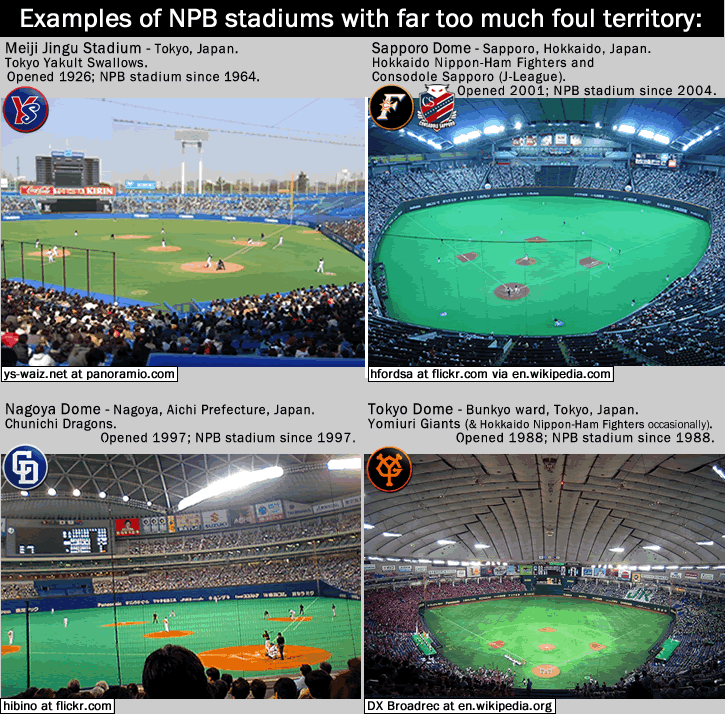
Photo credits above – ys-waiz.net at panoramio.com. hfordsa at en.wikipedia.org. hibino at flickr.com. DX Broadrer at en.wikipedia.oooeg/Tokyo Dome 2007.
As to unfavorable stadium deals for Japanese baseball teams, here is an example of how onerous NPB stadium lease agreements can be – the most popular and successful Japanese baseball team, the Tokyo-based Yomiuri Giants, pay a quarter of a million dollars rent per home game (72 home games per season) at the mausoleum-like Tokyo Dome.
The following article explores these themes…from Time magazine/World, ‘Baseball in Japan: Not All Cheers‘
By Robert Whiting/Tokyo (Mar.27,2008).
Ideas for NPB Stadium Improvements -
In Japan, Nippon Professional Baseball may losing the ratings war to Major League Baseball, but the league can do a lot better attracting baseball fans to their stadiums by making them more fan-friendly. Almost half the teams in NPB (5 teams) don’t draw over 20,000 for most games. Here are those 5 teams…
Drawing ~19K per game are Orix Buffaloes, with a fixed-dome stadium, the Nagoya Dome. How about Orix return to the forme home of Orix BlueWave and play some of their games at former NPB ballpark the Kobe Sports Park? Face it, playing in Osaka, in the Osaka Dome, Orix are stuck with a lemon (see below, upper right – notice the dead atmosphere). In 2005, the two teams (Orix and Kintestsu) merged, and, it seems, their two fan bases downsized. I suggest the reason might be that playing their games in a dome stadium on plastic turf has driven away a sizable chunk of both former Kintetsu Buffaloes fans and former Orix BlueWave fans. And I bet a significant amount of those 2 former teams’ fans go instead to the nearby Koshien Stadium, home of the Hanshin Tigers (who, as mentioned before, draw best in NPB at above 40K per game). Sure the Osaka Dome looks impressive from the outside, but since when has the fan experience at a ballpark had anything to do with the exterior of the stadium?
Here is the former stadium Orix BlueWave (at left) in Kobe, and the current stadium of Orix Buffaloes (at right) in Osaka (note: the 2 venues are 18 miles apart) -
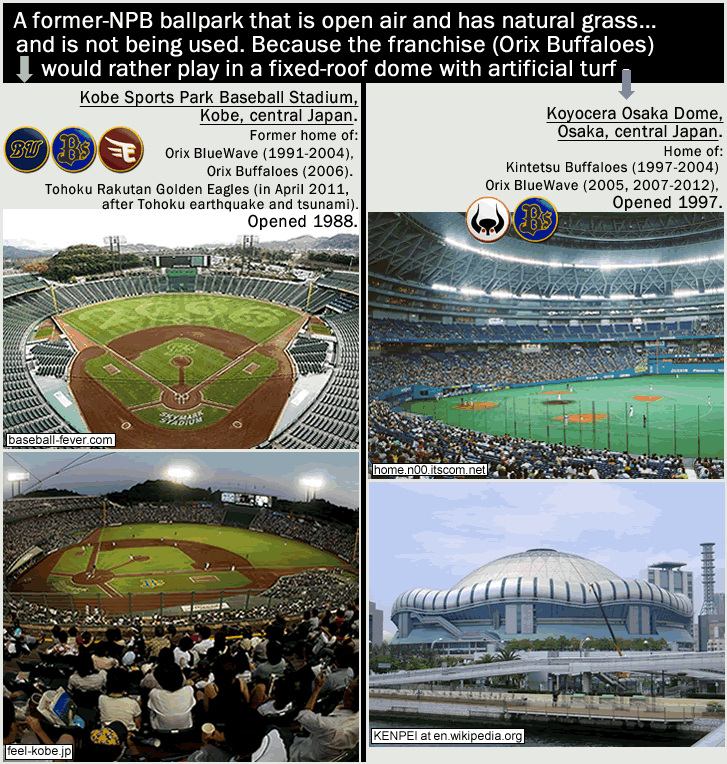
Photo credits above – baseball-fever.com/thread-International-Ballparks/page5. feel-kobe.jp.
KENPEI at en.wikipedia.org. home.n00.itscom.net.
Below, the 4 lowest-drawing teams in NPB
Drawing ~18K are Tokyo Yakult Swallows.
Drawing ~18K are Chiba Lotte Marines.
Drawing ~16K are Tohoku Rakuten Golden Eagles.
Drawing ~15K are Yokohoma DeNa BayStars.
For all 4 of the above teams…How about getting rid of the plastic turf? – at Yakult, at Yokohoma, at Lotte, at Tohoku (and also at Fukuoka). And also, move the fields 20 to 50 feet in, in all those stadiums with such vast, useless, and detrimental areas of foul territory.
…
Japanese-born players in Major League Baseball
Up to the 2011 season, a total of 43 Japanese-born players have played at least 1 game in Major League Baseball. The biggest restriction is the 9-year rule, disallowing any NPB player without 9 years’ tenure with a NPB team’s organization, and along with that another impediment is the “Posting’ system (see below, 8 paragraphs down). Before the mid-1990s, there had only been one Japanese-born player in MLB.
The first Japanese-born player in Major League Baseball was San Francisco Giants Pitcher Masanori Murakami in 1964 and 1965. In early 1964, the NPB team the Nankai Hawks sent 3 of its prospects to the USA, to the San Francisco Giants’ organization for experience (in an exchange-prospect capacity), and one of the three, Murakami, had a stellar season in 1964, winning the California League (Class A minor league) player of the year award with the San Jose Giants. The San Francisco Giants brought Murakami up to play in the Major Leagues in September, 1964, and he did so well that, in the off-season, the Giants tried to sign him – and Nippon Professional Baseball refused. Here is an excerpt from the Wikipedia page entitled ‘List of Major League Baseball players from Japan‘,
{excerpt}…”After Murakami put up good pitching statistics as a reliever, Giants executives sought to exercise a clause in their contract with the Hawks that, they claimed, allowed them to buy up an exchange prospect’s contract. NPB officials objected, stating that they had no intention of selling Murakami’s contract to the Giants and telling them that Murakami was merely on loan for the 1964 season. After a two-month stalemate the Giants eventually agreed to send Murakami back to the Hawks after the 1965 season. This affair led to the 1967 United States – Japanese Player Contract Agreement, also known as the “Working Agreement”, between MLB and NPB, which was basically a hands-off policy.”…{end of excerpt}.
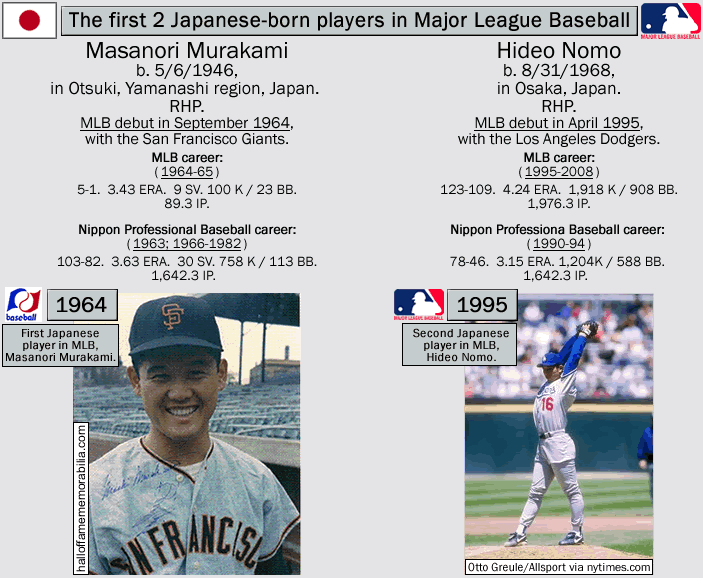
Photo credits above – halloffamememorabilia.com.
Otto Greule/Allsport via nytimes.com/’Japanese Team Welcomes Back Nomo’ [May 1 2010].
For over 30 years this state of affairs existed, until February 1995, when pitcher Hideo Nomo broke that blockade utilizing a loophole in the Working Agreement. Advised by his agent Don Nomura, Nomo declared retirement before he reached the free agency phase of his contract with the NPB team the Kintetsu Buffaloes, thus circumventing the NPB/MLB agreement that barred Japanese players from playing in North America. Nomo then came out of “retirement” and signed with the Los Angeles Dodgers – and promptly put up All-Star caliber numbers…13-6 with a 2.54 ERA and a league-leading 236 Strikeouts (78 Walks), winning the 1995 National League Rookie of the Year award (as a 27-year-old). After stints with 5 other MLB teams (Mets, Cubs, Brewers, Tigers, Red Sox), Nomo returned to the Dodgers and won 16 games in both 2002 and 2003. Then, after stints with the Devil Rays and the Royals, Nomo retired in 2008. Nomo’s MLB statistics: 123-109, 4.24 ERA, 1,918 Strikeouts in 1,076.3 Innings.
The 3rd Japanese-born player in MLB was right-handed Pitcher Mac Suzuki. He initially by-passed Japanese pro baseball because, as a 16-year-old, after being kicked out of high school in Kobe, Japan, his parents sent him to straighten out in the United States. He got a position as a bat-boy for the Salinas Peppers of the California League, a Single-A affiliate of the Seattle Mariners (owned by a Japanese consortium). In 1992, while still the bat-boy for the Salinas Peppers, the 17-year-old Suzuki made a final-game-of-the-season debut, pitching 1 inning and retiring the side. From 1993 to ’96, Suzuki moved through the Mariners’ farm system and made his Major League debut for Seattle in July, 1996. Suzuki played in Major League Baseball from 1996 to 2002, with the Mariners, the Royals, the Rockies, and the Brewers, with stats of 16-31, 5.72 ERA, 327 Strikeouts (265 Walks) in 465.6 Innings. Mac Suzuki did eventually play pro ball in Japan, for the Kintetsu Buffaloes. He also played in Taiwn in the CPBL and in Mexico in the LMB with the now-defunct Dorados de Chihuahua. Last year [2011], as a 37-year old, Suzuki played for the Independent league team the Kobe Stars.
The fourth Japanese-born player in Major League Baseball was right-handed Pitcher Shigetoshi Hasegawa. A 6-year veteran with the Orix BlueWave from 1991 to ’96, Hasegawa won the 1991 Pacific League Rookie of the Year award, and he was part of the 1996 Japan Series title-winning team there. At Orix, he was a teammate of Ichiro Suzuki (see below). The Anaheim Angels bought his contact from Orix in 1997, and the submarine-style reliever made his MLB debut in April 1997. Hasegawa played with the Angels from 1997-2001, and with the Seattle Mariners from 2002-05. Hasegawa finished his MLB career with these numbers: 45-43, 3.70 ERA, 33 Saves, 447 Strikeouts (265 Walks) in 720.3 Innings. “Shiggy” was a 2003 All-Star selection for Seattle. His Wikipedia page says that he was rumored to be the only MLB player to ever read the Wall Street Journal in the locker room. Fluent in English, he published a book in Japan on improving one’s English-language-skills. Hasegawa these days is based in Irvine, California and dabbles in real estate. He is also a baseball commentator for NHK (which is Japan’s national public broadcasting organization).
The fifth Japanese-born player in Major League Baseball was left-handed relief Pitcher Takashi Kashiwada. As part of the Yomiuri Giants’ organization, Kashiwada pitched 26 innings between 1994-96. His contract was bought by the New York Mets in 1996, and Kashiwada made his MLB debut with the Mets in May 1997. He only played one season in Major League Baseball, going 3-1 with a 4.31 ERA and 14 Strikeouts (13 Walks) in 31.3 Innings. Kashiwada returned to Japan and the Yomiuri Giants the following season, shuttling between the minors and the majors for 7 seasons, and retiring as a player in 2003. Kashiwada was then re-hired by the Yomiuri Giants as an international scout.
The sixth Japanese-born player in Major League Baseball was Pitcher Hideki Irabu, who made his MLB debut with the New York Yankees in July, 1997. This was after Irabu, a 9-year NPB veteran, refused to sign with San Diego Padres after the Padres had purchased his contract from the NPB team the Lotte Orions in early 1997 { see this, ‘Hideki Irabu‘ (en,wikipedia.org) }. Irabu was a hard throwing right-handed Pitcher who was the child of an American serviceman and an Okinawan woman, born in Okinawa, Japan in 1969. [The Padres/Yankees/Irabu affair was the catalyst for to the current "Posting" systerm that NPB and MLB have devised (see below).] Irabu had a volatile relationship with Yankees’ owner George Steinbrenner, and although he won 2 World Series titles as a NY Yankee (in 1998 and 1999), his legacy was tarnished by the very public put-down Steinbrenner made, calling Irabu a “fat pussy toad” for not covering first base on an infield ground-out play in a 1999 spring training game { see this, ‘The List: Steinbrenner’s worst‘ (by Jeff Merron at go.espn.com) }. Irabu went on to play in 6 MLB seasons with the Yankees, Expos, and Rangers, finishing in 2002 with MLB stats of 34-35, 5.15 ERA, 16 Saves, 405 strikeouts (175 walks) in 514.0 Innings. He returned to Japan and NPB with the Hanshin Tigers in 2003 and ’04, helping Hanshin win the 2003 Pacific League pennant. Irabu’s NPB stats (from 1988-96; and 2003-04) were 273-159, 4.93 ERA, 1,282 Strikeouts (405 Walks), in 1,286.3 Innings. Irabu later played Independent pro ball back in the USA (with the Long Beach Armada in 2009), then back again in Japan (later in 2009, with the Kochi Fighting Dogs). Irabu was found dead in his apartment in Los Angeles, CA in 2011, a suicide victim.
…
Below, some of the Japanese-born NPB veterans who have found success across the ocean in Major League Baseball -
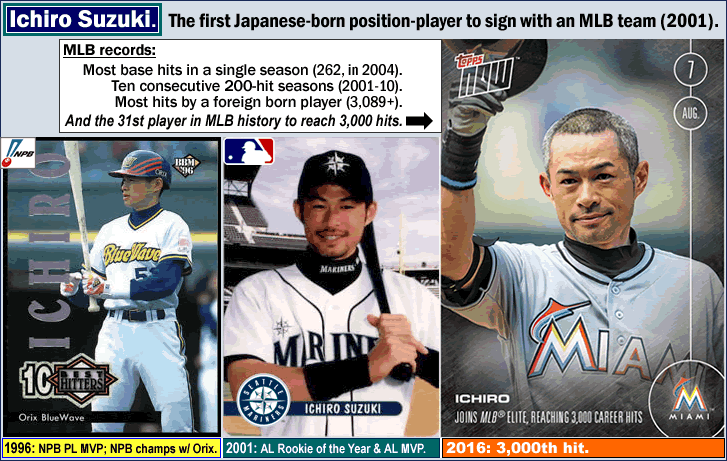
The first Japanese-born everyday position player in the major leagues, was Ichiro Suzuki, with the Seattle Mariners in 2001.
Below: Ichiro Suzuki, OF. [aka 'Ichiro'].
Ichiro was a 7-time NPB All-Star with the Orix BlueWave. He was a 7-time NPB Batting champion, and led in RBI and Stolen Bases in 1995. In 1996, he was part of the 1996 Japan Series title-winning Orix BlueWave team. In a 9-year NPB career with Orix, he hit an astounding .353. He signed with MLB’s Seattle Mariners in Nov. 2000. His best season in Seattle was in 2004, at .372 / 8 HR / 60 RBI / 36 SB. Also in 2004, he set the All-time MLB recored for Hits in a season, with 262. He was voted 2001 AL MVP and 2001 AL Rookie of the Year. A 10-time AL All-Star selection. A 2-time AL Batting champion, Ichiro has also led the AL in Hits 7 seasons (last in 2010). AL record for the most consecutive Stolen Bases without being caught – 42 consecutive Stolen Bases without a Caught Stealing (from Apr. 2006-May 2007).
MLB stats, 2001-11: 11 years, 95 HR / 605 RBI / .326 BAvg. / .370 OBPct. / 423 SB.
Current age [2012], 38 years old.
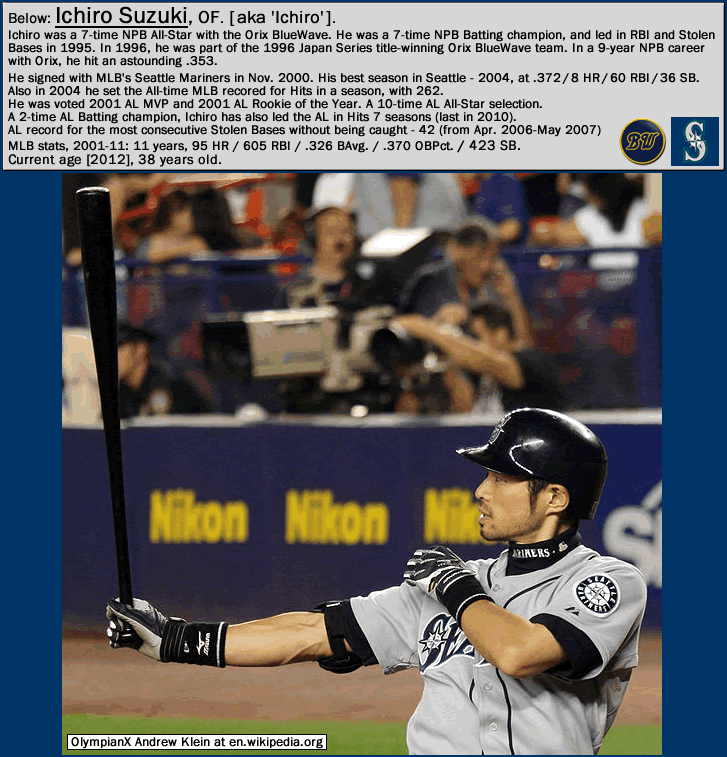
Photo credit above – (Ichiro Suzuki), OlympianX Andrew Klein at en.wikipedia.org.
…
Below, center (in red cap): Hideki Matsui, OF/DH. [ aka 'Godzilla' ]. Matsui was a 9-time NPB All-Star slugger with the Yomiuri Giants. He hit 332 HR and batted .304 in 10 years in NPB. He signed with MLB’s New York Yankees in Dec. 2002. His best season in NY was in 2005, at .305 / 23 HR / 115 RBI. He was voted 2009 World Series MVP. After that, he signed with the Los Angeles Angels as a free agent. Below, in April 2010, Matsui is seen being warmly greeted by his former Yankee teammates, when he was given his 2009 New York Yankees’ World Series ring. Matsui played for the Los Angeles Angels in 2010, then signed with the Oakland Athletics, and played for the A’s in 2010.
As of 2 April, 2012, Matsui is a free agent (at the age of 37). ‘Hideki Matsui still wants to play‘ (cbssports.com/By C. Trent Rosecrans [March 29,2012]).
NPB stats, 1993-2002 (10 years): 332 HR / 809 RBI / .304 BAvg.
MLB stats, 2003-11: 9 years, 173 HR / 753 RBI / .285 BAvg. / .363 OBPct.
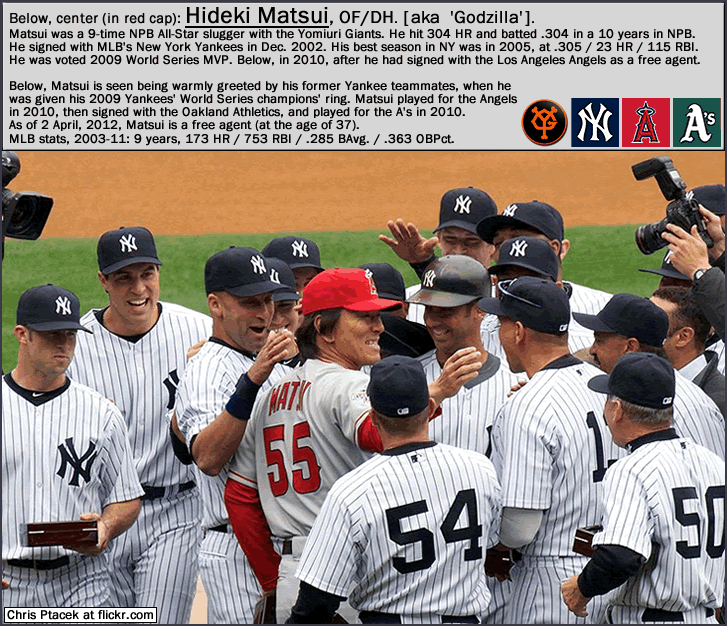
Photo credis above – (Hideki Matsui w/ former Yankee teammates), photo by Chris Ptacek at flickr.com.
…
Below: Daisuke Matsuzaka, P (RHP/Starter). [aka 'Dice-K'].
Matsuzaka was the 1999 NPB Pacific League Rookie of the Year, and 6-time NPB All-Star. A 2-time NPB ERA champion, a 3-time NPB Win champion, and a 4-time NPB Strikeout champion, Matsuzaka led the Seibu Lions to the 2004 Japan Series title. He signed with MLB’s Boston Red Sox in Dec. 2006. He was part of the Red Sox’ 2007 World Series title-winning team, getting the win in the 3rd game of the Sox’ 4-game World Series sweep of the Colorado Rockies (going 5 scoreless innings). Matsuzaka’s best year so far for Boston was the following season, 2008, when he went 16-3 / 2.90 ERA / 154 K (94 BB) in 167.6 Innings.
NPB stats, 1999-2006: 8 years, 108-60 / 2.95 ERA.
MLB stats, 2007-11: 9 years, 49-30 / 4.25 ERA. Current age [2012], 31 years old.
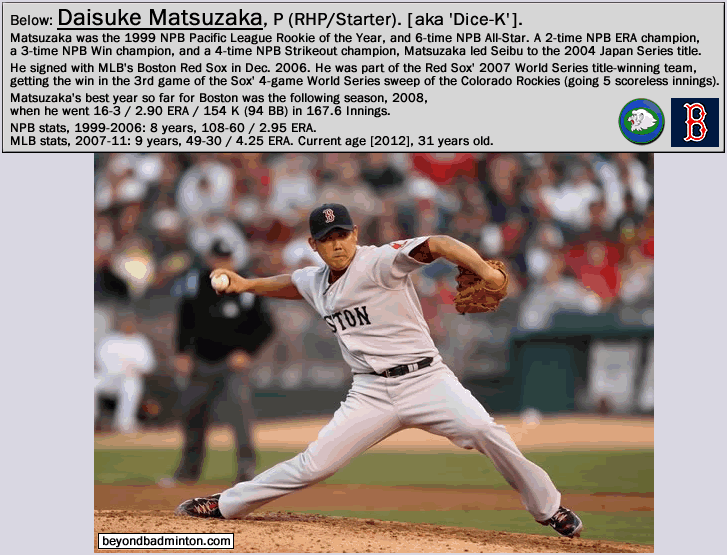
Photo credit above – beyondbadminton.com.
…
Current [2012] Japanese-born players in Major League Baseball -
‘List of Major League Baseball players from Japan/Active players‘ (en.wikipedia.org).
The biggest restriction is the 9-year rule, disallowing any NPB player without 9 years’ tenure with a NPB team’s organization. 2007 brought the Posting rule, when blind bids are made by MLB teams for eligible NPB players. This was implemented to give NPB teams compensation for losing star players to MLB. It is severely criticized because it forces the player to negotiate a contract with just one MLB team. The posting rule is onerous – all that work (9 years) to get to the position where a Japanese-born player is finally able to qualify for playing in Major League Baseball – only to have his bargaining rights stripped, and his options limited to negotiating a contract with just one MLB team. In other words, the Posting system gives a 9-year pro baseball veteran the labor rights equivalent to a just-drafted high school player.
Currently [April 2012], there are 9 Japanese-born players with MLB experience on rosters, and 1 free agent (Hideki Matsui)…
2001, from Orix Blue Wave – Ichiro Suzuki, OF (Seattle Mariners, 2001-present).
2003, from Yomiuri Giants – Hideki Matsui , OF/DH (NY Yankees/Los Angeles Angels/Oakland A’s/unsigned free agent).
2006, from Yokohoma BayStars – Takashi Saito, P (LA Dodgers/Boston Red Sox/Atlanta Braves/Milw. Brewers/Arizona D-backs).
2007, from Seibu Lions – Daisuke Matsuzaka., P (Boston Red Sox, 2007-present).
2008, from Hiroshima Toyo Carp – Hiroki Kuroda, P (LA Dodgers/NY Yankees).
2009, from Yomiuri Giants – Koji Uehara, P (Baltimore Orioles/Texas Rangers).
2009, as an amateur, previously of Nippon Oil (amateur company team un-affiliated w/ NPB) – Junichi Tazawa, P (Boston Red Sox).
2010, from Yomiuri Giants – Hisanori Takahashi, P (NY Mets/Los Angeles Angels).
2011, from Chiba Lotte Marines – Tsuyoshi Nishioka, INF (Minnesota Twins).
2011, from Hokkaido Nippon-Ham Fighters – Yoshinori Tateyama, P (Texas Rangers).
Below, the biggest off-season tranfer via the Posting rule…
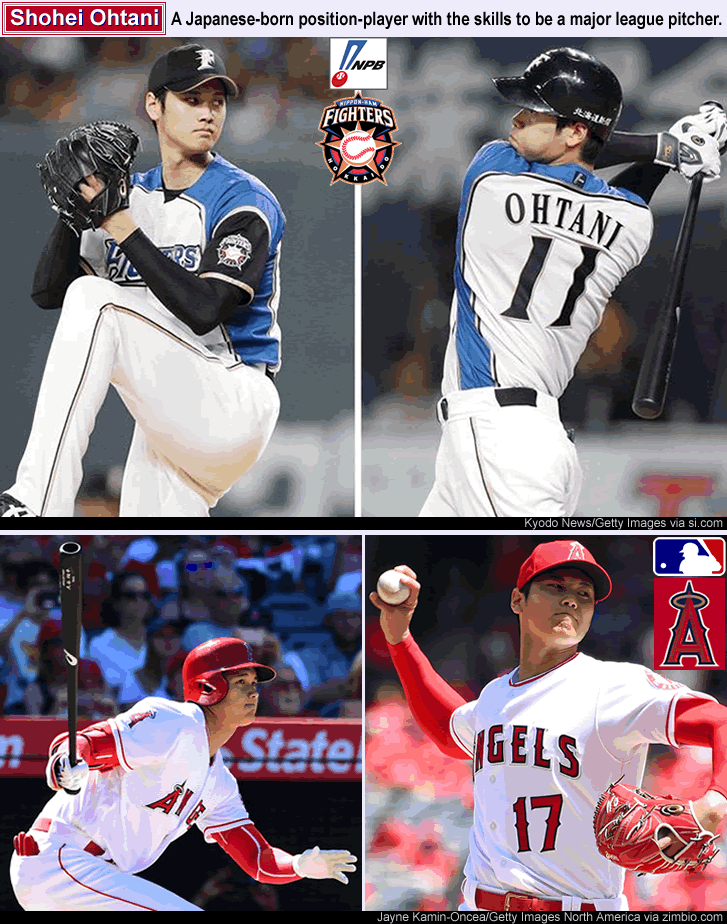
2012, from Hokkaido Nippon-Ham Fighters – Yu Darvish, P (Texas Rangers).
…
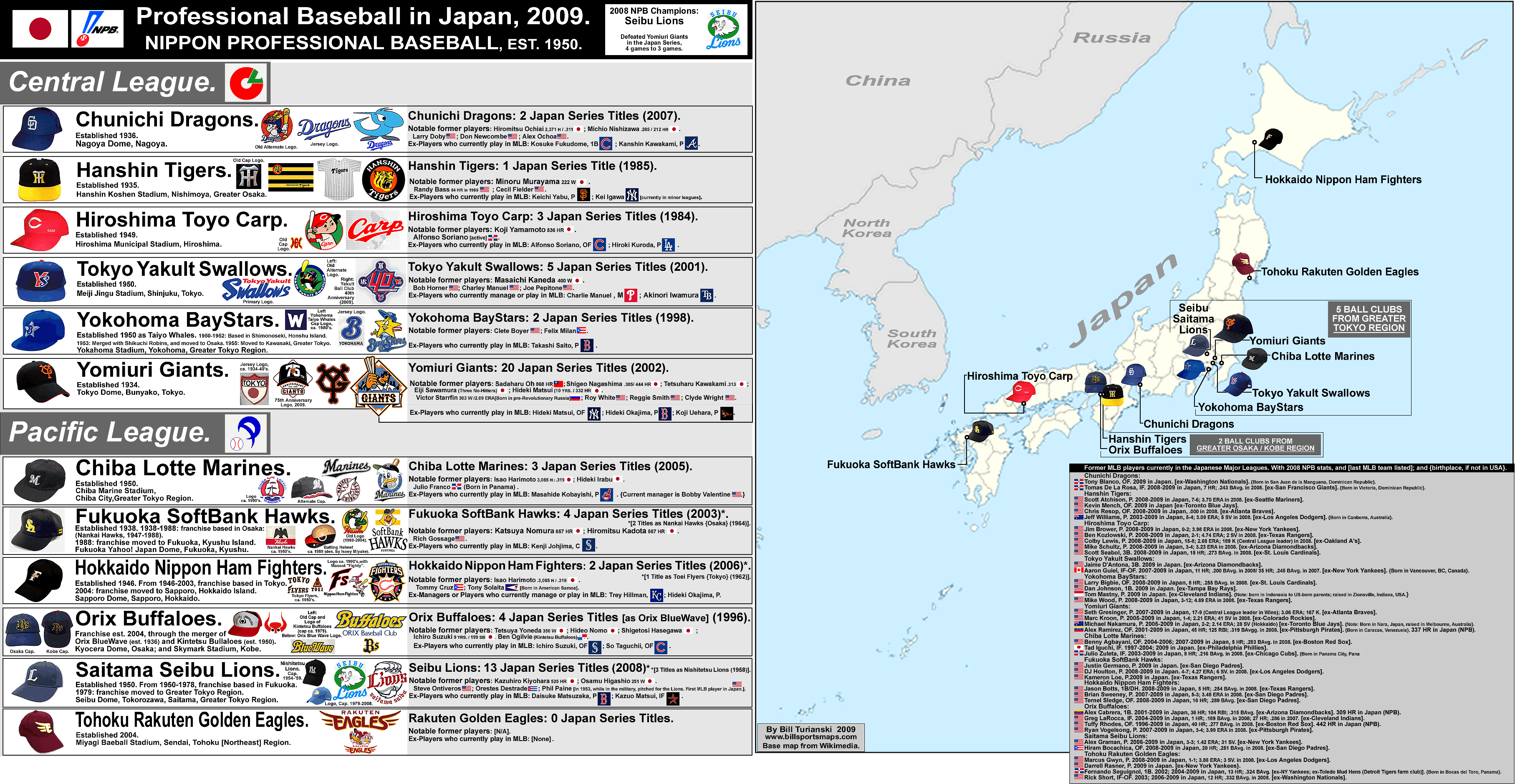
Brief descriptions of the 12 NPB teams, including – year of establishment, franchise history, ownership profile, stadium (with capacity and location listed) and titles:
Overview of NPB teams…this site, Bob Bavasi’s JapanBall.com, does it much better than I could… ‘Teams/Leagues [Nippon Professional Baseball]‘.
Yomiuri Giants
Est. 1934 / Charter member of NPB, 1950.
The Great Japan Baseball Club (1934-35, as an independent touring team) / Tokyo Kyojin (1936-46) / Yomiuri Giants (1947-present).
Owner: Yomiuri Group (which owns Japan’s [and the world's] largest newspaper, Yomiuri Shimbun, which has a circulation of 14 million daily).
Tokyo Dome, capacity 55,000. Bunkyo ward, Tokyo, Tokyo Prefacture.
33 Central League Pennants (2009).
23 Japan Series titles (2009).
…
Saitama Seibu Lions
Est. 1950 / Charter member of NPB, 1950 (as Nishetetsu Clippers).
Nishetetsu Clippers (1950) / Nishetetsu Lions (1951-1972) / Taiheiyo Club Lions (1973–76) / Crown Lighter Lions (1977–78) / Seibu Lions (1979–2007) / Saitama Seibu Lions (2008–present).
Owner: Seibu Railway (a conglomerate centered in NW Tokyo and Saitama Prefecture, involved in railways, tourism, and real estate).
Seibu Dome, capacity 35,655. Tokorozawa, Saitama Prefacture [in Greater Tokyo].
21 Pacific League Pennants (2008).
13 Japan Series titles (2008).
…
Fukuoka SoftBank Hawks
Est. 1938 / Charter member of NPB, 1950 (as Nankai Hawks).
Nankai Hawks (1938–44) / Kinki Nippon (1944–45) / Kinki Great Ring (1946–47) / Nankai Hawks (1947–1988) / Fukuoka Daiei Hawks (1989–2004) / Fukuoka SoftBank Hawks (2005–present).
>In 1989 moved from Osaka, south, to Fukuoka, Kyushu Island.
Owner: SoftBank Corp. (a telecommunications conglomerate).
Fukuoka Dome, capacity 35,695. Fukuoka City, Fukuoka Prefacture, Kyushu Island.
5 Pacific League Pennants (2011).
5 Japan series titles (2011).
…
Tokyo Yakult Swallows
Est. 1950 / Charter member of NPB, 1950 (as Koketetsu Swallows).
Kokutetsu Swallows (1950–1965) / Sankei Swallows (1965) / Sankei Atoms (1966–68) / Atoms (1969) / Yakult Atoms (1970–73) / Yakult Swallows (1974–2005) / Tokyo Yakult Swallows 2006-present).
Owner: Yakult Honshu Co. Ltd. (the manufacturer of the yogurt-like drink called yakult; also involved in medicine & health-care).
Meiji Jingu Stadium, capacity 37,933. Shijuku ward, Tokyo, Tokyo Prefacture.
6 Central League Pennants (2001).
5 Japan Series titles (2001).
…
Chiba Lotte Marines
Est. 1950 / Charter member of NPB, 1950 (as Mainichi Orions).
Mainichi Orions (1950–57) / Mainichi Daimai Orions (1958–63) / Tokyo Orions (1964–68) / Lotte Orions (1969–91) / Chiba Lotte Marines (1992–present).
Owner: Lotte Co. Ltd. [of South Korea] (a conglomerate involved in food production and retail sales, construction, chemicals, finance, theme parks, and IT).
Chiba Marine Stadium, capacity 30,000. Chiba City, Chiba Prefacture [Tokyo Bay area].
5 Pacific League Pennants (2005).
4 Japan Series titles (2010).
…
Orix Buffaloes
[Club formed in 2005 as a merger between Orix Blue Wave and Osaka Kintetsu Buffaloes]. Est. 1936 (as Hankyu Braces [Orix Blue Wave, from 1991-2004]) & est. 1950 (Kintetsu Pearls [Kintestsu Buffaloes, from 1959-2004]) / Charter members of NPB, 1950 / in 2005, re-formed as merger between Orix Blue Wave and Osaka Kintetsu Buffaloes.
Owner: Orix Corp. (involved in financial services, real estate, and venture capital).
Dual venues…Kyocera Dome, c. 36,477 / Kobe Sports Park, c. 35,000. Osaka, Osaka Prefecture / Kobe, Hyogo Prefecture.
[Hankyu/Orix Blue Wave: 12 Pacific League Pennants (last in 1996).]
[Kintestsu Buffaloes: 1950-2004, 4 Pacific League Pennants (2001).]
[Orix Blue Wave: 4 Japan Series titles (1996)].
…
Hiroshima Toyo Carp
Est. 1950 / Charter member of NPB, 1950.
Hiroshima Carp (1950–1967) / Hiroshima Toyo Carp (1968–present).
Owner: The Matsuda family of Hiroshima owns around 60%, and Mazda Motor Corp owns around 34% (the Matsuda family were the founders of Mazda).
Mazda Zoom-Zoom Stadium, capacity 32,000.
Hiroshima, Hiroshima Prefacture.
6 Central League Pennants (1991).
3 Japan Series titles (1984).
…
Chunichi Dragons
Est. 1936 / Charter member of NPB, 1950.
Nagoya (1936–43) / Sangyo (1944) / Chubu Nippon (1946) / Chubu Nippon Dragons (1947) / Chunichi Dragons (1947–50) / Nagoya Dragons (1951–1953) / Chunichi Dragons (1954–present)
Owner: Chunichi Shimbun, (an Aichi Prefecture newspaper [in central Japan], with a circulation of 2.6 millon daily).
Nagoya Dome, capacity 40,500. Nagoya, Aichi Prefacture.
8 Central League Pennants (2011).
2 Japan Series titles (1988).
…
Hokkaido Nippon-Ham Fighters
Est. 1946 / Charter member of NPB, 1950 (as Tokyu Flyers).
Senators (1946) / Tokyu Flyers (1947) / Kyuei Flyers (1948) / Tokyu Flyers (1949–53) / Toei Flyers (1954–1972) / Nittaku Home Flyers (1973) / Nippon-Ham Fighters (1974–2003) / Hokkaido Nippon-Ham Fighters (2004–present).
>In 1974, moved from Tokyo, north, to Sapporo, Hokkaido Island.
Owner: Nippon Meat Packers, Inc. (a conglomerate involved in meat packing and food processing; they also own Cerezo Osaka [a J-League soccer team]).
Dual venues: Sapporo Dome, capacity 40,476. Sapporo, Hokkaido Prefecture [Hokkaido Island]; [for a few games each season...] Tokyo Dome, capacity 55,000. Bunkyo ward, Tokyo, Tokyo Prefacture.
5 Pacific League Pennants (2009).
2 Japan Series titles (2007).
…
Yokohoma DeNA BayStars
Est. 1936 / Charter member of NPB, 1950 (as Taiyō Whales, on the southern tip of Honshu [main] Island in Shimonosheki, Yamaguchi Pref.)
Taiyo Whales (1950–52) / Taiyō-Shochiku Robins (1953) / Yō-Shō Robins (1954) / Taiyō Whales (1955–1977) / Yokohama Taiyō Whales / (1978–1992) / Yokohama BayStars (1993–2011) / Yokohama DeNA BayStars (2012–present).
>In 1978, moved north to Yokohoma, as Yokohoma Taiyo Whales.
Owner: DeNA Co. Ltd. (a firm involved in mobile portals and gaming platforms; and e-commerce).
Yokohoma Stadium, capacity 30,000. Yokohoma, Kanagawa Prefacture [Tokyo Bay area].
2 Central League Pennants (1998).
2 Japan Series titles (1998).
…
Hanshin Tigers
Est. 1936 / Charter member of NPB, 1950 (as Osaka Tigers).
Osaka Tigers (1935–40) / Hanshin (1940–44) / Osaka Tigers (1946–1960) / Hanshin Tigers (1961–present).
Owner: Hanshin Electric Railway Co.. (a private railway, whose lines link Kobe and Osaka).
Koshien Stadium, capacity 47,808. Nishinomiya, Hyogo Prefacture [Greater Osaka area].
5 Central League Pennants (2005).
1 Japan Series title (1985).
…
Tohoku Rakuten Golden Eagles
Est. 2005 / expansion team.
Owner: Rakuten, Inc. (an e-commerce firm).
Temporary stadium [for 2012 season]: Kobe Sports Park, Kobe, Greater Osaka.
Regular stadium: Miyagi Baseball Stadium [damaged in the 2011 earthquake], capacity 23,000.Sendai, Miyagi Prefacture.
0 Pacific League Pennants.
0 Japan Series titles.
…
_
Thanks to the contibutors to the pages at en.wikipedia.org, ‘Nippon Professional Baseball‘.
Thanks to Captain Walrus for the circular NPB logos, http://s83.photobucket.com/albums/j303/OOTPLogos/RoundLogos/Nippon/. ‘CAPTAIN WALRUS’S CIRCULAR LOGOS (at ootpdevelopments.com/boards)’.
Thanks to this thread at ootpdevelopments.com, ‘(Kokutetsu Swallows/Sankei Atoms/Yakult Atoms/Yakult Swallows)‘, for the Yakult Swallows’ mascot logo.
Thanks to Yokohoma DeNa BayStars site for new logo and photo of new home cap logo, http://yd.baystars.co.jp/uniform/capflag.html.
Thanks to NPBtracker.com, for for directing me to the above link (BayStars new logo/cap).
Thanks to npb.org.jp, for 2011 final standings table.
Thanks to Biz of Baseball for 2008 MLB league attendance average, bizofbaseball.com.
Thanks to Patrick Newman at Japanesebaseball.com, for 2008 NPB league attendance average, japanesebaseball.com.
Thanks to yakyubaka.com, for attendance data, NPB Central League 2011 attendance data; Pacific League 2011 attendance data.
Thanks to japanesebaseball.com, for directing me to the above link (NPB attendance).
Thanks to Japaneseballplayers.com, for stats.




.svg)