1978 NASL map
…
…
By Bill Turianski on the 26th of February 2025; twitter.com/billsportsmaps.
Links…
-1978 North American Soccer League season (en.wikipedia.org).
-NASLjerseys.com. {Recommended.}
-Rock ‘n’ Roll Soccer: The Short Life and Fast Times of the North American Soccer League, by Ian Plenderleith [of When Saturday Comes], at amazon; bsky.app/[@plenderleithian].
…
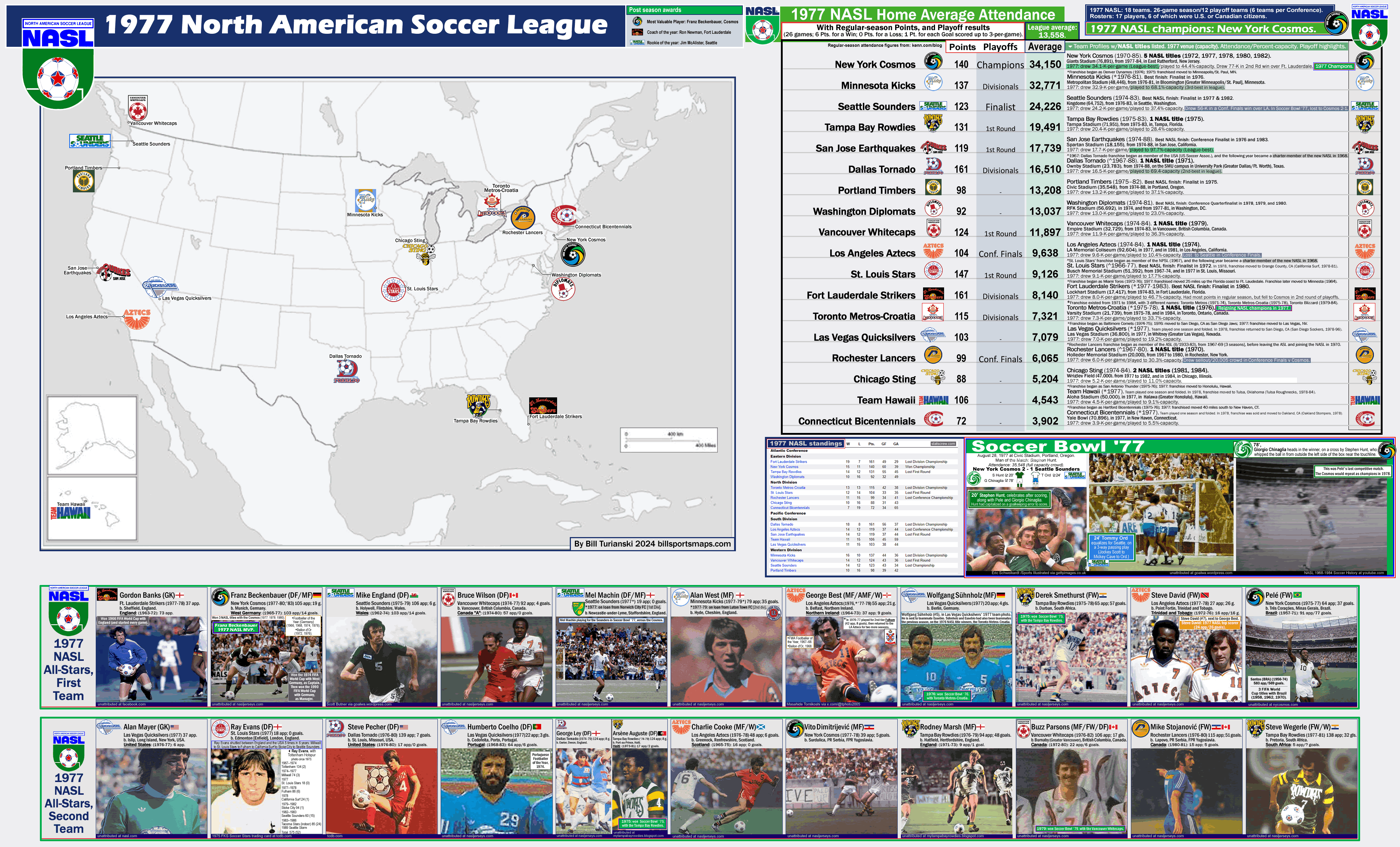
Note: This is the second in a series. The first one is here: 1977 NASL map: the 18 teams of the 1977 North American Soccer League, with attendances; plus 1977 NASL All-Stars (1st and 2nd Teams)
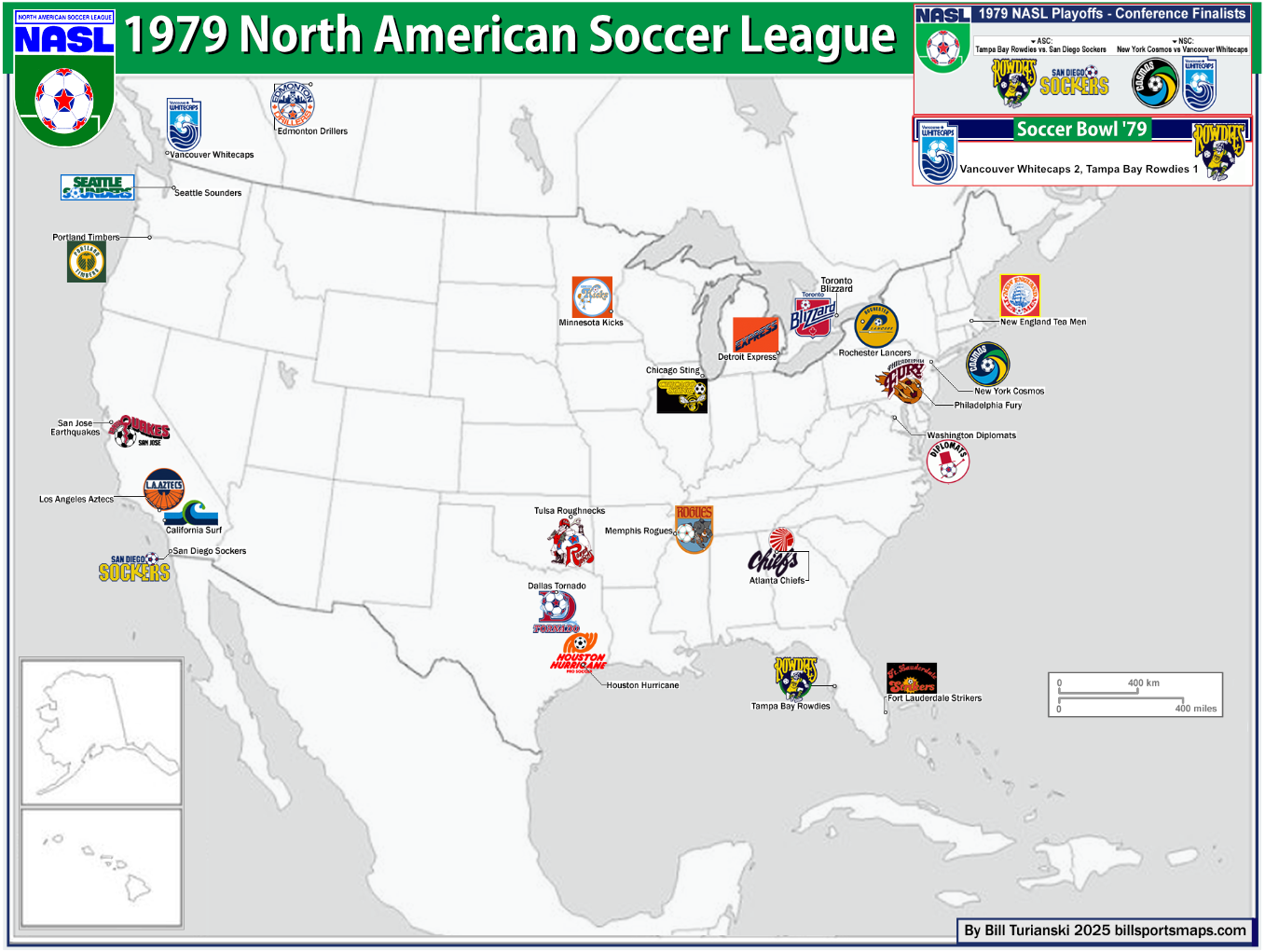
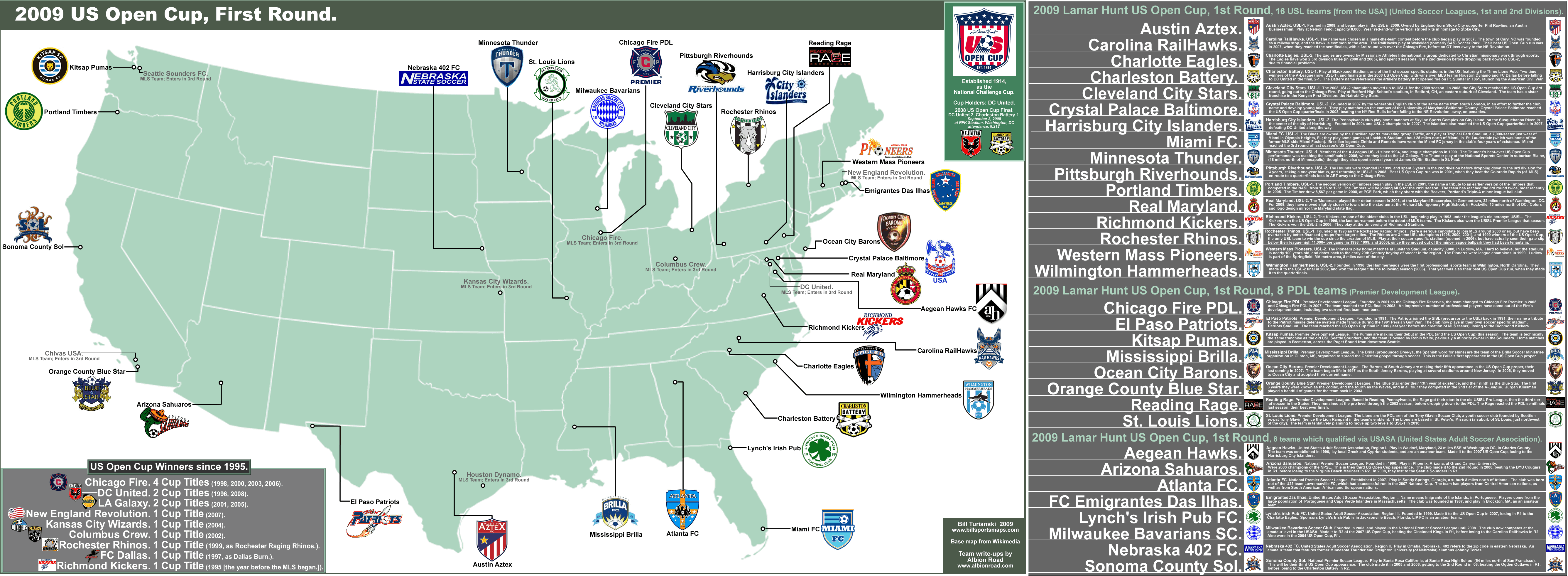
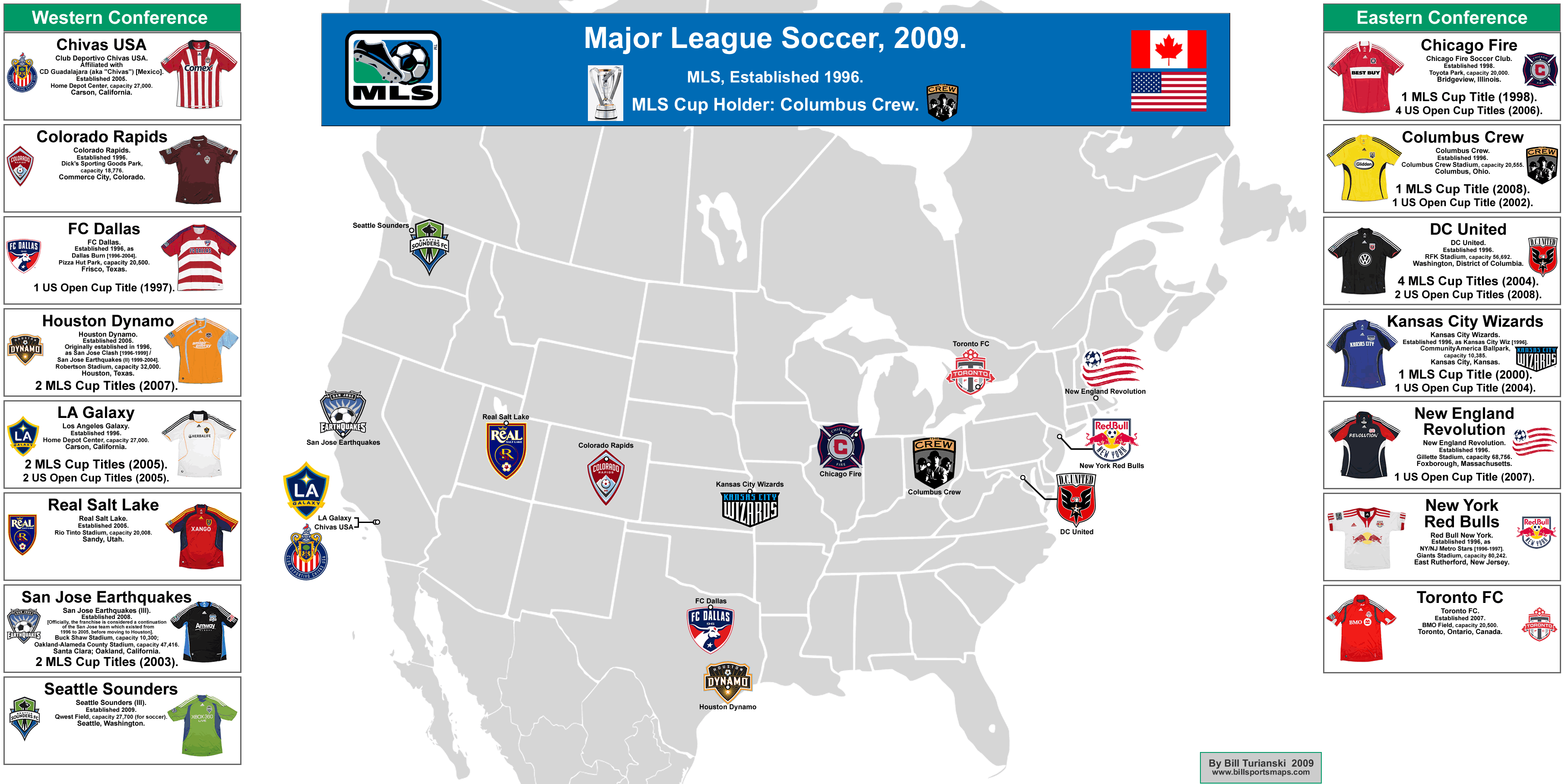
The map is a location-map of the 24 teams of the 1978 North American Soccer League.
To the right of the map is a chart of 1978 NASL Home Average Attendance, by team. Teams’ regular-season-points totals and playoffs results are listed. Next to that is a section that shows thumbnail team profiles (years the team existed [including franchise-shift information], NASL titles, venue & capacity, location, 1978 average attendance & percent-capacity, and 1978 playoff results). In the upper-right corner are the 1978 NASL standings, and the 24 team logos. And below that, at the lower-right-hand side, is a section for Soccer Bowl ’78 (New York Cosmos 3, Tampa Bay Rowdies 1, in front of 74,901 at Giants Stadium, on August 27, 1978).
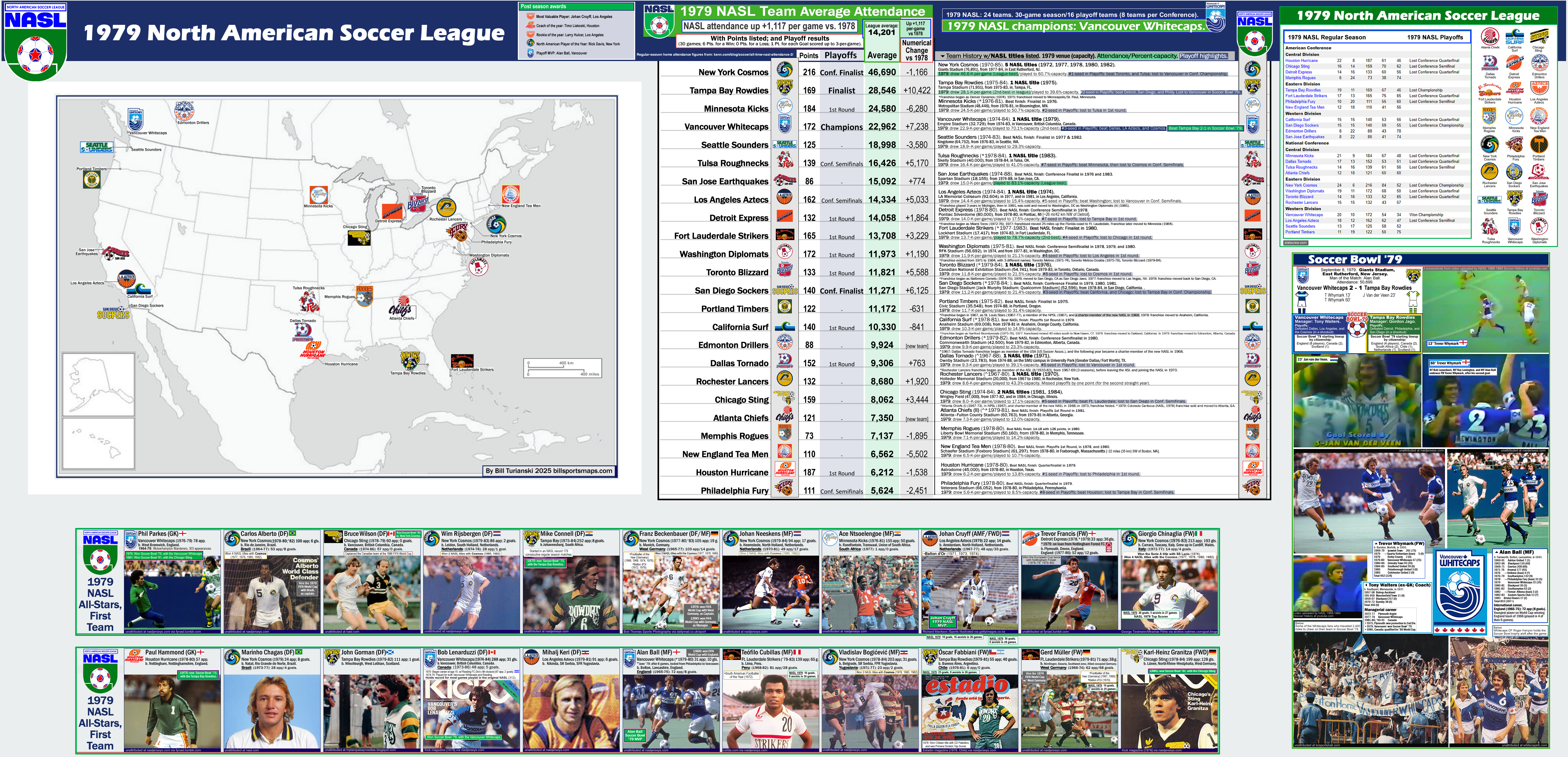
1978 NASL All-Stars, First Team & Second Team (22 players shown, with brief player-profiles). At the foot of the map-page is a long horizontal chart showing the 1st- and the 2nd-team All-Stars. Players are shown in their 1978 kit, if possible (for some players there are very few color images available online). Thumbnail bios, and stand-out honors and statistics are included.
At the center of the top banner there is listed the 1978 NASL post-season awards. Most Valuable Player: the Ilford, Essex-born Mike Flanagan (FW) of the New England Tea Men. Coach of the year: the Southport, Merseyside-born Tony Waiters of the Vancouver Whitecaps. Rookie of the year: the London, England-born Gary Etherington (MF/FWD/DF), of the New York Cosmos. North American Player of the Year: the Vancouver, British Columbia, Canada-born Bob Lenarduzzi (DF) of the Vancouver Whitecaps.
…

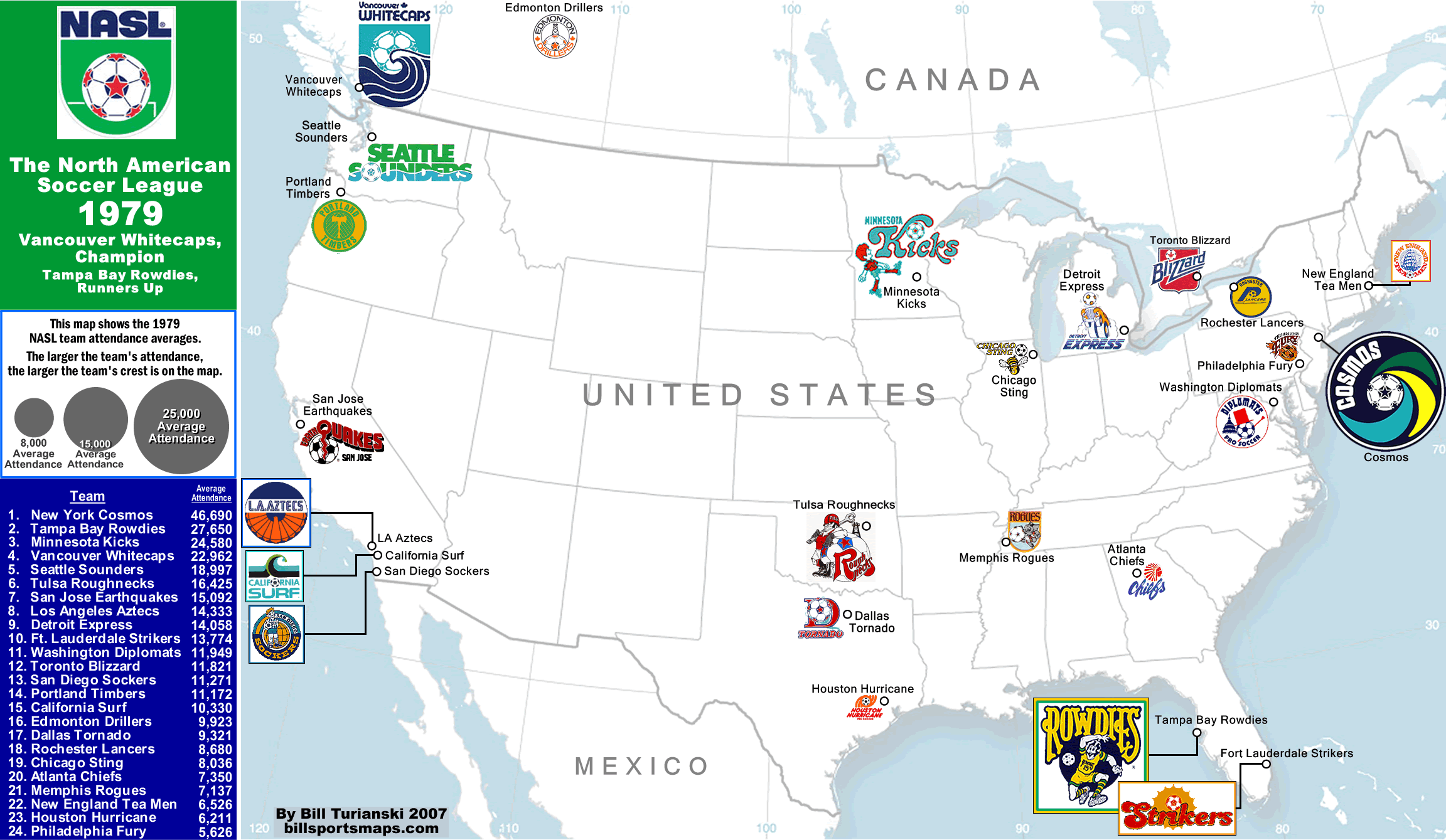
Image above: graphic from Kick magazine [1978] via reddit.com/[NASL soccer].
1978 NASL: 24 teams. 30-game season/16 playoff teams (8 teams per Conference).
Rosters: 17 players, 6 of which had to be U.S. or Canadian citizens.
In 1978, the NASL expanded from 18 to 24 teams. No teams had folded, but 4 franchises had moved to new locations. So that meant there were 10 new teams in the NASL in 1978.
New teams (franchises) in 1978:
-Colorado Caribous (Denver, CO). Only lasted 1 year; in 1979 the franchise moved to Atlanta, Georgia, as Atlanta Chiefs (II).
-Detroit Express (Pontiac [Greater Detroit], MI). Lasted 3 years (1978-80); in 1981 the franchise moved to Washington, DC, as the Washington Diplomats (II).
-Houston Hurricane (Houston, TX). Lasted 3 years (1978-80).
-Memphis Rogues (Memphis, TN). Lasted 3 years (1978-80).
-New England Tea Men (Foxborough [Greater Boston], MA). Lasted 3 years (1978-80); in 1981 the franchise moved to Jacksonville, Florida, as Jacksonville Tea Men.
-Philadelphia Fury (Philadelphia, PA). Lasted 3 years (1978-80); in 1981 the franchise moved to Montreal, Quebec, Canada, as the Montreal Manic.
Franchises moving in 1978:
>Connecticut Bicentennials to Oakland Stompers (Oakland, CA). Only lasted 1 year; in 1979 the franchise moved to Edmonton, Alberta, Canada, as the Edmonton Drillers.
>Las Vegas Quicksilver to San Diego Sockers (San Diego, CA). Lasted 7 years (1978-84).
>St. Louis Stars to California Surf (Anaheim, CA). Lasted 4 years (1978-81).
>Team Hawaii to Tulsa Roughnecks (Tulsa, OK). Lasted 7 years in NASL (1978-84), then Tulsa continued on as an independent team in 1985 (played friendlies, only).
In 1978, the NASL league set-up was drastically changed. The NASL implemented a 2-conference/6-division alignment copied directly from the NFL, even down to the names…American Soccer Conference (ASC) and National Soccer Conference (NSC), with each having East, Central and West divisions [of 4 teams each].) A full two-thirds of the 24 teams (16 teams!) would make it to the playoffs. Critics grumbled that the NASL now really had 2 seasons: the regular season and the playoffs.
In any case, there was a glaring flaw in the re-alignment. By filling the ASC with all 6 of the new franchises (California, Detroit, Houston, Memphis, New England, Philadelphia) and one of the four re-located teams (Oakland), the NASL created a power imbalance. Because the NSC had the dominant New York Cosmos, along with most of the other established, strong, and well-supported teams at the time (Seattle Sounders, Vancouver Whitecaps, Minnesota Kicks, Portland Timbers). Plus the NSC also had some other competitive teams with smaller fanbases, like the 1976 NASL champions, Toronto, and the 1977 conference playoff finalist the Rochester Lancers, as well as the Washington Diplomats. In comparison, the only established, strong, and well-supported teams in the ASC were the Tampa Bay Rowdies and the Fort Lauderdale Strikers (the San Jose Earthquakes were established and well-supported, but they began a slip into mediocrity in ’78). For the next 3 seasons, an NSC team would win the title (the Cosmos in ’78, the Whitecaps in ’79, and the Cosmos again in 1980).
Photo below: Opening day of the 1978 NASL season. The Rose Bowl in Pasadena, California. April 9 1978. New York Cosmos vs. Los Angeles Aztecs.
The Cosmos’ Franz Beckenbauer enters the field, cheered on by the Cosmos cheerleaders. The star-studded New York Cosmos were the reigning NASL champions, and the best drawing team. And everywhere else they played, they drew huge crowds as well. In 1978, the Cosmos would draw even more (their average attendance increased by 13 thousand, to 47 thousand per game). And the Cosmos would repeat as champions.

Photo credit above – Tony Duffy/Allsport/Hulton Archive/Getty Images via gettyimages.co.nz.
The success of the New York Cosmos meant that most NASL teams tried to sign expensive and aging international stars, which ended up bankrupting teams 3 or 4 years down the road. But one team that had initial success doing this was the brand-new Detroit Express, who played in the Silverdome (home of the NFL’s Detroit Lions). The Express got the Plymouth, Devon-born FW Trevor Francis, on loan from Birmingham City. (The next year Trevor Francis became the first player sold for over 1 million pounds [to Nottingham Forest, where he scored the winning goal in the European Cup in 1980].) Francis did not arrive in Detroit until 10 games in, yet still was in among the top scorers (22 goals and 10 assists in just 19 games), and was a 1st Team All-star {see his thumbnail profile at the foot of the map page}. This propelled the Express to the best record in the new American Conference (ASC), at 20-10. Detroit drew 12.1-K-per-game (7th-best).
The ASC’s #2-seed for the playoffs went to the ASC East winners, the New England Tea Men, another new franchise, as the NASL returned to Boston. The Tea Men were owned by Lipton Tea, and the team’s jersey featured the Lipton brand’s trademark primrose-yellow-and-red colors, fashioned into a giant capital-T shape. The Tea Men did sign a key international, though he was neither a star nor aging – that was 1978 NASL MVP Mike Flanagan, who came over on loan from 2nd-division Charlton Athletic {see his thumbnail profile at the foot of the map page}. The Essex-born Flanagan put up unquestionably great numbers, and had the second-most goals in ’78 (30 goals and 8 assists in 28 games), but he had less goals and less assists than Giorgio Chinaglia…yet was still voted MVP. This was probably a case of the NASL trying to make it not look like it was all just the Cosmos plus a cast of others. Flanagan had a contract dispute, went back to England, and never matched the numbers he put up in the NASL in ’78. The Tea Men also featured 3 other 1st Team All-Stars, GK Kevin Keelan (who holds the record for most appearances for Norwich City), Dublin-born Irish international MF Gerry Daly, and Cambridgeshire-born DF Chris Turner (who made 314 appearances for Peterborough United). The Tea Men played at the home of the NFL’s New England Patriots, Schaefer Stadium, and drew 12.0-K-per-game (8th best).
In the National Soccer Conference, the Cosmos set records for most wins (24-6), and points (212), in an NASL season (the 24-6 record in ’78 was shared with the Vancouver Whitecaps). The Cosmos scored 88 goals, 20 more than any other team. The Cosmos’ Anglo-Italian FW Giorgio Chinaglia was top scorer (34 goals, 11 assists in 30 games). And the Cosmos had an excellent playmaker in ex-Red Star Belgrade MF Vladislav Bogićević, who scored 10 goals, with 17 assists, in 30 games, and was a 2nd Team All-Star. Another scoring threat was the Birmingham, West Midlands FW Steve Hunt (12 goals, with 12 assists, in 25 games), who was a 2nd Team All-Star. Yet another scoring threat was another Englishman, the Newcastle-born FW Dennis Tueart (10 goals, 12 assists in 20 games). Plus 1st Team All-Stars and former World Cup champions Franz Beckenbauer and Carlos Alberto also still featured in the formidable ’78 Cosmos’ squad. And the Cosmos already-great home attendance figures only got better at Giants Stadium in East Rutherford, New Jersey. In 1978, the Cosmos had a staggering 13,700-per-game attendance increase, up to a NASL-record 47,856 per game.
The NSC’s #2-seed for the playoffs went to the NSC West winners, the Vancouver Whitecaps, who, as mentioned above, had the same record-setting win-loss total, but scored 20 less goals, than the Cosmos, and ended up with 13 less bonus points. The Whitecaps had a basically unknown lineup; they featured two 2nd Team All-Stars: DF and captain John Craven (Lancashire born, with 164 appearances for Blackpool); and Leeds, Yorkshire-born FW Kevin Hector, who put up solid numbers (21 goals, 10 assists in 28 games). (Kevin Hector has the most appearances for Derby County: 486 app/155 goals.) In 1978, the Whitecaps also had the goalkeeper with the lowest goals-against figure: Phil Parkes (a 0.95 GA Avg), but Parkes was inexplicably not voted as an all-star (though he would be in ’79 and ’80). The Whitecaps also had former Nottingham Forest and Derby County MF Alan Hinton, who set an NASL record with 30 assists (but also was not voted an all-star). In 1978, Vancouver had the 2nd-largest attendance increase in the league: up 3.8-K-per-game to 15,724 per game (5th-best). In the playoffs, they drew huge (see further below). The following season of 1979 would see the Vancouver Whitecaps as champions.
…
…
Soccer Bowl ’78 Playoffs…
Conference Quarterfinals (One-game series) [August 8-10]…
In the ASC…
The #1-seed Detroit Express beat the #8-seed Philadelphia Fury 1-0, before a good crowd of 22.4-K at the Pontiac Silverdome in Michigan. The #7-seed Fort Lauderdale Strikers upset the #2-seed New England Tea Men 1-3, in front of a decent crowd of 18.6-K at Schaefer Stadium in Massachusetts. The #3-seed San Diego Sockers beat the #6-seed California Surf 2-1, in front of a disappointingly small crowd of 6.2-K, in San Diego. And the #4-seed Tampa Bay Rowdies beat the Chicago Sting 3-1, in front of a large crowd – there were 26.8-K at Tampa Stadium. (Tampa Bay Rowdies were the 4th-highest drawing team in ’78, averaging 18.1-K in the regular season.)
In the NSC…
The #1-seed New York Cosmos beat the #8-seed Seattle Sounders 5 to 2, before a solid crowd of 47 thousand at Giants Stadium in New Jersey. In an all-Canadian cities match-up, the #2-seed Vancouver Whitecaps beat the #7-seed Toronto Metros-Croatia 4-0, in front of a nearly-full-capacity crowd of 30.8-K at the 32.7-K-capacity Empire Stadium, in Vancouver. The #3-seed Minnesota Kicks beat the #6-seed Tulsa Roughnecks 3-1, in front of a typically-large-Minnesota-crowd of 36.4-K at Metropolitan Stadium in Bloomington, Minnesota. (The Minnesota Kicks were the 2nd-highest-drawing team in 1978, drawing above 30-thousand per game for the second straight year. The Kicks’ secret was low-priced tickets and their encouragement of a vast pre-game tailgate party-scene.) And the #4-seed Portland Timbers beat the Washington Diplomats 2-1 (in overtime), in front of 14.2-K at Civic Stadium in Portland, Oregon.
Conference Semifinals (Home and Away games, with no aggregate goals, but a 30-minute Mini-Game if the series was tied [drawn] after both games) [August 12-17]…
In the ASC…
The top-seeded Detroit Express were beaten by the Fort Lauderdale Strikers. In the 1st game down in Fort Lauderdale, before a crowd of 11.5-K at Lockhart Stadium, the Strikers won 4-3 (Shootout 3-2). In the 2nd game up in the Pontiac Silverdome, before a fantastic team-record crowd of 32 thousand, the Express won 1-0. So it went to the 30 minute mini-game, in which the underdog Ft Lauderdale prevailed (0-1). The other ASC semifinal saw the Tampa Bay Rowdies beat the San Diego Sockers, with the Rowdies winning the 1st game in San Diego 0-1, before yet another pathetically small southern-California-soccer-crowd of just 8-K. San Diego won the 2nd game in Tampa 1-2, before a solid crowd of 32-K; the mini-game went to Tampa Bay, 1-0.
In the NSC…
The Cosmos beat the Minnesota Kicks, but it went to the extra mini-game and then the shootout to decide it. Minnesota drew a club-record 45,863 in the 1st game and blew out the Cosmos 9 to 2 (but aggregate goals did not count for anything in the NASL). In the 2nd game, at Giants Stadium, before 60 thousand fans, the Cosmos prevailed 4-0; the mini-game went scoreless, and the Cosmos won the shootout 2-1. The other ASC semifinal saw the Portland Timbers beat the Vancouver Whitecaps; the Timbers won the 1st game at home in front of 16-K, and Portland also won the 2nd game up in Vancouver, with the Whitecaps drawing a then-club-record 32.2-K.
1978 Conference Finals…

In the ASC…
Tampa Bay Rowdies vs. Ft. Lauderdale Strikers.
Tampa Bay had a tough time getting by their in-state rivals, the Strikers. In the 1st game at the 17.4-K-capacity Lockhart Stadium, in Ft. Lauderdale, Florida, the attendance was 16,286 [at a solid 93.5 percent-capacity]. The Strikers won 3-2. In the 2nd game, in torrential rain, at the 71-K-capacity Tampa Stadium, there was a huge crowd of 37,249 [52.4 percent-capacity]. (That 37.2-K attendance was, at the time, the Rowdies’ best ever in a non-Cosmos game.) The Rowdies beat the Strikers 3-1, so that made it necessary for the Mini-game decider. And after a scoreless 30 minutes, it went to the 5-second-shootout phase. The Rowdies won the shootout 2-1. MF Rodney Marsh scored the winning shootout goal with a low rolling shot that just avoided the goalkeepers’ boot and just slid inside the left post (the 9-times English international Rodney Marsh was a 1st Team All-Star in 1978). Hundreds of Rowdies fans invaded the pitch in celebration after Marsh scored the winner. {See this 1-minute video uploaded by NASL 1968-84 Soccer History at youtube.com, 1978 08 23 Fort Lauderdale Strikers vs Tampa Bay Rowdies.}
In the NSC…
New York Cosmos vs. Portland Timbers.
The Cosmos dispatched the Timbers with ease. In the 1st game at the 35.4-K-capacity Civic Stadium, in Portland, Oregon, there was a good crowd of 24,515 [at 68.9 percent-capacity]. The Cosmos won 1-0. In the 2nd game at the 76.8-K-capacity Giants Stadium, in East Rutherford, New Jersey, attendance was 65,287 [at a solid 84.9 percent-capacity]. The Cosmos won 4-0.
Soccer Bowl ’78: New York Cosmos 3, Tampa Bay Rowdies 1. August 27,1978 at Giants Stadium, East Rutherford, NJ, attendance 74,901 [97.4 percent-capacity]…

{See this 4-minute video uploaded by New York Cosmos at youtube.com, Cosmos Classics: The New York Cosmos Win Soccer Bowl ’78.}
The New York Cosmos were coached by Eddie Firmani. The Cosmos were the reigning champions and were playing in their third NASL Final (their first was in 1972, over the St. Louis Stars). The Tampa Bay Rowdies were coached by Gordon Jago. The Rowdies were in their second Soccer Bowl in 4 years (they won Soccer Bowl ’75, over Portland). Tampa Bay was disadvantaged from the start – they were without their key playmaker Rodney Marsh (whose shin injury had gotten infected). Also, the game was not being played at a neutral venue – the Rowdies had to play in the Cosmos’ home stadium. The NASL had decided to play Soccer Bowl ’78 at Giants Stadium – their best-drawing venue – because they wanted a big sell-out crowd. They got that, but they also got an uneven match-up and a huge Cosmos home-advantage.
For the first 30 minutes of the game, both teams had scoring opportunities, but it stayed deadlocked. In the 31st minute, the Cosmos’ Dennis Tueart scored on a swiveled volley kick (with an assist by Steve Hunt). The goal came about when the Cosmos’ Canadian-born DF Bob Iarusci broke up a Tampa Bay offensive rush, and found Winger Steve Hunt open on the left flank. Hunt took the pass and crossed it over to the right side of the box, to an open Dennis Tueart, who volleyed the ball left-footed into the net. {In the Soccer Bowl ’78 section on the lower section of the map page, here, Tueart is seen striking the ball to the far post, past Rowdies goalkeeper Winston DuBose.}
Just before halftime (45′), Giorgio Chinaglia made it 2–0. Chinaglia scored on a rare header, from 12 yards out. The goal came off of the rebound of a shot by Steve Hunt, when the ball had bounced upwards, off of the collapsed goalkeeper.
In the 2nd half, Tampa Bay had a steady run of scoring chances, as did the Cosmos. In the 71st minute, Tampa Bay scored on a goal by Mirandinha (with an assist from David Robb). Tampa Bay’s David Robb stole a pass from Dennis Tueart in the Cosmos’ end, and passed it to Mirandinha near the top of the box. The Brazilian used the outside of his foot to curl a low shot past Cosmos’ goalkeeper Jack Brand, with the ball bouncing off the near post and into the goal.
But just 3 minutes later, the Cosmos answered back, with a 77th minute goal by Dennis Tueart (assist by Werner Roth). Cosmos’ captain DF Werner Roth nutmegged Tampa Bay DF Joey Fink, then slotted a pass, finding Dennis Tueart at the top-right of the box. Tueart rounded the ‘keeper, and scored from a tight angle. Dennis Tueart was selected as MVP of Soccer Bowl ’78. The Cosmos were back-to-back NASL champions.

Image above – from Shoot magazine [England, 1978] via facebook.com/[1970s Soccer USA].
The 1978 NASL season was the start of what many consider to be the league’s Golden Age. Yet what was generally overlooked was the fact that, besides the Cosmos, most of the established teams had decreases in attendance – Minnesota, Seattle, Tampa Bay, Washington, Portland, and most alarmingly, Dallas (with attendance down 7.9-K per game). Of the other established teams besides the Cosmos, only Vancouver, San Jose, Ft. Lauderdale, and Rochester had an increase in attendance. Of the 10 new teams, 5 drew promising numbers, all drawing between 11.0-K-to-12.2-K…Detroit Express, New England Tea Men, Oakland Stompers, Tulsa Roughnecks, and California Surf. But Oakland folded up and moved to Edmonton, Alberta. (Tulsa would go on to be 1984 NASL champions.) In 1978, the NASL’s overall average attendance was 13,084, which was actually a decline of 474-per-game from 1977 (although attendance would rise in both 1979 and ’80).
The entire spectacle of the NASL was vastly entertaining, but it was becoming apparent that it was built upon an unsustainable business model (paying big bucks for foreign stars, while ignoring the potential of home-grown talent). The next 3 seasons would bear that out.
___
Soccer Bowl ’78 photo credits…
-Top-row shot of Soccer Bowl ’78 crowd at Giants Stadium in New Jersey, photo by George Tiedemann /Sports Illustrated via gettyimages.co.ie. -4 screenshots from ’1978 08 27 Tampa Bay Rowdies vs New York Cosmos Soccer Bowl’, uploaded by NASL 1968-1984 Soccer History at youtube.com (31′, Dennis Tueart scores; 45′, Giorgio Chinaglia scores; 74′, Mirandinha scores; 77′, Dennis Tueart scores his second goal). -Giorgio Chinaglia, photo from facebook.com. -Dennis Tueart with Soccer Bowl ’78 trophy, post game, photo unattributed at manchestereveningnews.co.uk/sport.
…
Photo credits of 1978 NASL All-Stars…
First Team…
-Kevin Keelan, New England Tea Men (GK), photo unattributed at nasljerseys.com/[Keelan, Kevin].
-Carlos Alberto, New York Cosmos (DF), photo unattributed at nasljerseys.com.
-Mike England, Seattle Sounders (DF), photo (from 1976 pre-season) by Scott Butner via goalwa.wordpress.com.
-Ray Evans, St, Louis Stars (DF), photo unattributed at nasljerseys.com.
-Chris Turner, New England Tea Men (DF), photo unattributed nasljerseys.com/Turner, Chris].
-Franz Beckenbauer, New York Cosmos (MF/DF), photo unattributed at si.com/soccer.
-Gerry Daly, New England Tea Men (MF), photo unattributed at nasljerseys.com/[Daly, Gerry].
-Rodney Marsh, Tampa Bay Rowdies (MF), photo unattributed at nasljerseys.com/[Marsh, Rodney].
-Trevor Francis, Detroit Express (FW), photo unattributed at nasljerseys.com/[Francis, Trevor].
-Mike Flanagan, New England Tea Men (FW), photo unattributed at nasljerseys.com/[Flanagan, Mike].
-Giorgio Chinaglia, New York Cosmos (FW), photo by George Tiedmann/courtesy Miramax Films via archive.nytimes.com/goal.blogs.
Photo credits of 1978 NASL All-Stars…
Second Team…
-Alan Mayer, San Diego Sockers (GK), photo from KICK magazine [1978] via nasljerseys.com/Mayer, Alan.
-Bruce Wilson, Chicago Sting (DF), photo unattributed at nasljerseys.com/[Wilson, Bruce].
-Arsène Auguste, Tampa Bay Rowdies (DF), photo unattributed at mytampabayrowdies.blogspot.com.
-John Craven, Vancouver Whitecaps (DF), photo unattributed at nasljerseys.com/[Craven, John].
-Alan Merrick, Minnesota Kicks (DF), photo unattributed at nasljerseys.com[Merrick, Alan].
-Vladislav Bogićević, New York Cosmos (MF), photo unattributed at nasljerseys.com/[Bogicevic, Vladislav].
-Alan Ball, Philadelphia Fury (MF), photo unattributed at nasljerseys.com/[Ball, Alan].
-Ray Hudson, Fort Lauderdale Strikers (FW), photo unattributed at nasljerseys.com/[Hudson, Ray].
-Steve Wegerle, Tampa Bay Rowdies (FW), image unattributed at facebook.com/TampaBayRowdies/videos.
-Kevin Hector, Vancouver Whitecaps (FW), photo unattributed at nasljerseys.com/[Hector, Kevin].
-Steve Hunt, New York Cosmos (FW), photo unattributed at nasljerseys.com/[Hunt, Steve].