billsportsmaps.com

January 26, 2012

2011-12 FA Cup, Fourth Round Proper.

Filed under: 2011-12 FA Cup — admin @ 1:05 pm

2011-12_fa-cup_4th-round_post_.gif
2011-12 FA Cup Fourth Round


FA Cup – results, fixtures, articles (bbc.co.uk/FA Cup).

[Note: the text and the illustration below were added 2 days after this post was originally posted.]
FA Cup 4th Round upsets, from Saturday 28 Jan. 2012 -
Hull City 0-1 Crawley Town…45 places and 2 leagues separate Crawley Town (who are in 3rd place in League Two) and Hull City (who are 8th in the Championship).

Brighton & Hove Albion 1-0 Newcastle United…24 places and 1 league separate Brighton (10th in the Championship) and Newcastle (6th in the Premier League).

Liverpool 2-1 Manchester United…5 places separate Liverpool (7th in the Premier League) and Man Utd. (2nd in the Premier League).

Bolton Wanderers 2-1 Swansea City…4 places separate Bolton (17th in the Premier League) and Swansea (13th in the Premier League).

liverpool-2_1-man-utd_2011-12_fa-cup_4th-round_-.gif

Photo credits above – Reuters via dailymail.co.uk. Getty images via uefa.com.
_
Thanks to the contributors to the pages at en.wikipedia.org, ‘2011-12 FA Cup‘.
Thanks to the FA.com, for the photo of the FA Cup trophy.

January 19, 2012

2012 Copa Libertadores, map of the 38 clubs in the competition.

Filed under: Copa Libertadores — admin @ 5:00 pm

copa-libertadores2012_post_f.gif
2012 Copa Libertadores


Copa Libertadores – scores, schedule, and standings (ESPN Soccernet).
First Stage – 2012 Copa Libertadores preliminary round matches begin on 24 and 25 January; second-leg matches from 31 Jan. to 2 Feb.
The 32-team Second Stage – The 8 4-team groups begin their 6-games-per-team schedules on 8 February, ‘2012 Copa Libertadores/schedule’ (en.wikipedia.org).

The 2012 Copa Libertadotes is the 53rd edition of South America’s most prestigious professional football competition. 2011 winners were Santos FC of Brazil, who, led by the young footballing wizard Neymar, defeated Peñarol (of Uruguay) 2-1 in aggregate to claim their third Copa Libertadores title, and the club’s first since 1963, when the club featured Pelé.

The competetion, run by CONMEBOL, features qualifying clubs from the 10 South American nations under CONMEBOL’s jurisdiction, plus, since 1998, clubs from Mexico (despite the fact that Mexican football is under the jurisdiction of CONCACAF). 9 of the 11 countries involved are allotted 3 qualifying spots, while Argentina and Brazil get 5 spots. The Holder gets an automatic spot, so Brazil has 6 spots in this tournament. The football associations of each country involved have different criteria for awarding their Copa Libertadores spots, and you can see those details here {‘Copa Libertadores/Format/Qualification’ (en.wikipedia.org)}. In general terms, each country’s most recent champion or champions will qualify, plus the best-placed non-champions. In Brazil’s case, the 5 qualifiers are first place through 4th place in the previous year’s Campeonato Brasileiro Série A (Corinthians were champions in 2011), plus the current Copa do Brasil winner (Vasco da Gama were the cup winners in 2011). In Argentina’s case, the qualifiers are the previous year’s Clausura champion (Vélez Sarsfield won it in May, 2011), the previous year’s Apertura champion (Boca Juniors won it in December, 2011), and the next best-placed non-qualifiers via aggregate of the previous Clausura season and Apertura season (Lanús and Godoy Cruz qualified this way); plus the Copa Sudamericana spot. Arsenal de Sarandí qualified this way, as best performance [Semifinalist] in the 2011 Copa Sudamericana not already qualified. Since 2010, the Argentine Football Association has had the winner, or best-placed non-qualified Argentine team, from the Copa Sudamericana also get into the next year’s Copa Libertadores, as the 5th-seeded Argentine team. [The Copa Sudamericana is analogous to the UEFA Europa League tournament in Europe, and features clubs who won national cups or who placed in the 2nd-to-14th-place range in their respective leagues].

The current format, which has been in place since 2005, has 38 teams in it, but 12 of those teams must play in a preliminary round (involving a two-legged tie), called the First Stage, in order to get to the 32-team group stage, which is called the Second Stage. The Second Stage is comprised of 8 groups of 4, and the top 2 in each group advances to the Round of 16.

On the map page, a list of the match-ups for the First Stage (aka preliminary round) is just below the top banner, at the upper right-hand corner. Or you can see the matchups at this link…’2012 Copa Libertadores/First Stage‘.

The map page features a location-map of the 38 clubs, and profiles boxes for the clubs arranged by country. Each club’s profile box features…the club’s crest and home kit; their stadium(s) and location; how the club qualified for the tournament; the club’s total national professional titles (and the year of their most recent title); the club’s total Copa Libertadores appearances (and how the club fared in their most recent Copa Libertadores appearanace); and the club’s Copa Libertadores titles (and the year of most recent title).

After the First Stage is completed, I will post another map of the 32-team Second Stage.


Records and statistics of the Copa Libertadores/by club‘ (en.wikipedia.org).
Below is a chart I put together which lists the 38 qualified clubs by all-time Copa Liberrtadores appearances. Copa Libertadores titles are listed at the far left.
(You can click on the image below to get the chart on a separate page.)
2012-copa-libertadores_qualified-teams_list-of-all-time_titles_appearances_e.gif

Thanks to FootieMap.com, for finding stadium-locations of various clubs, http://www.footiemap.com/.
Thanks to RSSSF – I used this list for all-time Copa Libertadores appearances chart, ‘Copa Libertadores 1960-2010 Club Histories’ at rsssf.com .
Thanks to the contributors to the pages at en.wikipedia.org, ‘2012 Copa Libertadores‘.

January 11, 2012

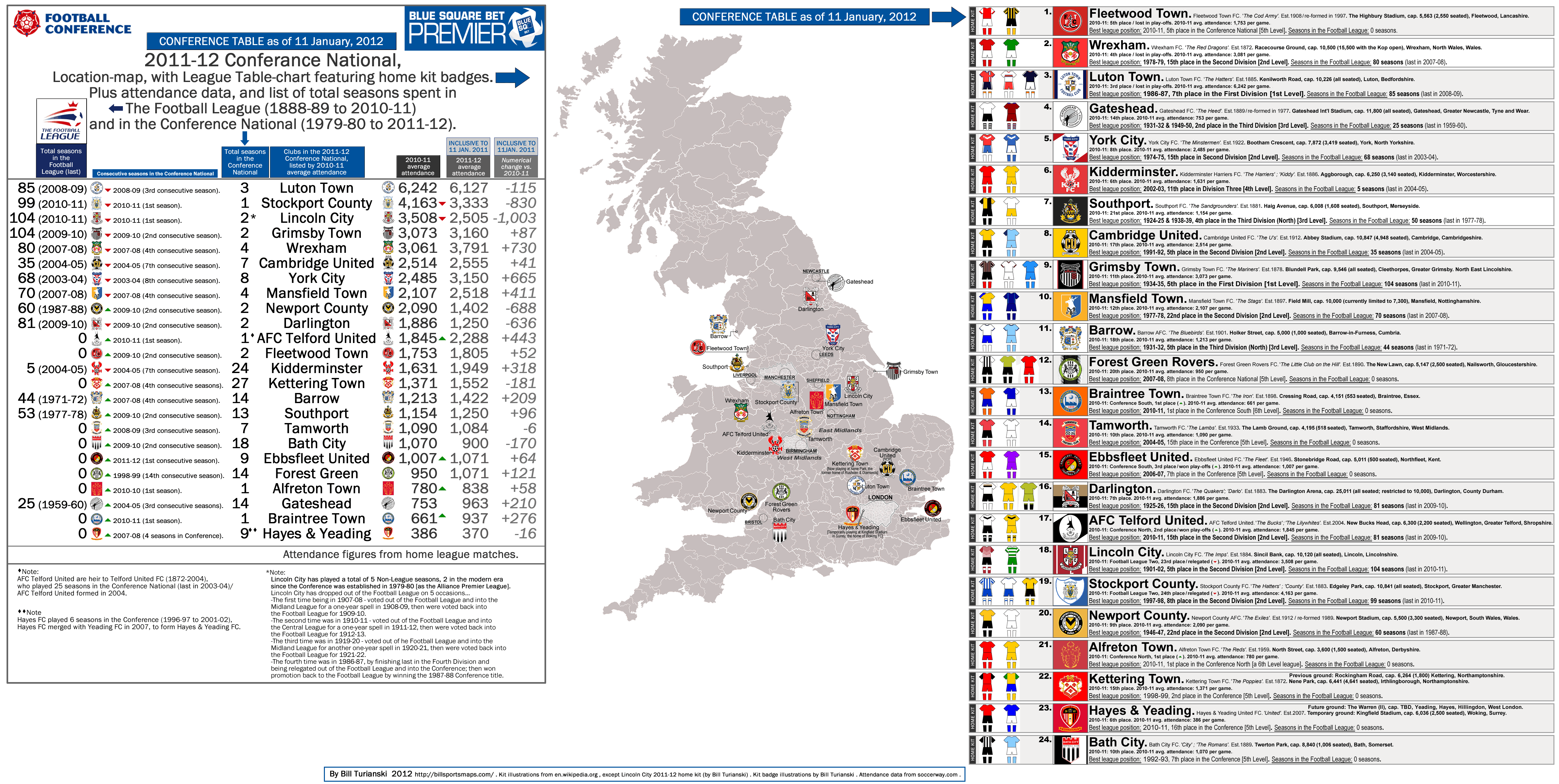
2011-12 Conference National – Location-map, with attendance data and league table chart (inclusive to 11 January, 2012).

Filed under: 2011-12 English Football,Eng-5th level — admin @ 7:00 pm

2011-12_conference_standings-map_jan-2012_post_.gif
2011-12 Conference National


Conference National (aka Blue Square Bet Premier League) – results, fixtures, table (Soccerway.com).

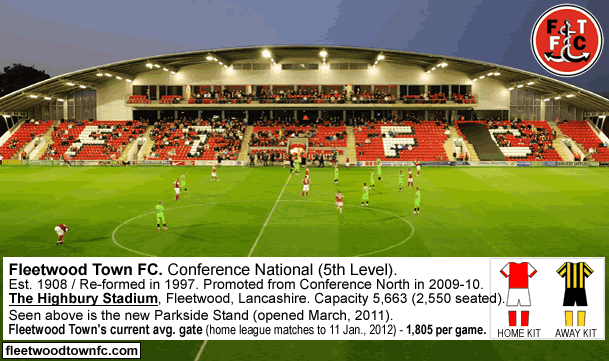
fleetwood-town_parkside-stand_2b.gif
Photo credit – http://www.fleetwoodtownfc.com/club/highbury-stadium/.
As of 12 January, 2012, coastal Lancashire-based Fleetwood Town occupy the sole automatic promotion-spot and lead the Conference by a point over North Wales-based Wrexham, though the Red Dragons have a game in hand on the Cod Army. Fleetwood made a splash recently with their first-ever FA Cup Third Round Proper appearance, though they fell 5-1 to the second-tier club just down the road, Blackpool. Now Fleetwood, managed by the Scot Micky Mellon, can concentrate on their goal of gaining promotion to the Football League for the first time ever.

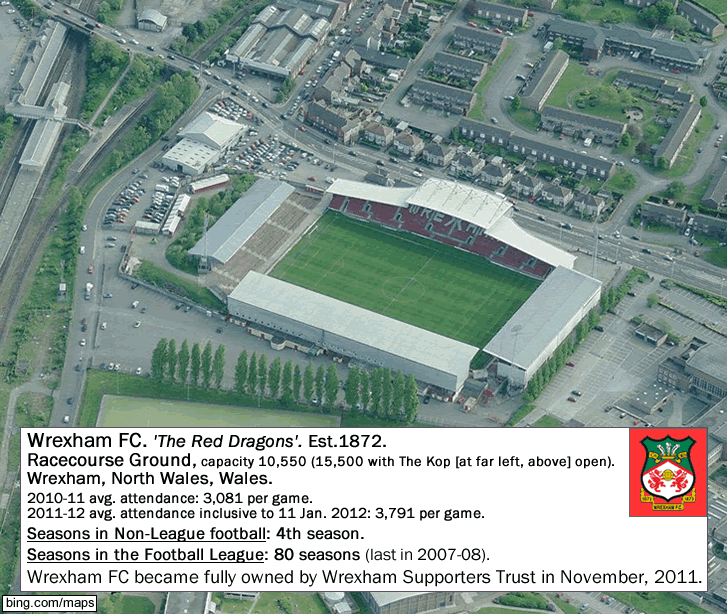
Wrexham have plenty of history in the League (80 seasons, last in 2007-08). Since late 2011, Wrexham has become the latest club in Britain to become fully supporter-owned, and they too have made a few headlines recently, being the sole remaining Non-League club still alive in the 2011-12 FA Cup. From Guardian.co.uk, from 11 Januarry 2012, by David Conn, ‘Wrexham hoping FA Cup run can complete Dragons’ rise from the ashes – Wrexham, now owned by a supporters trust, are making headlines for the right reasons again…‘.
wrexham-fc_racecourse-ground_b.gif
Image credit above – bing.com/maps/bird’s eye satellite view.
Wrexham are helmed by player/manager Andy Morrell, who at 37 is still putting balls into the net. Wrexham is seeing attendance up +23% (730 more per game than last season, to a 3,791 per game average). Wrexham’s gates are currently second-best in the Conference. {Attendance figures can be seen at the following link, just above the league table, here (Soccerway.com)}.

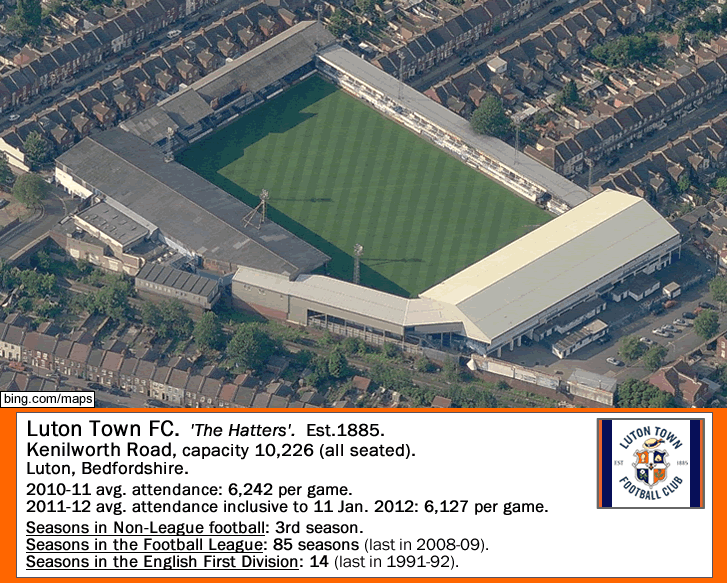
The biggest draw in the Conference is, for the third straight season, Luton Town, who found themselves relegated out of the Football League following financial meltdown and a 30-point deduction in 2008-09. Luton sit third, 6 points off the pace. Like another recent example of a rather large club to be marooned in Non-League football – Oxford United – Luton Town are finding it very hard to get out of the Conference and back into the Football Legaue. It must drive Hatters fans crazy knowing their club outdraws over 75% of fourth-division clubs [League Two] and over 60% of third-division clubs [League One], but still remain at the wrong side of the bottleneck at the top of the fifth division. Luton are averaging above 6,000 per game once again (6,127 per game as of 11 Jan. 2011), which is a spectacular figure for Non-League football.
luton-town_kenilworth-road_b.gif
Image credit above – bing.com/maps/bird’s eye satellite view.

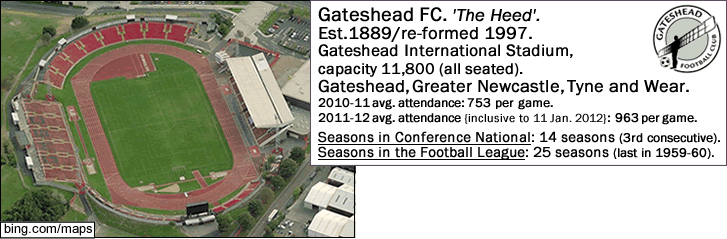
Rounding out the 4 play-off spots are two northern clubs – Gateshead, of Greater Newcastle, in 4th place; and North Yorkshire’s York City, in 5th place. Gateshead’s crowds are not that large for the Conference (where the median figure currently is 1,805 per game)…Gateshead are averaging 963 per game, but that is a +27% increase (an increase of +210 per game).
gateshead-fc_gateshead-international-stadium_c.gif
Image credit above – bing.com/maps/bird’s eye satellite view.
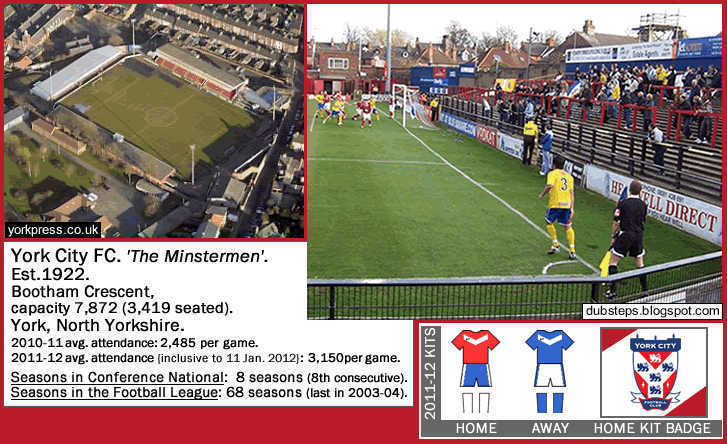
The problem for Gateshead, nicknamed ‘the Heed’ [a Geordie colloquialism for the word 'Head'), is that they play in a dire multi-purpose stadium, the Gateshead International Stadium, that is as charmless as a running track-scarred venue can get. York are drawing well these days (currently averaging 3,150 per game), despite the fact that the Minstermen's ground is inadequate in a different way - their Bootham Crescent (opened 1932) is a relic of a ground that harks to a bygone era. From York City official site, 'Why Not Bootham?'.
Here is a supporters' site dedicated to getting York City a new ground - http://www.astadiumforyork.com/
york-city-fc_boothan-crescent_b.gif
Photo credits above - yorkpress.co.uk. dubsteps.blogspot.com/2007/11/york-city-havant-waterlooville
That bygone era included no automatic relegation out of and promotion into the Football League, and York City, stuck in the Conference since 2004-05, could be seen as a prime example of a certain type of club - the once-seemingly-permanent-members of the 4th Division who must now labor in the wilds of the Non-League game. Back in the day (before 1986-87), the York Citys of the English football scene didn't really have to worry about losing their League status if they finished in last place, because the old boys' network of club owners would inevitably vote back in last place finishers almost year-in and year-out. In the 29 seasons from when the Fourth Division was formed, in 1958-59, to 1985-86 (which was the last season in the Football League with no automatic relegation out of the League), only three clubs got voted out of the Football League. So the last place finisher (or second-to-last place finisher, see below) in the Football League was spared 26 out of 29 times. It happened to York City in 1980-81, when they finished in last in the old Fourth Division, but were not voted out.

It was only if the club finished in or near last place in the Football League for two or three straight seasons that they risked being voted out - and this occurred with Bradford Park Avenue being voted out of the Football League in 1970, after 3 consecutive seasons at the bottom of the Fourth Division. Present-day Conference National club Cambridge United took Bradford Park Avenue's place in the Football League for the following season [in 1970-71, but CUFC were relegated in 2004-05, after a 36-season spell in the Football League].

The next club failing to be re-elected was Cumbrian club Workington, who were voted out of the Football League 7 years later in 1976-77, after two consecutive seasons at the bottom (and replaced in the Fourth Division for the following season [1977-78] by none other than Wimbledon FC). Interestingly, in that following season of 1977-78, Rochdale finished in last place in the Fourth Division, but 23rd place finisher Southport were voted out instead (Southport had finished in 23rd place for 3 consecutive seasons). The Merseyside-based Southport FC, currently a Conference National club, were the last club ever voted out of the Football League via election. That same election process in 1978 saw present-day Premier League club Wigan Athletic join the Football League, replacing Southport for the 1978-79 Fourth Division season. Wigan had never got a shot at playing League football until 1978-79, and they were a club back then who were able to draw from 4,000 to 6,000 per game [Southport were drawing just 1,873 per game and Rochdale just 1,275 in 1977-78, which were the two worst gate figures in the Football League that season]. Those 4K to 6 K per game figures that Wigan were drawing in their first 4 seasons in the Fourth Division is still higher than most clubs draw in League Two these days. It is an example of a club who was big enough to be in the Football League but for years couldn’t get voted in. One exception, in the other direction, to that state of affairs was Lincoln City, who were voted out of the Football League 3 different times in the early part of the 20th century, but each time were voted back in after just one season in Non-League football. In 1966-67, Lincoln City finished last in the Football League yet were re-elected for the following season. Then in 1986-87, the first season that the Football League allowed one automatic promotion/and one automatic relegation, Lincoln City got the unwanted distinction of being the first club to get the automatic drop to Non-League football.

Now, for the second time in their history, Lincoln City find themselves automatically relegated (along with Stockport County) out of the League [incidentally, Stockport County finished in last place in the Football League in both 1964-65 and 1973-74, and were re-elected both times].

This has added two to the ranks of the clubs with more than 65 years of Football League history that are now stuck in Non-League football. There are presently 8 clubs in this category – Lincoln City and Grimsby Town (with 104 seasons in the Football League each), Stockport County (with 99 seasons in the Football League), Luton Town (with 85 seasons in the Football League), Darlington (with 81 seasons in the Football League), Wrexham (with 80 seasons in the Football League), Mansfield Town (with 70 seasons in the Football League), and York City (with 68 seasons in the Football League). That list will probably expand in future seasons, as newcomers such as Fleetwood Town displace other clubs who have spent multiple decades in the lower divisions of the Football League.

The opening of the barred gate between the 4th Level and the 5th Level in 1986-87 will continue to have the knock-on effect of putting more clubs with no League history prior to 1987 into the Football League, at the expense of down-on-their luck clubs with vast League history. From en.wikipedia.org, ‘Former Conference clubs now in The Football League‘ [21 clubs]. Of the 21 clubs on the list, 13 had no Football League history prior to 1987, and 10 of those are not re-formed clubs (like Aldershot Town, Accrington Stanley, and AFC Wimbledon) and thus are absolute newcomers to the Football League thanks to the establishment of promotion/relegation between the Football League and Non-League football. Those 10 clubs are Barnet, Burton Albion, Cheltenham Town, Crawley Town, Dagenham & Redbridge, Macclesfield Town, Morecambe, Stevenage, Wycombe, and Yeovil Town.

The map page featutes a location-map of the 2011-12 Conference national, with 2 flanking sections. On the left of the map page is a chart which shows attendance data and League/Non-League history – total seasons spent by club in the Football League (ie, the top 4 Levels of English football) and in the Conference National (the 5th Level of English football), as well as how the club arrived into their current spell in the Conference, and how many seasons that spell has lasted.

On the right of the map page is a league table chart which shows the clubs in profile boxes arranged to reflect the standings from 11 January, 2012. At that point in time, most clubs had played 27 or 28 games of the 46-game season. The profile boxes feature the club’s home kit badge, their 2011-12 kits, and info on the club including formation date, nickname, stadium name and location, 2010-11 league finish, 2010-11 average attendance (from home league matches), best finish all-time, and seasons spent in the Football League.

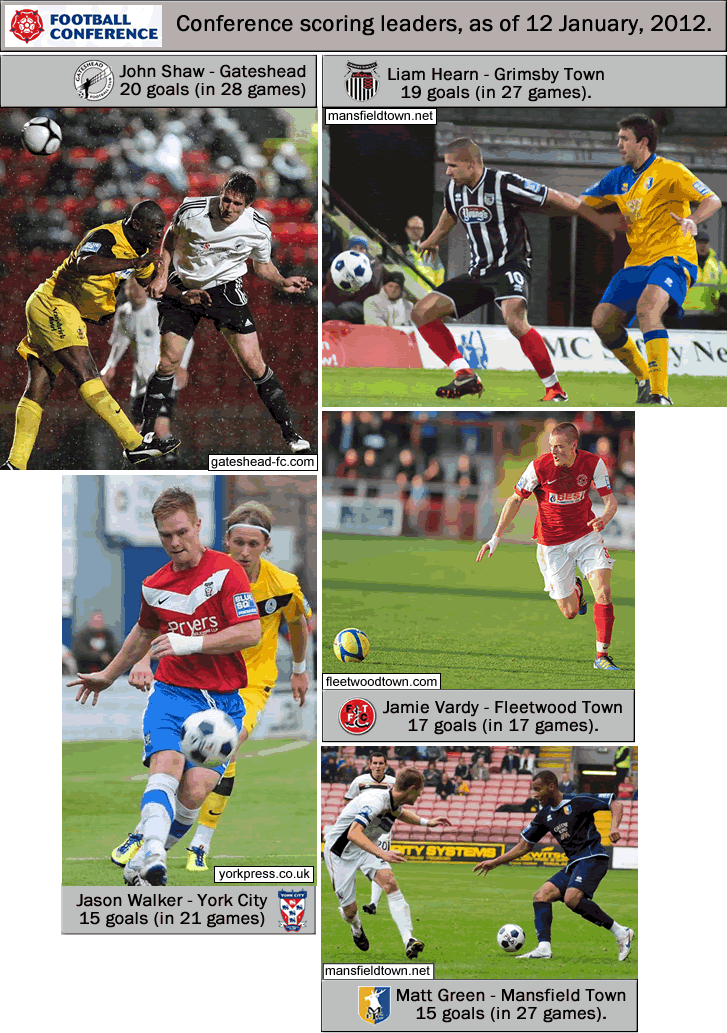
Scoring leaders in the Conference (as of 11 January 2012)…
conference-scoring-leaders_jan-2012_john-shaw_liam-hearn_jamie-vardy_jason-walker_matt-green_e.gif
Photo credits for above – John Shaw (Gateshead), gateshead-fc.com. Liam Hearn (Grimsby Town), mansfieldtown.net/Gallery. Jamie Vardy (Fleetwood Town), fleetwoodtownfc.com/teams/jamie-vardy. Jason Walker (York City), yorkpress.co.uk. Matt Green (Mansfield Town), mansfieldtown.net/Gallery.

Thanks to the contributors to the pages at en.wikipedia.org, ‘2011–12 Football Conference‘.
Thanks to Soccerway.com for attendance data.
Thanks to E-F-S site for old attendance figures.
Thanks to this set of lists on the Football365 site – Club’s all-time season by league level [Levels 1 through 4, from 1888-89 to 2001-02].
Thanks to the Footy-Mad.co.uk sites, for their League History charts of each club {Levels 1 through 5], usually found at top menu bar under Club/League History; example, http://www.wrexham-mad.co.uk/.

January 4, 2012

2011-12 FA Cup, Third Round Proper.

Filed under: 2011-12 FA Cup — admin @ 9:36 pm

2011-12_fa-cup_3rd-round_post_b9.gif
2011-12 FA Cup Third Round Proper


FA Cup, results, fixtures, articles (bbc.co.uk).

The FA.com.

Note: the chart below was posted after Third Round results came in…
2011-12_fa-cup-cup_3rd-round_upsets_f.gif

The map page features a location-map of the 64 clubs playing in the 2011-12 FA Cup Third Round Proper. Attendance data inclusive to 3 January 2012 is shown at the far left on the map page. Full fixture list is at the far right on the map page.


Derbies -
The match-ups that feature clubs whose grounds are closest apart (as measured by approximate driving distance)…
Manchester City v. Manchester United – 9.4 km. (5.8 miles).
Fleetwood Town v. Blackpool – 14 km. (9 miles).
Fulham v. Charlton Athletic – 16 km. (10 miles).
Dagenham & Redbridge v. Millwall – 20 km. (12 miles).
Birmingham City v. Wolverhampton Wanderers – 23 km. (14 miles).
Nottingham Forest v. Leicester City – 38 km. (23 miles).

Here is the breakdown of the clubs in the 2011-12 FA Cup Third Round Proper…
All 20 clubs from the Premier League [the 1st Level].
All 24 clubs from the Football League Championship [the 2nd Level].
7 clubs from the Football League One [the 3rd Level] – Charlton Athletic, MK Dons, Notts County, Oldham Athletic, Sheffield United, Sheffield Wednesday, Stevenage.
9 clubs from the Football League Two [the 4th Level] – Bradford City, Bristol Rovers, Cheltenham Town, Crawley Town, Dagenham & Redbridge, Gillingham, Macclesfield Town, Shrewsbury Town, Swindon Town.
4 clubs from Non-League football, with 3 clubs from the Conference National [the 5th Level] – Fleetwood Town, Tamworth, Wrexham; and 1 club from the Conference South [the 6th Level] – Salisbury City.

The Third Round is when clubs from the top flight and the second division enter the competition. That accounts for 44 of the 64 spots. The other 20 spots are comprised of the clubs who have survived Qualifying Round ties (4 Non-League clubs) and/or First and Second Round ties (16 third and fourth division clubs).

Salisbury City of the 6th Level league the Conference South are the lowest-placed club still alive in the competition. The Wiltshire-based club, nicknamed the Whites, have advanced through 5 rounds, and defeated Swindon Supermarine, Poole Town, Bishop’s Stortford, Arlesey Town, and Grimsby Town to get to the Third Round.

Salisbury City. Est. 1947. The Whites.
The Raymond McEnhill Stadium, Old Sarum, Salisbury, Wiltshire. Capacity 3,740. Opened in 1997. Salisbury City, a 6th Level/Conference South club, currently are averaging 738 per game, and sit 16th in the Conference South (5 points above the drop-zone).

In 2011-12, under second-year player/manager Darrell Clarke, Salisbury City reached the 3rd Round of the FA Cup for the first time in the club’s 66-year history. The Whites did this by first holding Grimsby Town to a 0-0 draw before 2,161 at the RayMac, then winning the replay at Grimsby 3-2 in extta time. From bbc.co.uk/Football, from 13 Dec. 2100, ‘Grimsby Town 2-3 Salisbury City‘.

Salisbury drew Sheffield United in the 3rd Round, and will travel to Brammall Lane in South Yorkshire for the match on 7 January, 2012.
salisbury-city-fc_old-sarum_n.gif"
old-sarum_salisbury-city_e.gif
Photo and Image credits – bluesqfootball.com. salisburycity-fc.co.uk. Mrs.Plum at en.wikipedia.org
maps.google.com/maps. gloupe.com. english-heritage.org.uk.
_

Thanks to the contributors to the pages at en.wikipedia.org, ‘2011-12 FA Cup/Third Round‘.
Thanks to the FA.com, for the photo of the FA Cup trophy.

Thanks to soccernet.espn.go.com for Premier League and Football League clubs’ current attendance figures [3 January, 2012].
Thanks to soccerway.com for Conference National and Conference South clubs’ current attendance figures.
Thanks to southern-football-league.co.uk for Salisbury City 2010-11 average attendance figure.

Thanks to Sportmapworld.com for Man City/Man Utd. distance.
Thanks to UK Distance Calculator.com.

Thanks to Salisburyjournal.co.uk/sport/salisburycityfc/Salisbury City Club History.

December 26, 2011

2011-12 League Two – Stadia map, with galleries of the top 4 clubs in the table, 1st place Crawley Town, 2nd place Cheltenham Town, 3rd place Southend United, and 4th place Shrewsbury Town.

league-two_2011-12-stadia-map_post_d.gif
2011-12 League Two Stadia map


Note: to see my most recent post on the English 4th division, click on the following: category: Eng-4th Level/League 2.

On Boxing Day, 2011, League Two is led by Crawley Town. The Red Devils of West Sussex were pretty much expected to be at or near the top of the table this season in the fourth division, because their transfer and wage bill (abetted by anonymous Far East investors) far exceeds other clubs in League Two. A 15-game unbeaten run was ended by Gillingham today, though, but it still looks like Crawley are in prime position to gain their second consecutive promotion under the mercurial Scot, manager Steve Evans. Crawley lead 2nd place Cheltenham Town by 3 points. Cheltenham Town in second place is a shock, seeing as most media outlets and bloggers pegged them for a relegation battle, not a promotion campaign this season. Ex-Robins MF and captain Mark Yates has been managing Cheltenham Town for 2 years now, and his squad plays some nice passing football, and only Swindon Town have less goals conceded (18) than Cheltenham (at 20, tied with Shrewsbury Town). Cheltenham have a stellar away record, boasting 8 wins, then a draw (to Barnet), in their last 9 matches away from Gloucestershire. Cheltehham Town have had two spells in the third tier (for a total of 4 seasons, last in 2008-09), and it’s starting to look like they could be returning to the third division. Perhaps the biggest impediment to their success could be the eventually-chewed-up-turf at Whaddon Road, the result of their groundshare with Gloucester City AFC (of the Conference North). Last year [2010-11], the poor pitch conditions played a part in Cheltenham’s struggles in the second half of the season, but maybe the mild winter, so far, will aid the Robins this season.

In 3rd place (which is an automatic-promotion-place in League Two) are Southend United. The Essex side, under much-travelled Scottish manager Paul Sturrock, shot out of the gate, but now seem to have flagged a little bit, with 4 straight defeats (two league and two cup losses). In 4th place are a club that was expected by most to be in (another) promotion campaign – Shrewsbury Town. The Shropshire-based club are run by longtime Hereford United manager Graham Turner, who returned in July 2010 to the place where he finshed his playing career and began coaching. In 5th place are the Staffordshire-based Burton Albion, who are managed by Canadian international Paul Peschisolido. In 6th place are the Kent/Thames Estuary side Gillingham, who are managed by Dartford, Kent-born Andy Hessenthaler. In 7th and in the final play-off spot are Wiltshire’s Swindon Town, who are managed by Rome, Italy-born West Ham legend Paolo Di Canio.

From Guardian.co.uk/Football League Blog, ‘League Two 2011-12: the bloggers’ half-term report
The people who really know their clubs give us the lowdown on the League Two season so far
‘.

On the map page, which you can see by clicking on the segment at the top of this post, you can see stadium photos of all 24 clubs in the 2011-12 season of the English Football League Two. Alongside each stadium image, club info is provided – club crest, year of formation, location, stadium capacity, 2010-11 average gate, list of the seasons spent by the club in each of the top 5 Levels of English football, and 2011-12 kits. At the far right on the map page is a location-map of the 2011-12 League Two. At the lower right of the map page are 2010-11 and 2009-10 average attendance figures (from home league matches), as well as league movement (if any) these last 2 seasons.

Below are photos of the grounds of the top four clubs in the League Two table as of 26 December, 2011 – 1st place, Crawley Town (Broadfield Stadium). 2nd place, Cheltenham Town (Whaddon Road). 3rd place, Southend United (Roots Hall). 4th place, Shrewsbury Town (Greenhous Meadow). Also included are photos of standout players on the squads (including team goals and assists leaders), as well as photos of the managers.

Crawley Town. Est. 1896. The Red Devils. Broadfield Stadium, cap. 4,996. Crawley, West Sussex.
First season in the Conference [5th Level], 2004-05. First season in the Football League: 2011-12.
2010-11 avg. gate (home league matches), 2,535 per game (up +152.8%).
Current {26 Dec., 2011} avg. gate, 3,198 per game (up +26.0%).

crawley-town_broadfield-stadium_tyrone-barnett_matt-tubbs_steve-evans_segment_.gif
Crawley Town Image and Photo credits – Aerial view of Broadfield Stadium from bing.com/maps/. Entrance photo by Shaun at 100groundsclub.blogspot.com Photo of West Stand [at center] by Peer Pawelczyk via soccerway.com. Photo of terrace [at lower center] by Smidrophenia at flickr.com. Photo of Broadfield Stadium [at far left] from worldgroundhop.blogspot.com. Photo of West Sussex countryside by PhillipC at tripwolf.com. Matt Tubbs photo from skysports.com. Tyrone Barnett action photo by Frances Leader/Action Images via guardian.co.uk/football/football-league-blog; Tyrone Barnett photo in white kit from football365.com. Action photo including Kyle McFadzean from crawleytownfc.com/gallery. Andy Drury photo from thisissussex.co.uk. Steve Evans photo by Michael Steele/Getty Images Europe via zimbio.com.

Cheltenham Town. Est. 1887. The Robins. Whaddon Road, cap. 7,066. Cheltenham, Gloucestershire.
First season in the Conference [5th Level], 1988-89. First season in the Football League: 1999-2000.
2010-11 avg. gate (home league matches), 2,980 per game (down -8.1%).
Current {26 Dec., 2011} avg. gate, 3,339 per game (up +20.%).

cheltenham-town_whaddon-road_mark-yates_jimmy-spencer_darryl-duffy_kaid-mohammed_marlon-pack_segment_.gif
Cheltenham Town Image and Photo credits – Aerial view of Whaddon Road from bing.com/maps. Small photo at upper right from wolves-stats.co.uk/Cheltenham_Town. Large photo of Cheltenham from the adjacent hillside by Adrian Pingstone at en.wikipedia.org/Cheltenham. Small photo of the three stands [at the center] by footix at Panoramio.com. Exterior photo [at lower left] from thisisgloucestershire.co.uk/. Photo from inside the stands [at lower left] from http://www.courtoffside.com/forum/album.php?albumid=15. Large photo of Main Stand by Shaun at 100groundsclub.blogspot.com.
Jimmy Spencer, Darryl Duffy, and Kaid Mohammed action photos from CTFC.com/galleries. Marlon Pack action photo from features.rr.com; Marlon Pack photo from teamtalk.com/cheltenham-town. Mohammed/Jombati/Smikle celebrating photo from ctfc.com/Gallerycirencesterpeople.co.uk. Photo of Mark Yates from http://www.thisisgloucestershire.co.uk/football.

Southend United. Est. 1906. The Shrimpers. Roots Hall, cap. 12,392. Southend-on-Sea, Essex.
First season in the Football League: 1920-21, charter member of the Third Division.
2010-11 avg. gate (home league matches), 5,274 per game (down -31.6%).
Current {26 Dec., 2011} avg. gate, 5,801 per game (up +9.9%).

southend-united_roots-hall_liam-dickinson_kane-ferdinand_ryan-hall_paul-sturrock_segment_.gif
Southend United Image and Photo credits – Aerial view of Roots Hall, bing.com/maps. South Stand photo [at top, center] from footballstadiumguide.co.uk/southend-united. Roots Hall main entrance and camera gantry photos from portmanroadtothesansiro.blogspot.com. Fans in South Stand with flags from footybunker.com. Roots Hall photo at far left by Shaun at 100groundsclub.blogspot.com. Aerial photo of Southend-on-Sea by terryjoice at en.wikipedia.org/Southend-on-Sea. Liam Dickinson photos from southendunited.co.uk. Kane Ferdinanand photo from flblog.dailymail.co.uk, ‘Talent scout: Southend United’s Kane Ferdinand‘, by Joe Ridge. Ryan Hall photo from southendunited.co.uk/page/Gallery. Photo of Paul Sturrock with squad at Roots Hall from echo-news.co.uk/sport; Paul Sturrock photo from football.co.uk/southend_united.
Images of old Southend United kit badges are from Historical Football Kits site at http://www.historicalkits.co.uk/Southend_United/Southend_United.htm.

Shrewsbury Town. Est. 1885. The Shrews. Greenhous Meadow, cap. 9,875. Shrewsbury, Shropshire.
First season in the Football League: 1950-51
(Shrewsbury Town were elected to the Football League, Division Three North in 1950, after being Midland League champions in 1949-50).
2010-11 avg. gate (home league matches), 5,876 per game (down -7.5%).
Current {26 Dec., 2011} avg. gate, 5,436 per game (up +6.4%).
shrewsbury_town_greenhous-meadow_graham-turner_mark-wright_james-collins_lionel-ainsworth_segment_.gif
Shrewsbury Town Image and Photo credits – Aerial photo of New Meadow (aka Greenhous Meadow) from forums.electronicarts.co.uk. Main entrance photo from thegroundhog.wordpress.com. Pre-match photo of New Meadow by ynysforgan_jack at Flickr.com. The Old Market Hall in Shrewsbury photo by Asdfasdf1231234 at en.wikipedia.org/Shrewsbury. River Severn at Shropshire photo from sirpetespics.blogspot.com. Old kit badges of Shrewsbury Town from historicalkits.co.uk/Shrewsbury_Town. South Stand photo from the-prostar-stadium.blogspot.com. Mark Wright photo from shrewsburytown.com/Gallery. Lionel Ainsworth photo from AMA Sports photo agency via shropshirestar.com. James Collins photo by Julian Finney/Getty Images Europe via zimbio.com. Graham Turner photo from shrewsburytown.com.

After 22 matches played by most clubs in the 2011-12 League Two season, here are the 3 top scoring leaders and the top player in assists…
dec-2011-football-league-two_scoring-leaders_izale-mcleod_billy-kee_matt-tubbs_ryan-hall_e.gif
Photo credits above – Izale McLeod photo by Tom Jenkins at Guardian.co.uk. Billy Kee photo from burtonalbionfc.co.uk/gallery. Matt Tubbs photo from crawleytownfc.com/gallery. Ryan Hall photo from indiatimes.com.

Last season [2010-11], League Two as a whole averaged 4,175 per game, which was an 8.3% increase over 2009-10. Currently [26 Dec., 2011] League Two’s average attendance is 4,252 per game, which is a 1.8 percent increase from last season. [Current League Two attendance, including unofficial league average (ESPN Soccernet).

At the end of each League Two season, 4 clubs gain promotion to League One [which is the 3rd Level of English football]. First, second, and third place finishers get promoted automatically to League One each May, while the 4th through 7th place finishers compete in a play-off to determine the fourth promoted club. On the other hand, at the end of each League Two season, only 2 clubs are relegated to the Conference National [which is the 5th Level of English fooball, and the highest level in Non-League football]. League Two is the only level in the Fooball League that has a disparate number of promoted teams versus relegated teams [the other levels, the Football League Championship (the 2nd Level) and the Football League One (the 3rd Level), have 3 go up and 3 go down each season]. Currently, the clubs in the League Two relegation places are Plymouth Argyle and Northampton Town, with Dagenham & Redbridge, Hereford United, and Barnet within touching distance of the dreaded drop.

_

Photo credits on map page -

Accrington Stanley/Crown Ground, bing.com/maps/Bird’s Eye satellite view.
AFC Wimbledon/Kingsmeadow (aka Cherry Red Records Stadium), bing.com/maps/Bird’s Eye satellite view.
Aldershot Town/The EBB Stadium (Recreation Ground), bing.com/maps/Bird’s Eye satellite view.
Barnet/Underhill Stadium, bing.com/maps/Bird’s Eye satellite view.
Bradford City/Valley Parade, bing.com/maps/Bird’s Eye satellite view.
Bristol Rovers/Memorial Stadium, bing.com/maps/Bird’s eye satellite view.
Burton Albion/Pirelli Stadium, http://mw2.google.com/mw-panoramio/photos/medium/4422509.jpg.
Cheltenham Town/Whaddon Road (aka Abbey Business Stadium), bing.com/maps/Bird’s Eye satellite view.
Crawley Town/Broadfield Stadium, bing.com/maps/Bird’s eye satellite view.
Crewe Alexandra/Alexandra Stadium, shepherd-gilmour.co.uk.
Dagenham & Redbridge/Victoria Road, bing.com/maps/Bird’s Eye satellite view.
Gillingham/Priestfield, bing.com/maps/Bird’s Eye satellite view.
Hereford United/Edgar Street, bing.com/maps/Bird’s Eye satellite view.
Macclesfield Town/Moss Rose, bing.com/maps/Bird’s Eye satellite view.
Morecambe/Globe Arena, sixtamesides.blogspot.com.
Northampton Town/Sixfields Stadium, bing.com/maps/Bird’s Eye satellite view.
Oxford United/Kassam Stadium, footballaway.co.uk.
Port Vale/Vale Park, bing.com/maps/Bird’s Eye satellite view.
Plymouth Argyle/Home Park, bing.com/maps/Bird’s eye satellite view.
Rotherham United/Don Valley Stadium, bing.com/maps/Bird’s Eye satellite view.
Shrewsbury Town/Greenhous Meadow [aka New Meadow], James Humphries (aka Colds7ream) at en.wikipedia.org/wiki/New_Meadow.
Southend United/Roots Hall, bing.com/maps/Bird’s Eye satellite view.
Torquay United/Plainmoor, bing.com/maps/Bird’s eye satellite view.

Thanks to the contributors to the pages at en.wikipedia.org, ‘2011–12 Football League Two‘.

Thanks soccerway.com for current attendance figures.
Thanks to European-football-statistics.co.uk, for attendance data from previous seasons.

Thanks to these two sites…
1). Data for ‘Seasons spent in Levels’ lists, thanks to http://stats.football365.com/hist/tier3/attable.html [data up to 2001-02].
2). For league placement data from 2002-03 and on, plus general data on the clubs’ league placement through the years, thanks to Footy-Mad.co.uk sites of each club, usually [at the top menu bar there] at ‘Club/League History’. Example, Barnet-mad.co.uk.

Thanks to historicalkits.co.uk, for images of old kit badges.

Thanks to crawleytownfc.com.
Thanks to [Cheltenham Town] CTFC.com.
Thanks to southendunited.co.uk.
Thanks to shrewsburytown.com.

December 22, 2011

2011-12 UEFA Europa League: Knockout Phase, Round of 32.

Filed under: UEFA Cup / Europa League — admin @ 11:33 am

uefa_europa-league2011-12-knockout-phase_post_2d.gif
2011-12 UEFA Europa League Knockout Phase, map with attendance data


2011-12 Europa League Knockout Phase, Round of 32 – News and Fixtures – UEFA.com/ Europa League/Index.

From TheScore.com/Footy Blog, by Ethan Dean-Richards, from 19 Dec., 2011, ‘Man United have an opportunity to entertain in the Europa League‘.

Here are rthe Group Stage group winners…
PAOK [Thessaloniki]
Standard Liège
PSV [Eindhoven]
Sporting [Lisbon]
Beşiktaş
Athletic Club [Bilbao]
Metalist Kharkiv
Club Brugge
Atlético Madrid
Schalke
Twente [Enschede]
Anderlecht

Here are the clubs that, by virtue of finishing 3rd in their groups, moved from the Champions League Group Stage into the Europa League Knockout Phase…
Manchester City
Trabzonspor
Manchester United
Ajax
Valencia
Olympiacos
Porto
Viktoria Plzeň

Here is the Round of 32 draw
Porto v Manchester City [2nd leg now 22 Feb]
Ajax v Manchester United
Lokomotiv Moscow v Athletic Club
Red Bull Salzburg v Metalist Kharkiv
Stoke City v Valencia
Rubin Kazan v Olympiakos
AZ v Anderlecht
SS Lazio v Atletico Madrid
Steaua Bucharest v Twente
Viktoria Plzeň v Schalke
Wisla Krakow v Standard Liege
Sporting Braga v Besiktas [1st leg now 14 Feb]
Udinese v PAOK
Trabzonspor v PSV
Hannover v Club Brugge
Legia Warsaw v Sporting CP

Ties scheduled for 16 and 23 February, 2012, except Sporing Braga v. Besiktas on 14 February; and Manchester City v. Porto on 22 February.
_
Thanks to the contributors to the pages at en.wikipedia.org, ‘2011–12 UEFA Europa League‘.
Thanks to European-Football-Statistics.co.uk, for attendance data.

December 14, 2011

Argentina: Primera División, 2011-12 Stadia map, featuring 2011 Apertura champions Boca Juniors.

Filed under: Argentina,Football Stadia — admin @ 6:49 pm

argentina_clausura2012_stadia-map_post_c.gif
Primera División de Argentina, 2011-12 Stadia map


The map page features a stadium photo of each club in the 2011-12 season of Primera División de Argenina. Alongside each club’s stadium photo is club information, including…the full name of the club; the year of the club’s formation; their location; their stadium’s name and capacity; the club’s professional Argentine titles (and year of last title); the club’s Copa Libertadores titles (and year of last title); the club’s total Copa Libertadores appearances; the length, in seasons, of the club’s current spell in the Argentine top flight (and the year they (re)entered the first division); and how the club finished in the first half of the 2011-12 season [which was the 2011 Apertura].

At the top, right of the map page, next to the AFA crest, is a season-and-a-half synopsis, listing the last 3 title winners and the clubs that went down to, and came up from, Primera Nacional B…
2010-11 champions –
Apertura: Estudiantes (5th title).
Clausura: Vélez Sarsfield (8th title).

Relegated to Primera Nacional B (in June, 2011):
Gimnasia (La Plata)
Huracán
Quilmes
River Plate

Promoted to Primera División (in June, 2011):
Atlético de Rafaela
Unión [de Santa Fe]
San Martin (San Juan)
Belgrano [Córdoba].

2011-12 champions -
2011 Apertura: Boca Juniors (24th title).
2012 Clausura: TBD [the 2012 Clausura will begin in the first week of February, 2012].

The 2011 Apertura was won by one of the two most popular Argentine football clubs, Boca Juniors [the other one of the two biggest clubs in the country is River Plate, who are currently in their first-ever professional-era season in the second division, but will almost certainly be back in the top flight for the 2012-13 season]. This is Boca Junior’s 24th professional Argentine title, second only to the 32 pro titles won by River Plate. Boca ended as undefeated champions, as well as being the champions with the most points difference ahead of second place.

From the essential Hasta El Gol Siempre site, ‘Apertura 2011: ¡Boca campeón! (video)‘.

From Guardian.co.uk/football, from 22 November, 2011, by Jonazthan Wilson, ‘Boca Juniors’ binary finery a tribute to manager Julio César Falcioni
Boca Juniors are a team cast in Julio César Falcioni’s gnarled image, and the Apertura champions-elect are all the better for it
‘.

From ArgentinaIndependent.com, from 6 December, by Rory McClenaghan, ‘Football Season review: The Return Of Boca Juniors‘.

julio-cesar-falcioni_darío-cvitanich_rolando-sciavi_boca-juniors_2011-apertura-winners_r.gif
Photo credits above – Ortigoza and Cvintanich acion photo by Enrique Marcarian/Reuters via uk.eurosport.yahoo.com. Cvintanich photo from AFA via http://www.argentinaindependent.com/life-style/sport/football-season-review-the-return-of-boca-juniors-/. Schiavi photo and Bombonera title celebration photo from Daylife.com/Boca Juniors. Falcioni photo from pesstatsdatabase.com.

From goal.blogs.nytimes.com, from Dec.13, 2011, ‘In Argentina, Violence Is Part of the Soccer Culture‘.

The Argentine clubs that have qualified for the 2012 Copa Libertadores…
argentina-clubs_in-2012copa-libertadores_.gif
The 5 Argentine clubs which have qualified for the 2012 Copa Libertadores are…
ARG-1, Vélez Sarsfield (2011 Clausura champion).
ARG-2, Boca Juniors (2011 Apertura champion).
ARG-3, Lanús (best 2011 aggregate among non-champions).
ARG-4, Godoy Cruz (2nd best 2011 aggregate among non-champions).
ARG-5/First Stage [aka preliminary round], Arsenal (qualified as best performance by a club in the 2011 Copa Sudamericana not already qualified).

In terms of all-time Copa libertadores appearances, the 2012 Copa Liberadores will mark the 2nd appearance by Godoy Cruz, the 2nd appearance by Arsenal de Sarandi, the 4th appearance by Lanús, the 13th appearance by Vélez Sarsfield (who have won 1 Copa Libertadores title, in 1994), and the 23rd appearance by Boca Juniors (who have won 6 Copa Libertadores titles, their last in 2007).
2011-12 Copa Libertadores‘ (en.wikipedia.org).

From Youtube.com, posted by giovar94, a 13-minute video compilation of the best goals in Argentina in 2011 – this video is incedible – ‘Especial Tyc sports 2011 parte 8 [Mejores goles Argentina]‘.
[Thanks to the Guardian Sport Blog for the above link {see this}.]
_

Photo credits (stadium photos on map page) –
All Boys/Estadio Islas Malvinas, somosracingrc.com.ar.
Argentinos Juniors/Estadio Diego Armando Maradona, ca.bestpicturesof.com.
Arsenal [de Sarandi]/Estadio Julio Humberto Grondona, Hopp Hard Ingo at europlan-online.de.
Atlético Rafaela/Estadio Nuevo Monumental, atleticoesrafael at panoramio.com.
Banfield/Estadio Florencio Sola, estadiosargentinos.wikispaces.com.
Belgrano/Estadio El Gigante de Alberdi, fercabc at en.wikipedia.org.
Boca Juniors/ Estadio Alberto J. Armando (aka ‘La Bombonera [the Chocolate Box]), estadiosargentinos.wikispaces.com.
Colón/ Estadio Brigadier General Estanislao López, goolvinotinto.blogspot.com.
Estudiantes/, estadiolp.gba.gov.ar.
Godoy Cruz/Estadio Malvinas Argentinas, tiki-taka.org/forums/index.php/topic/12586-copa-america-2011/
independiente/Estadio Libertadores de América, InfiernoRojo.com via elgrancampeon.blogspot.com.
Lanús/Estadio Ciudad de Lanús, Hopp Hard Ingo at europlan-online.de.
Newell’s Old Boys/ Estadio Marcelo Bielsa, newellsoldboys.com.ar/institucional/elclub/.
Olimpo/Estadio Roberto Natalio Carminatti, aurinegro.com.ar via fussballtempel.net.
Racing/Estadio Presidente Perón (aka ‘El Cilandro’), racingclub.com.ar via es.wikipedia.org.
San Lorenzo/Estadio Pedro Bidegain (aka ‘el Nuevo Gasómetro’ (the New Gasometer), footballzz.com.
San Martin (SJ)/Estadio del Bicentenario, karawang.us.
Unión [Santa Fe]/Estadio 15 de Abril, eltope at panoramio.com.
Tigre/Estadio José Dellagiovanna, Gabriel Sabugo at en.wikipedia.org/wiki/Estadio_Coliseo_de_Victoria
Vélez Sarsfield/Esadio José Amalfitani, juststadium.com.

Thanks to the contributors to the pages at en. and es. and de. wikipedia.org, ‘2011–12 Argentine Primera División season‘.
Thanks to NordNordWest for the blank map of Argentina.
Thanks to Sam Kelly at Hasta El Gol Siempre and at the Hand of Pod podcast (link to it here at SoundCloud).

December 9, 2011

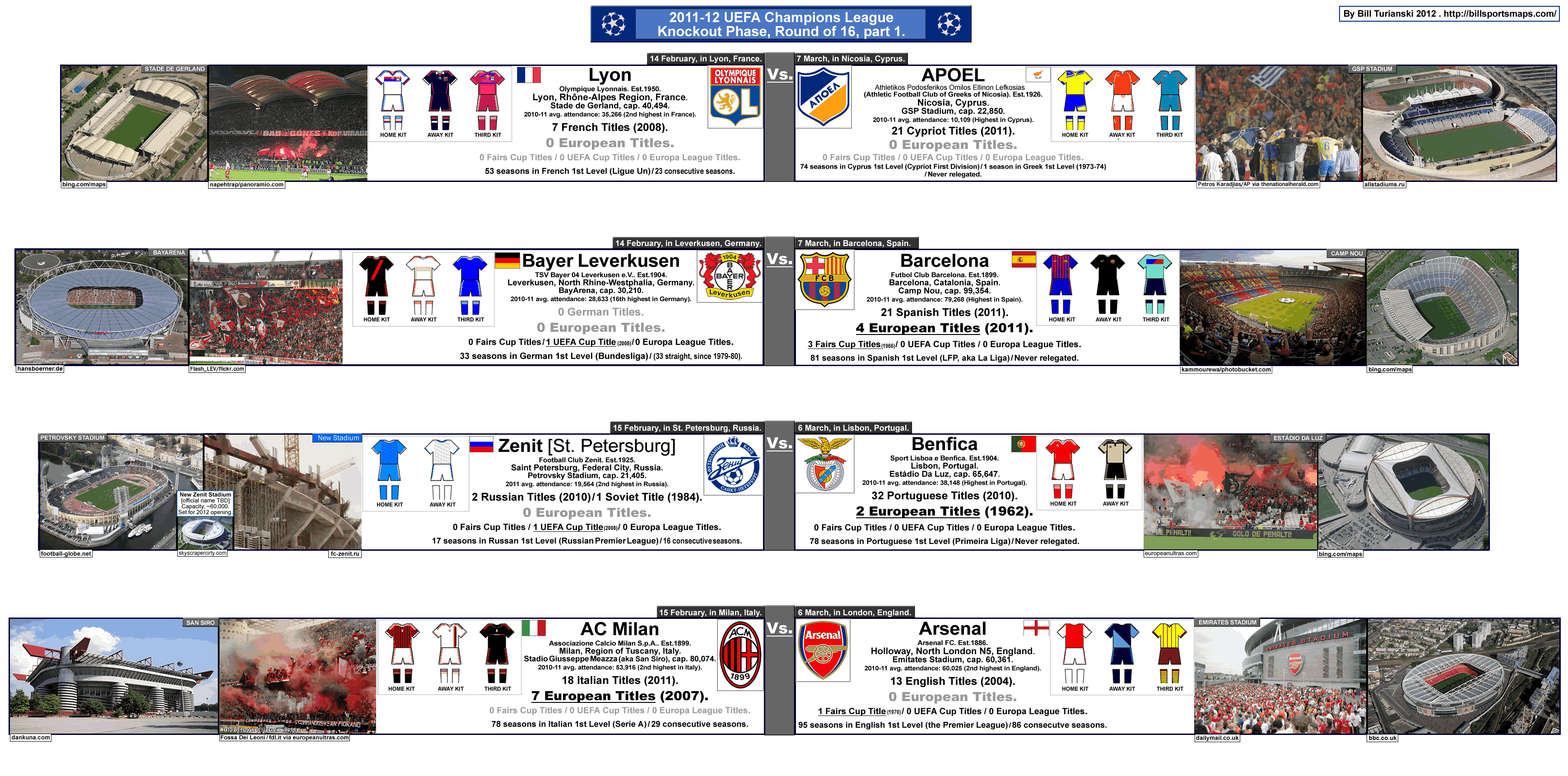
UEFA Champions League: 2011-12 Knockout Phase (16 teams), location map with attendance data.

Filed under: UEFA Champions League — admin @ 9:31 pm

uefa_cl-2011-12_knockout-phase_map_post_.gif
UEFA Champions League: 2011-12 Knockout Phase (16 teams)

Nine clubs return to the Round of 16 – Milan and Inter from Italy, Arsenal and Chelsea from England, Real Madrid and Barcelona from Spain, Marseille and Lyon from France, and Bayern Munich from Germany. Serie A (Italy) boasts the most clubs, three. Two clubs each come from England (the Premier League), Spain (La Liga), France (Ligue 1), and Russia (the Russian Premier League). The Republic of Mancunia boasts none, with both Manchester United and Manchester City flaming out and going into the ‘penalty’ league (to use SAF’s words)…’Shut it, Fergie! Platini hits out at United boss for calling the Europa League a ‘penalty’‘ (DailyMail.co.uk).

This is the first time into the Round of 16 for four clubs – APOEL (Cyprus), Basel (Switzerland), Napoli (Italy), and Zenit (Russia).

The matches for the Round of 16 will be in February and March, with first legs on 14–15 & 21–22 February, 2012; and second legs on 6–7 & 13–14 March, 2012.

The draw will be held on Friday 16 December…
Group winners go into one pot…Bayern Munich, Internazionale, Benfica, Real Madrid, Chelsea, Arsenal, APOEL, Barcelona.
Group runners-up go into the other pot…Napoli, CSKA Moscow, Base, Lyon, Bayer Leverkusen, Marseille, Zenit [St Petersburg], Milan.
From UEFA.com, from 9 Dec., 2011, ‘Last 16 await Friday’s draw‘.


_
Thanks to the contributors to the pages at en.wikipedia.org, ‘2011–12 UEFA Champions League

Thanks to European-football-statistics.co.uk for 2011-12 attendance figures.
Thanks to Soccerway.com for current attendance figures.
Thanks to Football-lineups.com for Portugal attendance figures.
Thanks to Izumi.com for the photo of Allianz Arena.

December 6, 2011

NFL, 2002 Season: map with helmets.

Filed under: NFL>2002 helmet map,NFL/ Gridiron Football — admin @ 9:21 pm

nfl_2002season_w-helmets_map_post_.gif


In 2002, the NFL added its 32nd franchise, the Houston Texans. And also that season, the NFL also underwent its most extensive re-alignment of its divisional format since the AFL/NFL merger of 1970. In 2002, in place of the 6 divisions, 8 divisions were instituted – 4 in the AFC and 4 in the NFC.

The major changes were:
-Seattle Seahawks switched conferences, to the NFC (NFC West).
-Arizona Cardinals moved from NFC East to NFC West.
-newly-formed AFC South comprised of Houston Texans, Indianapolis Colts, Jacksonville Jaguars, and Tennessee Titans.
-newly-formed NFC South comprised of Atlanta Falcons, Carolina Panthers, New Orleans Saints, and Tampa Bay Buccaneers.
-both the AFC Central and the NFC Central were renamed AFC North and NFC North.

The scheduling format was also tinkered with. One of the new elements that was long overdue was the elimination of the situation where teams were often playing every team in the other conference more than every team in their own conference. A team could actually go on forever not playing a team in their own conference if they finished, year-in, year-out, in certain places in the final standings. It was a pretty basic and glaring flaw. Another scheduling modification in 2002 was the drop from 4 games to 2 games per team that were scheduled the following season based on final standings. In other words, since 2002, good teams have not been punished with as tough a schedule the following season; and poor teams have not been rewarded with as soft a schedule the following season. And wins per first-place teams has increased since 2002, as the second link coming up shows (at the [1]-footnote below). First link is to the en.wikipedia page on the ‘2002 NFL season/Expansion and re-alignment [see third paragraph and down]‘…
Here is an excerpt from that Wikipedia article…”The league also introduced a new eight-year scheduling rotation designed so that all teams will play each other at least twice during those eight years, and will play in every other team’s stadium at least once. Under the new scheduling formula, only two of a team’s games each season are based on the previous year’s record, down from four under the previous system (the previous system also used standings to determine interconference match-ups). An analysis of win percentages has shown a statistical trend upwards for top teams since this change; the top team each year now averages 14.2 wins, versus 13.4 previously.[1]…”(end of excerpt).
[1], from June, 2008, from MIT-alumni-run site called The Fount.info ‘16-0: The myth of Perfection ‘.

The Tampa Bay Buccaneers defeated the Oakland Raiders in Super Bowl XXXVII [Super Bowl 37], which was played in San Diego at Qualcomm Stadium.
_
Thanks to misterhabs.com/Helmets, aka Helmets, Helmets, Helmets site. At that site I got most of the helmet illustrations on the 2002 map; some helmet illustrations I found at each team’s page at en.wikipedia.org… ‘National Football League‘.
Thanks to the contributors to the pages at en.wikipedia.org, ‘National Football League‘.

November 29, 2011

2011-12 FA Cup, Second Round Proper./ + Sutton United’s FA Cup Giant Killing – January, 1989 – Sutton United 2-1 Coventry City.

Filed under: 2011-12 FA Cup — admin @ 8:01 pm

2011-12_fa-cup_2nd-round_post_.gif
2011-12 FA Cup Second Round Proper


bbc/football/FA Cup.

Here is the league breakdown of the 40 clubs left in the competition at this stage. [Note, Premier League/1st Level clubs, and Football League Championship/2nd Level clubs (64 clubs) will enter the competition in the next round, the Third Round Proper, in the first weekend of January, 2012]…
Clubs in the 2011-12 FA Cup Second Round Proper -
28 clubs are from the Football League, with 13 clubs from League One (the 3rd Level), and 15 clubs from League Two (the 4th Level).
12 clubs are Non-League Football clubs (from Levels 5 through Level 8), with 6 clubs from the Conference National (the 5th Level), 3 clubs from the Conference South (a 6th Level league), 2 clubs from the Southerm League Premier Division (a 7th Level league also known as the Evo-Stick Southern), and 1 club from the Isthmiann League Division 1 North (an 8th Level league, also known as the Ryman North).

As in the First Round, the lowest-placed club still alive in the competition is Redbridge FC, who are from East London and are an 8th Level club in the Isthmian League Division 1 North. Redbridge FC currently average 125 per game (from home league matches to 26 November, 2011). In the First Round, the Motormen drew 0-0 with the 6th Level/Conference South club Oxford City, and won the replay in Oxford 2-1 after extra time. Redbridge will play at Crawley Town in the Second Round.

Listed below are the 3 matches to be televised live in the USA & Canada and/or the UK, with photos of the home grounds and info on the clubs involved…
Friday, 2 December at 7.30pm GMT – Fleetwood Town v Yeovil Town – ESPN (UK).
Fleetwood Town are a coastal Lancashire-based Conference National club [5th Level], who currently [28 Nov., 2011] lead the Conference by 3 points over Wrexham (though Wrexham have a game in hand and a higher goal differemce). Fleetwood Town had the biggest upset in the First Round Proper, beating a Football League One club – Wycombe Wanderers – that was 2 league levels and 27 places above them. Fleetwood Town currently average 1,712 per game (home league matches to 28 November, 2011)).

Last May, Fleetwood Town made the Conference play-offs, but were schooled by eventual promotion-winners AFC Wimbledon, by an aggregate score of 8-1. But I’ve got a feeling that if the Cod Army don’t win automatic promotion this season, they won’t be embarrassing themselves in the play-offs this coming May. This is a club whose trajectory is pointing straight up. In a 7-season span between 2004 and 2011, Fleetwood won promotion 4 times. Fleetwood Town are in only their second season in the 5th Level, and their ambition is evident in two ways. The first way one can see that Fleetwood has their sights set on the Football League is in the number of high-profile signings they have made recently, such as ex-Wrexham FW Andy Mangan (who led the Conference in scoring when he was on Forest Green Rovers in 2008-09, and who scored 16 goals for Wrexham in 2010-11, and who currently has 6 league goals for FTFC this season so far). Mangan scored one of the goals in the First Round victory over Wycombe on 5th Novembe, on a nice volley. Highlights here…’Fleetwood Town vs. Wycombe Wanderers [Fleetwood Town 2-1 Wycombe]‘ (Footytube.com). Another big move Fleetwood Town made recently was in securing the services of FW Richard Brodie (Conference leading scorer in 2009-10, when he was on York City, and scorer of 12 league goals for the promotion-winning Crawley Town last season), on loan from Crawley Town. [Brodie actually contributed in a negative way in the Cod Army's upset win over Wycombe - he was sent off right before the end of the first half, and Fleetwood had to play the second half with 10 men.] Fleetwood Town also boasts the 3rd-highest scorer currently in the Conference – ex-Halifax Town FW James Vardy, who has scored 13 goals in 13 league games this season for Fleetwood (plus 4 goals total when at Halifax Town at the start of the 2011-12 season). Vardy is the subject of transfer speculation, but Fleetwood would do well to hold off selling him until their promotion-run is sorted. Rounding out the club’s scoring threats is FW Magno Viera, a Brazilian, who was fourth best on the list of 2011-12 Conference scoring leaders, with 22 goals.

The second way in which Fleetwood Town’s ambition to become a larger and higher-placed club is apparent is in their new stand at their Highbury Stadium – the Parkside Stand – which has a capacity of 1,841 (all seated), plus 40 luxury boxes. The roof’s not too shabby either (see below). Fleetwood Town will host Yeovil Town in the FA Cup Second Round. Yeovil Town, from Somerset, in the West Country, are a League One [3rd Level] club who currently sit 22nd, in the relegation zone. Yeovil Town never had League history prior to 2003, when they won the Conference National. The Glovers then won promotion to the third tier two years later by winning League Two in 2004-05. This is a club who has been punching above their weight since then, ending up in the bottom half of the table in 5 of their last 6 seasons. Yeovil have a rather small fan base for the 3rd Level – they currently are averaging 3,813 per game.
fleetwood-town_parkside-stand_.gif
Photo credit – http://www.fleetwoodtownfc.com/club/highbury-stadium/.

(Early game on) Sunday, 4 December 12.30pm GMT – AFC Totton v Bristol Rovers – ITV1 (UK).
AFC Totton, nicknamed the Stags, are a Hampshire-based club in the Southern Premier [a 7th Level league], and currently sit 2nd in the league, in the play-off places, one point behind Leamington, with 2 games in hand. Totton is a western suburb of Southampton, on the eastern edge of the New Forest. The club have a brand-new ground, the 3,000-capacity Testwood Stadium, which opened on 9 February, 2011. The opening of their new ground was timed fortuitously, because 3 months later that season, AFC Totton won promotion, by winning the Southern League Divsion 1 South by 2 points over local-Greater-Southampton-rivals Sholing FC.

AFC Totton had never been in the FA Cup Proper before this season, and their first appearance in the First Round was a memorable one – they hosted, and demolished, Bradford Park Avenue (also a 7th-Level-club) by a score of 8-1. A club-record 2,315 attended the match. Totton’s current average attendance (home league matches to 26 Nov., 2011) is 383 per game. Totton will host Bristol Rovers in the Second Round. Bristol Rovers are from Horfield, which is a northern suburb of Bristol. The Gas are a League Two [4th Level] club, and currently sit 18th. Bristol Rovers currently draw 5,873 per game.
afc-totton_.gif
Photo credit – Southdinista at Flickr.com. Southdinista’s Photostream.

(Late game on) Sunday, 4 December 5.00pm GMT/12:00 noon ET – Sutton United v Notts County – ESPN (UK) and Fox Soccer Plus (USA & Canada).
Sutton United FC are a just-promoted Conference South club, from southwest London (but from an area that historically was part of the County of Surrey). The U’s currently sit 3rd in Conference South, in the play-off places. Sutton United are averaging 776 per game (home league matches to 26 Nov. 2011).

Notts County FC, the oldest professional association football club in the world, are these days an upper-mid-table 3rd level club. The Magpies currently sit 6th in League One, in the play-off places; and average 6,210 per game. The random element of the FA Cup draw has seen these two clubs match up three times now in the last 18 FA Cup competitions (Notts County hosted and defeated Sutton United in the 1993-94 FA Cup Third Round; and also in the 2008-09 FA Cup First Round).
sutton-united_gander-green-lane_.gif
Image and photo credits – Bing.com/maps/Bird’s Eye satellite view.
Areedef at en.wikipedia.org/Borough_Sports_Ground.
Chris Hayes at Flickr.com/ Chris Hayes’ Photostream.

    Sutton United’s FA Cup Giant Killing – January, 1989 – Sutton United 2-1 Coventry City

23 years ago, on 7 January, 1989, Sutton United claimed one of the biggest scalps in FA Cup history, when they upset the 1987 FA Cup winners Coventry City. In 1988-89, Sutton United were a mid-table 5th Level Conference club, while Coventry City were a very solid top flight club in 1988-89…Coventry finished in 7th place that year in the old First Division, and the Sky Blues were in the middle of a 34-season-straight-run in the First Division / Premier League (from 1967-68 to 2000-01).

An overflow crowd of over 8,000 attended that match at Gander Green Lane in early 1989, with more watching from gardens and second-story windows of adjacent buildings. Sutton won 2-1, with bricklayer-by-trade Matthew Hanlan winning it in the 60th minute with his far-post volley off a cross from Phil Dawson, who had collected the ball from a short, decoy corner-kick. You can see images from that historic upset below.
From Youtube, posted by hammerfalljag, ‘Sutton Utd v Coventry City FA Cup 1988-89 Highlights‘ [4:43 video]…1st goal (Sutton United, Tony Rains, 42′) at 1:08 of video. 2nd goal (Coventry City, David Phillips, 52′) at 2:05 of video. 3rd and winning goal (Sutton United, Matthew Hanlan, 60′) at 2:50 of video.
sutton-united_gander-green-lane_1989-fa-cup-3rd-round_upset_sutton-united2-1coventry-city_v.gif
Screenshots (4) from Youtube video posted by hammerfalljag, ‘Sutton Utd v Coventry City FA Cup 1988-89 Highlights‘ [4:43 video].
Photo credits – Hanlan goal; and Rains and Hanlan celebrating, from http://www.suttonunited.net/info_history.html

Thanks to SuttonUnited.net.
Thanks to FleetwoodTownFC.com.
Thanks to the contributors to the pages at en.wikipedia.org, ‘2011-12 FA Cup‘.
Thanks to ESPN Soccernet for Football League attendance figures (link set at League One attendance).
Thanks to Soccerway.com for Conference attendance figures (link set at Conference National).
Thabnks to NonLeague.co.uk for attendance figures for 7th and 8th Level leagues.

« Newer PostsOlder Posts »

Powered by WordPress