billsportsmaps.com

November 22, 2007

Portsmouth Football Club.

Filed under: English Football Clubs,Hand Drawn Maps — admin @ 9:51 am

portsmouth_profile_map7.gif

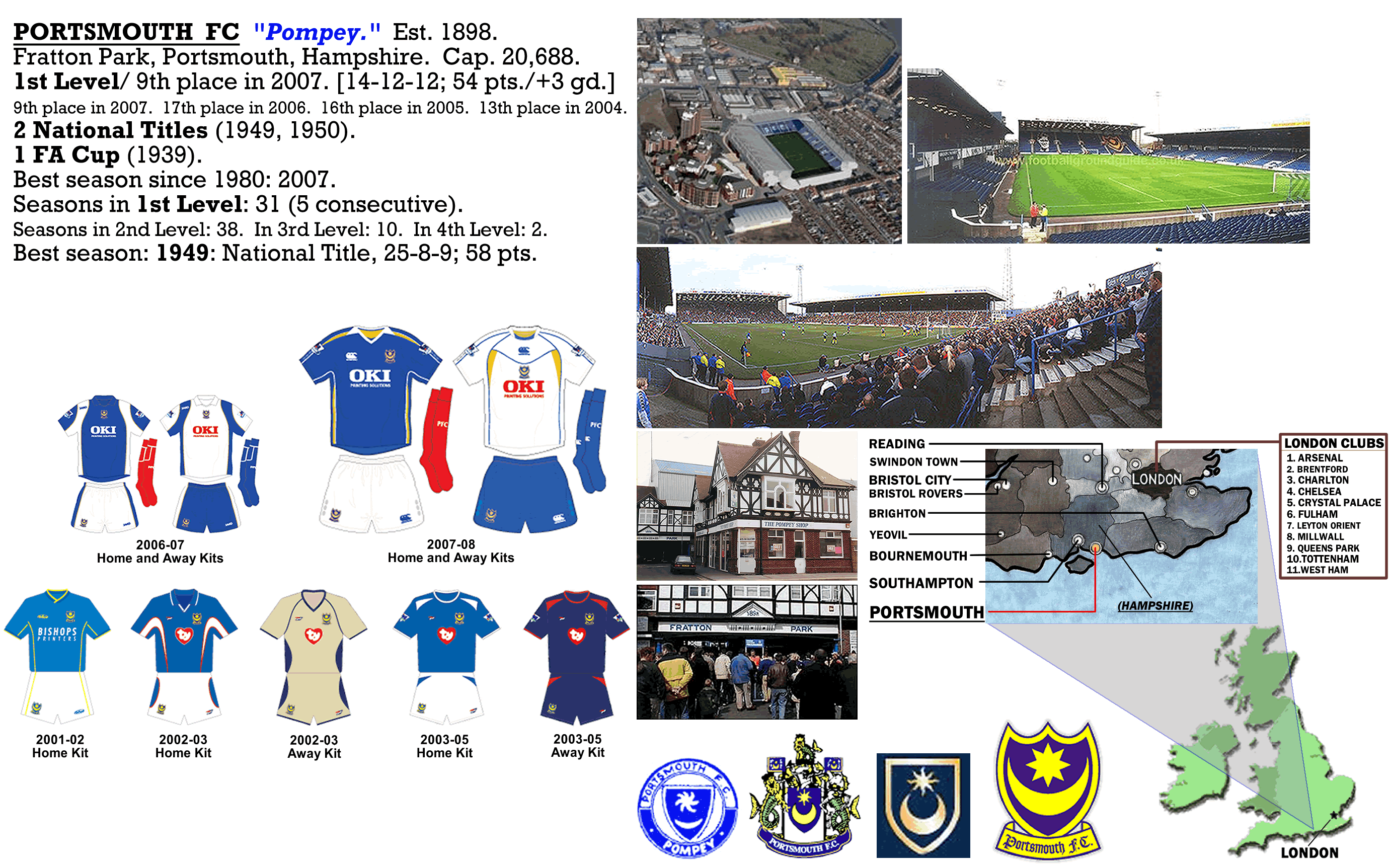
 Today is Thanksgiving in the USA, and I am giving thanks to the roof over my head, my family and their continued health and happiness, this old e-machine that can still (slowly) do the work I demand of it, and to the fact that my favorite sporting club is sitting in 6th place in one of the top leagues in the world.  That would be plucky Portsmouth FC of the English Premier League, affectionately known as “Pompey.”  Portsmouth was the traditional home base of the British Navy, all through the years of Empire, and the naval presence there is still strong.  It is a very working-class town, as opposed to the more upper-middle class Southampton, 15 miles northwest.  The two have one of the biggest rivalries in English football, and there was much glee in Portsmouth when Southampton FC were relegated in 2005.  Pompey almost were relegated the following season, but pulled off one of the greatest escapes in Premier League history, going from 9 pts. down, to safety, in the last 10 games.  They did this by virtue of two things: the return of much-loved manager Harry Redknapp earlier that season, and a cash-infusion from new ownership that allowed the wheeler-dealer Redknapp to make some crucial player acquisitions during the January transfer window. I decided on Portsmouth as my club because I love their passionate fans, and I am drawn to teams that have to struggle to keep their heads above water.  Portsmouth, in their dilapidated stadium, with their working class fan base, punching above their weight, really reminded me of the soccer club I lived and died for as a youth…the Rochester Lancers of the old North American Soccer League.  I later found out that Harry Redknapp had played, and coached, in the NASL, with the Seattle Sounders from 1976 to 1979.  Here he met Milan Mandaric, then owner of the original San Jose Earthquakes.  Harry had come up through the West Ham United system, playing midfield for the East London club from 1965-72, with 147 appearances and 7 goals.  He ended his English career at Bournemouth in 1976, and then went to the US .   Years later, when Mandaric decided to buy (and basically rescue and revive) Portsmouth FC (he loved how devoted the Pompey faithful were), he appointed Redknapp (who had just managed West Ham for 6 seasons) as Director of Football.  Redknapp eventually became manager in 2002, guiding Pompey back to the top flight for the first time in 15 years, in 2003.  So that NASL vibe I felt with Portsmouth was real. 

Portsmouth FC has less cash-flow worries since Alexandre Gaydamak bought the club in 2005.  Since avoiding relegation in 2005, they have been steadily improving.  They finished 9th last season, just missing out on qualifying for Europe, in the UEFA Cup.  Under Harry, Pompey has always played a brand attacking football, and the team has been fun to watch these last 5 seasons.  Redknapp is much loved by his players, and has an avuncular style that has endeared him to the public.  His acumen in the transfer market is legendary.  He’s kind of like a used car salesman, but with footballers.  Now with more cash at his disposal, Redknapp has been acquiring (and attracting) a higher caliber of player.  Portsmouth’s defense (never a strength) has improved considerably, and they recently won an unprecedented 4 straight games on the road.  The club is also improving infrastructure like it’s training facillities, and they finally put a roof over the re-built away stands.  Fratton Park is still the smallest venue in the Premier League, but the club plans to build a new, state of the art stadium/commercial complex/luxury co-op development, on land reclaimed from the English Channel.  Last time I checked, it was slated for a 2010 completion, but I’ll believe it when I see it.  Whatever the outcome of the perpetually delayed new stadium, Portsmouth FC”s future looks bright.

Special thanks to these websites: FootballGroundGuide[dot]com[dot]uk, and Stadium Guide[dot]com for the photos, and Colours-Of-Football[dot]com for the kits. 
November 8, 2007

Baseball of the Northeast, 1992.

Filed under: Baseball,Hand Drawn Maps — admin @ 9:13 am

92_baseballneast_segment4.gif


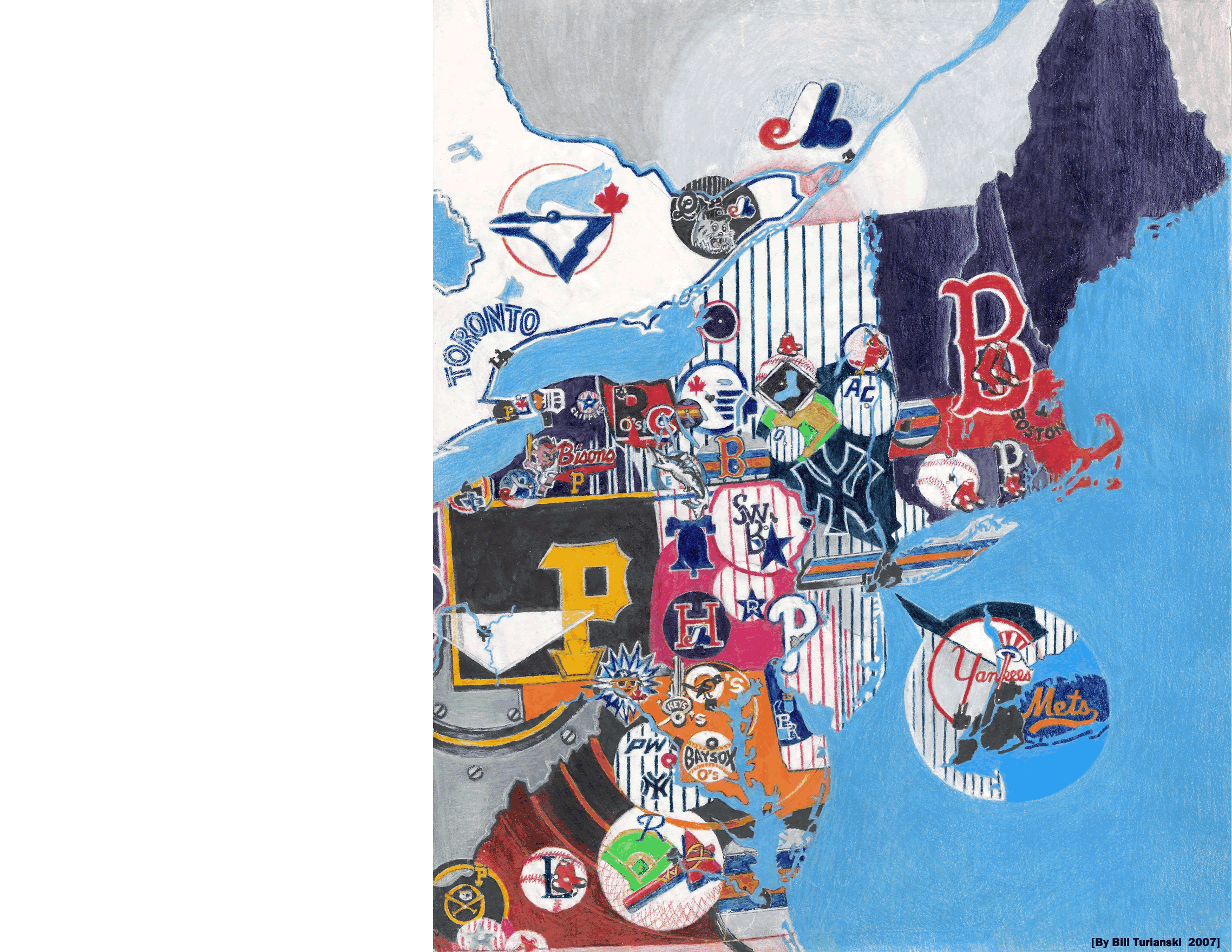
I made this map in 1992, back in the days before the internet:  my source for team information was “The Baseball Almanac, 1991″ by Dan Schlossberg.  The minor league team’s affiliations are noted by small crests or icons of the parent club.  The green and tan baseball diamond in the center of New York State represents Cooperstown and the Baseball Hall Of Fame.  Many of the smaller minor league teams shown here are defunct, like the Albany-Colonie Yankees, the Geneva Cubs, the Watertown Indians, the Welland (Ontario) Pirates, the St. Catherines (Ontario) Blue Jays, and the Utica Blue Sox.  Some of the logos here I took the liberty of inventing, like the Blue Sox crest, and the one for the Frederick Keys, in Maryland.  I carved out domains for the Major League teams, trying to be as realistic as possible, while still maintaining a graphic balance.   The New York Yankees got all of Upstate NY, northern and coastal New Jersey, and Fairfield County, Connecticut.  The New York Mets got all of Long Island, NY, plus a Met-colored bar cutting a swath through northern NJ.  This style of representing fan bases proved too problematic and arbitrary, though.  My maps have evolved to where I now usually depict team crests larger or smaller, depending on average attendance.  Showing each team’s “sphere of influence” would entail a census-taking of Herculean scale, and would ultimately be open to dispute. 

November 1, 2007

The Golden Age of Baseball.

Filed under: Baseball,Hand Drawn Maps,Retro maps — admin @ 8:00 pm

mlb_golden_segment5.gif


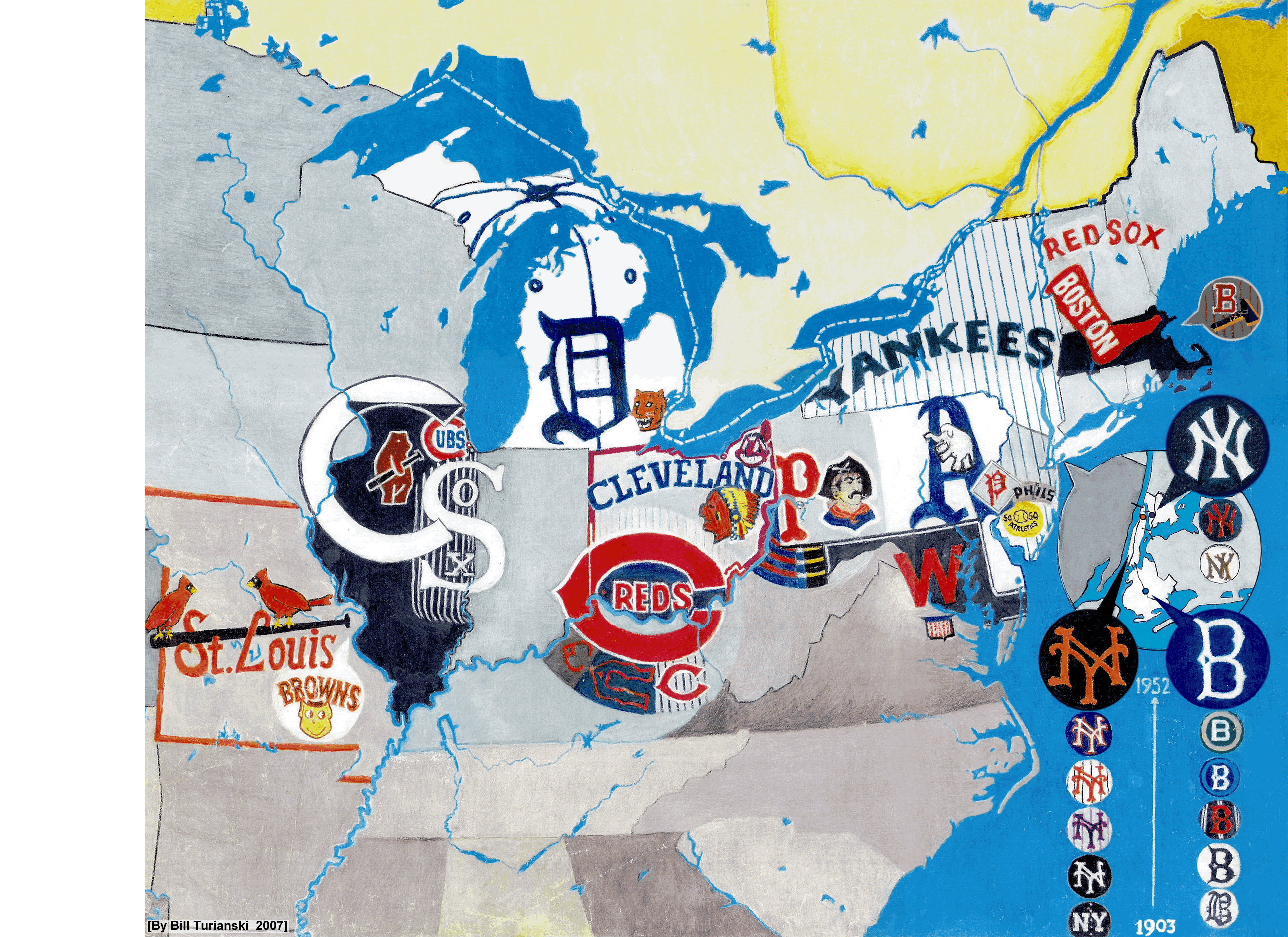
Between 1903 and 1952, there was no franchise movement among the 8 National League and 8 American League baseball clubs.  This map shows all 16 clubs, with emblems, cap crests and uniform details from that time period.  Included is an inset map of the Greater New York City area.  In it, the locations of Yankee Stadium (NY Yankees), the Polo Grounds (NY Giants), and Ebbets Field (Brooklyn Dodgers) are marked.   The evolution of these three clubs’ crests and the evolution of the ball clubs’ colors are also shown here.  This map was drawn in 1993, and would not have been possible without the incredible book “Baseball Uniforms of the 20th Century” {at Amazon, here}.  That book was researched, written, and illustrated by Marc Okkonen.  His artwork for this book can now be found as the main uniform database (from 1900 to 1994) for the Baseball Hall of Fame site “Dressed to the Nines – A History of the Baseball Uniform“. 

October 26, 2007

Hockey of the North Atlantic, circa 1994.

Filed under: Hand Drawn Maps,Hockey — admin @ 10:26 pm

nhl_segment4.gif


This is a map from my early days of sports maps, around 13 years ago.  As you can see, I was way more into the unbridled use of color and form, and less into accuracy.  I can remember, halfway into the map, deciding to put in minor-league hockey clubs, only to realize (pre-internet) that I had little chance of finding the logos for most of these small clubs.  So I improvised:  Ontario Hockey League trading cards I had helped; and for the Quebec Major Junior Hockey League teams, I just used their names alone.  This map has teams from the National Hockey League; the American Hockey League; the aforementioned OHL and QMJHL; and the East Coast Hockey League.  Minor league affiliations of AHL clubs are noted by small logos of their parent NHL clubs.  The player in the map’s legend is New York Ranger goalie Mike Richter, in his 1994 All-Star team uniform. 

October 22, 2007

The American League, established 1901.

Filed under: Baseball,Hand Drawn Maps,Retro maps — admin @ 11:50 pm

mlb_al_segment2.gif


The World Series starts Wednseday, so this is a good time for a baseball map.  This map was drawn in 2005.  The map includes every ball club that has played in the American League, since its inception in 1901. The American League was created 25 years after the National League, which was formed in 1876.  Since 1903, the winner of each league has gone on to play in the best-of-7-game World Series.  Featured on this map are caps, logos, and cap crests from the past, with the years listed.  Franchise shifts are also noted.

October 5, 2007

The Netherlands. Football Clubs 2006-07.

Filed under: Hand Drawn Maps,Netherlands — admin @ 6:04 am

neth_chop4.gif


I made this map in the fall of 2004.  I updated it by adding promoted clubs, and some 2nd division clubs, so that the map shows the 23 highest drawing clubs from last season.  It isn’t an Attendance map, however, as the team crests aren’t proportionally sized.  PSV won the title last season, on the last game, on goal difference.  AZ Alkmaar blew it, basically, and their attempts to break into the top echelon of Dutch clubs (the big 3) was put on hold for another season.  The big 3 is Ajax (29 titles),  PSV Eindhoven (20 titles), and Feyenoord (14 titles).  Since 1965, no other team has won the Eredivisie title, except for AZ in 1981.  AZ just moved into a new 17,000 seat stadium, with plans to expand it later.

October 3, 2007

Ukrainian football clubs (hand-drawn map circa 2003).

Filed under: Hand Drawn Maps,Ukraine — admin @ 9:27 pm

ukraine_segment3.gif 


    In January 2004, I was all “mapped out” in terms of US sports.  My brother was into the Premier League (an Arsenal fan), and I decided to try doing a map of English football.  Suffice to say I was hooked.  I swiftly turned into a Portsmouth FC fan (I have a weakness for colorful yet struggling teams), and began following international football. While I was doing research on the internet, I stumbled across a site about Ukrainian football  (“ukrsoccerhistory.com”).  As a Ukrainian- American, I felt duty-bound to do a map on Ukraine as well.  In retrospect, there’s a few things I’d do different today (like make Shakhtar’s crest bigger), but I’m pretty happy with the result.   Especially since I decided to put Zorya Luhansk on the map, even though they were in the second division at the time.  Zorya made it back into the top flight last season.  They were one of only 3 Ukrainian clubs to ever have won the USSR first division title, in 1972.  Plus I love the Bolshevik poster-art quality of their charging-train-engine logo (sadly no longer in use).  Other retro logos I used were with Metalist Kharkiv. Chornomorets Odesa, and Tavriya Simferopol. 

   The biggest USSR title winner was from Ukraine: Dynamo Kyiv.  This club from the capital won it 13 times, the first in 1960, and the last in 1990.  Dnipro Dnipropetrovsk, from central Ukraine, won the USSR league twice, both late in the Soviet era, in 1987 and 1989. 

   Ukrainian players invariably accounted for around 25% to 40% of the squad on any USSR side, but very few people in the west knew this.  With independence, the world can see that Ukraine produces some pretty decent footballers.  Their good showing in the 2006 World Cup proved this, as they finished in the top 8 teams.  Just getting there was a major accomplishment.  They had to beat out 2004 Euro-champions Greece, and 2002 World Cup 3rd place finishers Turkey, plus Denmark, in their tough qualifying group.

   The manager of the Ukrainian national team is Oleg Blokhin, the most capped player of the Soviet Union.  The most prominent Ukrainian is 2004 European Footballer of the Year Andriy Shevchenko, who got his start with Dynamo Kyiv, before making his name at AC Milan.  He now plays for Chelsea, but has had problems adapting to the English style.  Andriy Voronin became a top striker with Bayer Leverkusen, and is now at Liverpool.  Anotoliy Tymoschuck was the midfield anchor at Shakhtar. He was sold for a record amount to Russian side Zenit St. Petersburg, who currently lead the league [Tymoschuk went on to Bayern Munich later].   

   Ukraine won its independence in 1991.  Since 1992, Ukraine has had its own league, the Vyscha Liha (Ukrainian Premier League).  Simferopol, a small club from Crimea, won the first, hastily assembled short season.  After that, Dynamo Kyiv won it 9 straight seasons.  Shakhtar Donetsk came under new ownership (Rinat Akhmetov, the richest man in Ukraine) and began improving.  They finally won a league title in 2002, and have been battling Dynamo Kyiv for the title each year since.  They have become the big 2, to the detriment of the rest the league.  Dynamo have 12 titles, Shakhtar have 3.  Dynamo won it last season, but have played poorly in the Champions League for 3 seasons running.  Meanwhile Shakhtar, with their swank new training facilities, have been able to attract a higher caliber of player.  Brazilians feature large in their squad, though they just lost Elano to Manchester City. Brandao is one of 6 from Brazil on the team, and they recently signed the iconoclastic Italian striker Christiano Lucarelli.  They have been steadily improving on the European stage, and could finally advance to the group of 16 this season.  They just beat Celtic at home, and Benfica in Portugal.  Meanwhile last season’s 3rd-place team, Metalist Kharkiv, went to England and held Everton to a 1-1 draw, in the UEFA Cup.  Dnipro is up and coming, and have been the only other club besides the big 2 to supply starters to the national squad these days.  They could very well finish in the top two this season, and start to weaken the hegemony of the big 2. 

For the 2007-2008 season, UEFA ranks Dynamo Kyiv 63rd in Europe.  Shakhtar is ranked 69th, and Dnipro is 83rd.   Ukraine’s pro league is ranked 11th by UEFA (country ranking for league participation), up from 13th place.

Check out the September 2007 issue of World Soccer.  This magazine has a nice feature on Ukraine’s Premier League, complete with map and thumbnail profiles of the 16 clubs in this season.   

September 17, 2007

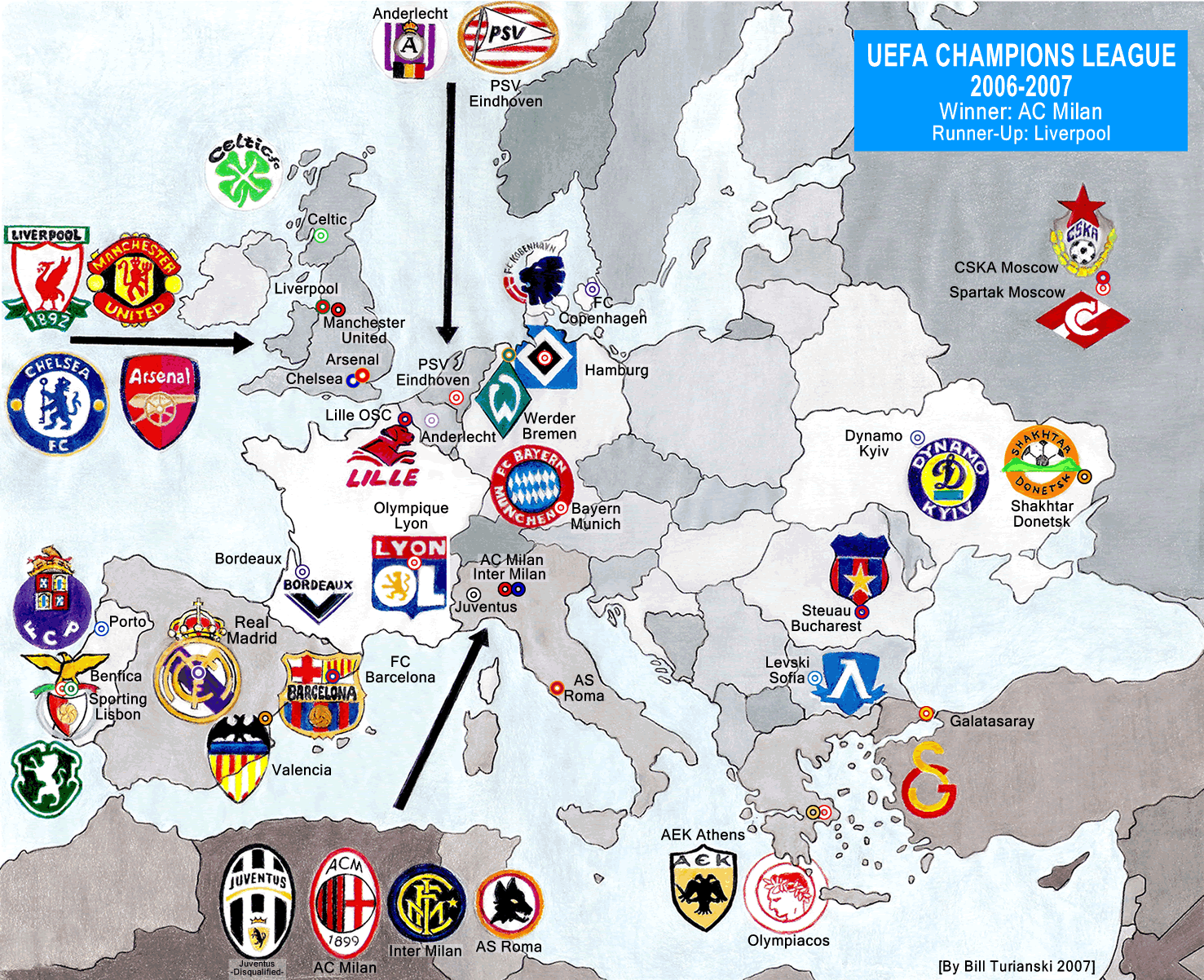
Champions League, 2006-2007 Map.

Filed under: Hand Drawn Maps,UEFA Champions League — admin @ 11:42 pm

cleague_segment.gif

September 16, 2007

German Football-Bundesliga Map, 2003-2007.

Filed under: Germany,Hand Drawn Maps — admin @ 12:13 pm

german_segment2.gif


Please note:
My latest Bundesliga map-&-post can be found here, category: Germany.]

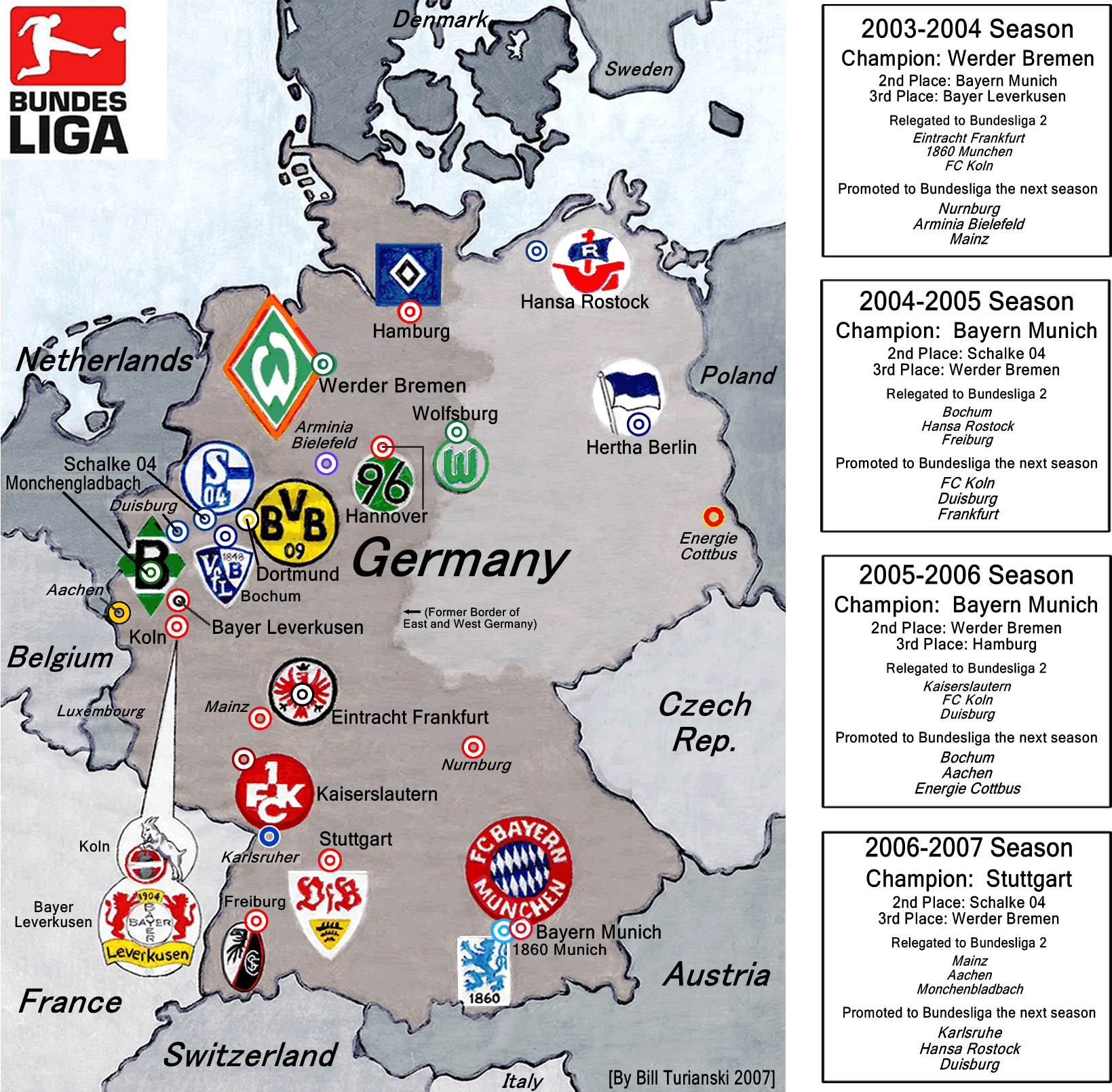
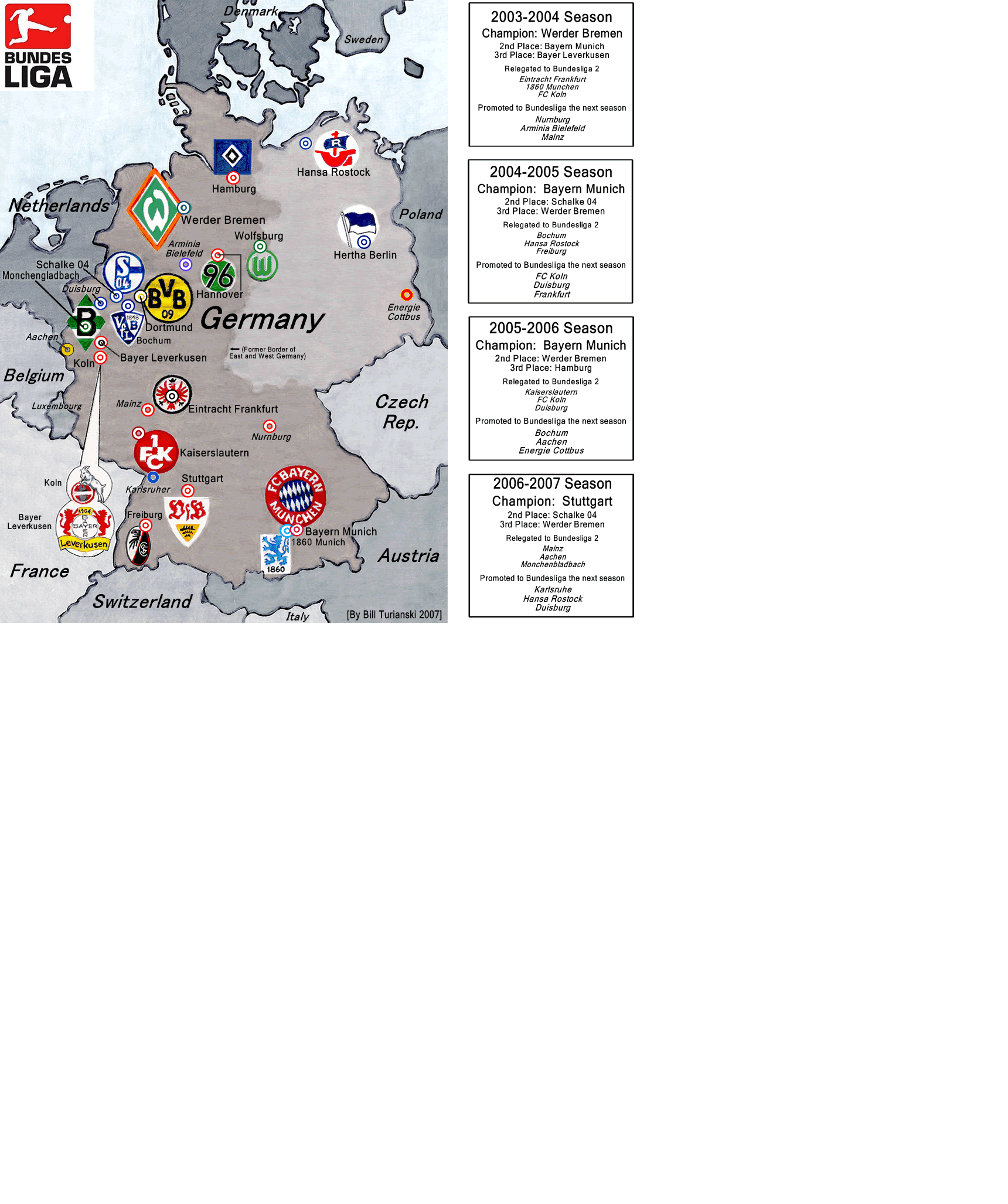
I hand-drew this map in early 2004. I have updated it to spring 2007 by adding all the teams who have been promoted, from Bundesliga 2, since then. Thumbnail lists of the last four Bundesliga seasons (2003-04, 2004-05, 2005-06, 2006-07) are included.

September 14, 2007

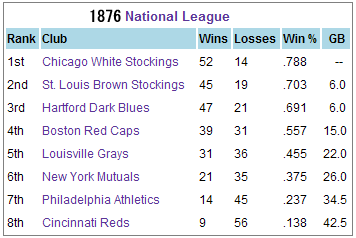
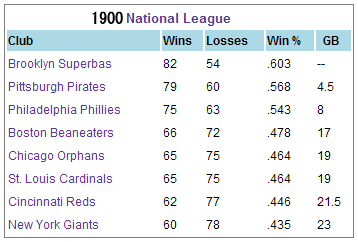
National League, est.1876. Origins map.

Filed under: Baseball,Hand Drawn Maps,Retro maps — admin @ 9:29 pm

mlb_nlsegmen1t.gifThe National League was formed in 1876.  

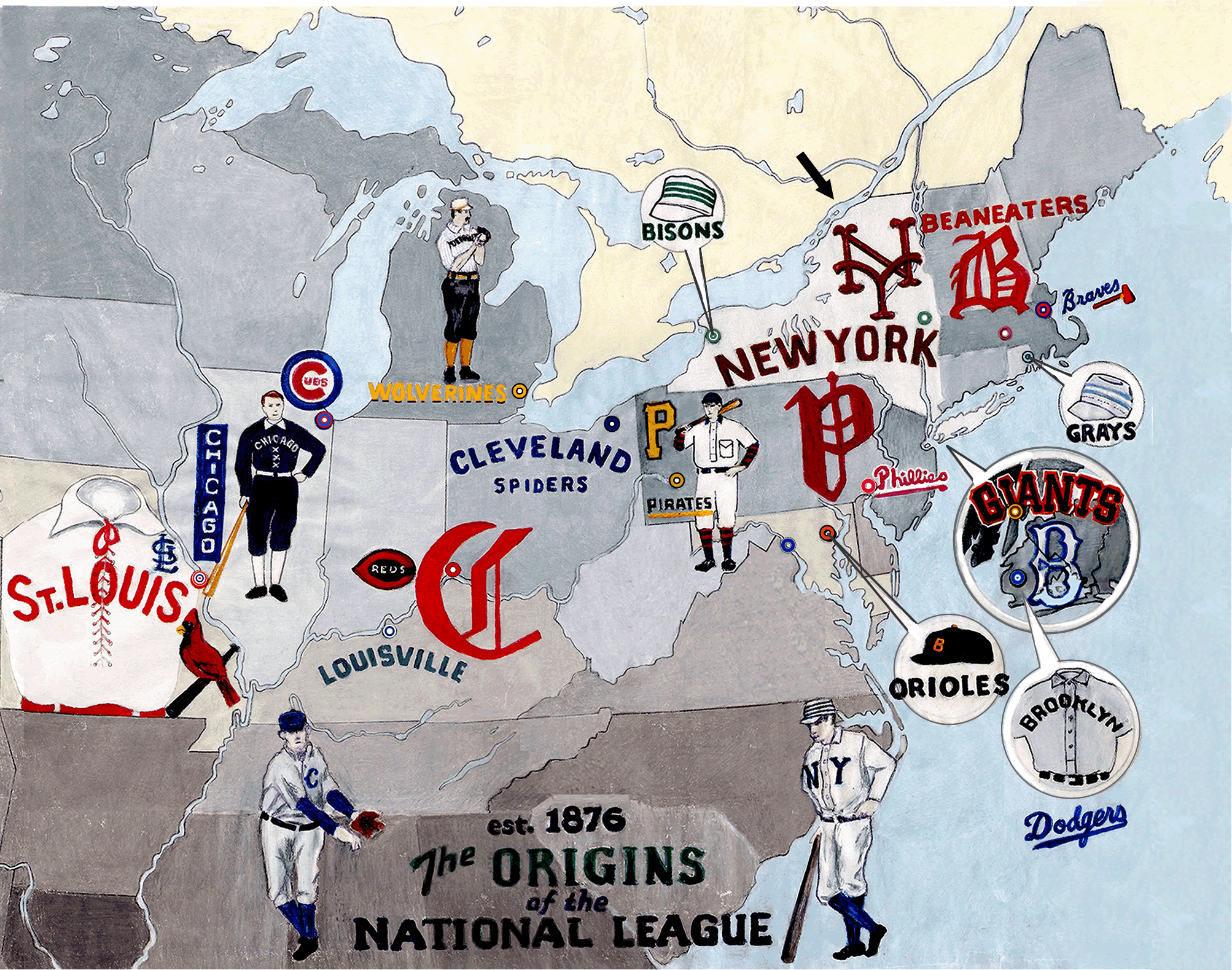
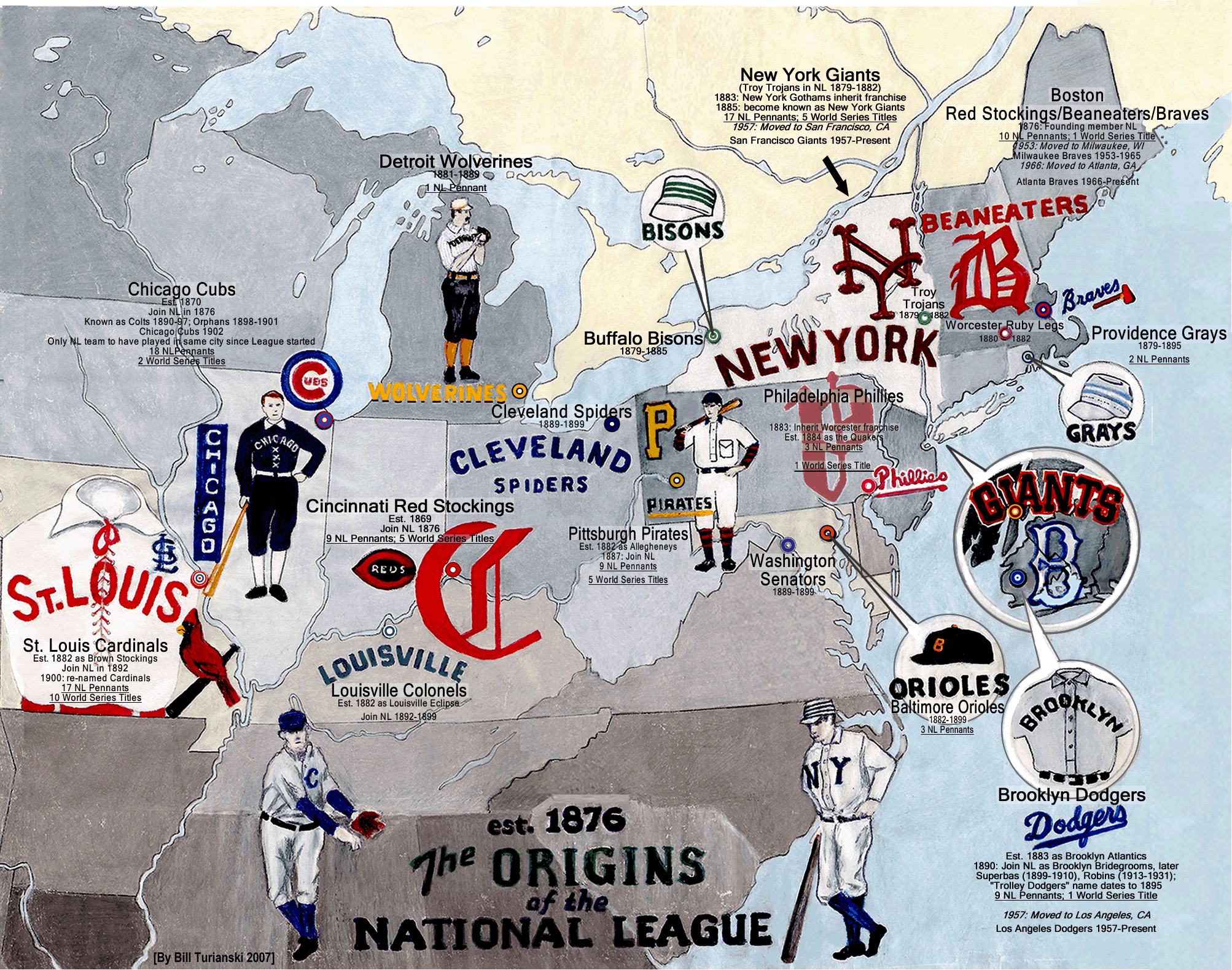
This map shows all the NL ball clubs that were prominent during the late nineteenth century.

(1876 to 1900).

 The NL contracted from 12 to 8 clubs after the 1899 season.  The remaining 8 clubs all still exist today, although several are in different cities.  In fact, no National League club has folded since 1899.  

« Newer PostsOlder Posts »

Powered by WordPress